
Seeing bright sparkles, wavy lines, or colorful geometric shapes which may present suddenly and last for a few minutes is not uncommon. Migraine aura is a cause of these symptoms in many people, also certain eye issues can play a role.
Understanding what causes kaleidoscope vision issues which in turn may point out which episodes require medical attention. Some are benign, but others may be a report of retina, blood vessel or brain issues.
What Is Kaleidoscope Vision?
Kaleidoscope vision reports a type of transient disturbance which in turn presents as broken up, colorful, or dynamic patterns. People may see sparkles, black spots, or waves across the visual field.
One that is put forth is of visual aura which is a neurological issue which presents in Migraine. Also it is so that kaleidoscope vision etiology may vary according to the length of symptom, which eyes are affected, and what other signs may present. Also these disturbances may happen without a headache. An eye exam is a tool which we use to determine if the symptoms are in the eyes or the brain’s visual pathways.
Common Kaleidoscope Vision Causes
Migraine aura is a very well reported sign of kaleidoscope vision causes. Flashes of light, expanding patterns, and distorted images are what may present. Also in the mix are retinal migraine, retinal disorders, and temporary issues with blood flow. Some of these conditions require acute assessment which is why it is important to note when visual changes come on suddenly.
| Possible cause | Common visual changes |
| Migraine aura | Shimmering patterns, expanding zigzags, temporary blind spots |
| Retinal migraine | Temporary visual disturbance affecting one eye |
| Retinal tear or detachment | New flashes, floaters, shadows, or a curtain over vision |
| Transient ischemic attack (TIA) | Sudden visual loss or disturbance, sometimes with neurological symptoms |
Understanding kaleidoscope vision causes requires us to look at how symptoms present, develop and resolve. A new episode should not be immediately tied to migraine.
Migraine Aura and Zigzag Vision
A migraine related visual aura tends to develop slowly and will last from 5 to 60 minutes. It may present as expanding shimmering patterns or temporary blind spots.
Many report that they see jagged lines which flash in their visual field that is how zigzag vision presents itself. This is a result of what is going on in the brain’s visual processing centers.
Also it is the visual field of both eyes that is affected in a migraine aura even if the issue appears to be more severe in one eye. Identifying these features helps in the diagnosis of what may be kaleidoscope vision causes.
When Could Kaleidoscope Vision Indicate an Eye Problem?
Not all visual issues are a result of migraines. We see that retinal tears, retinal detachment, and vascular issues present with acute symptoms which in turn require prompt medical attention. As for the key retinal warning signs problems which you should note include new flashes, many floaters, a dark curtain, and sudden vision loss. These will require you to seek out urgent care.
Unlike what is seen in typical migraine aura, retinal issues may present with persistent symptoms or changes in vision which are limited to one eye.In the domain of kaleidoscope vision causes we pay special attention to sudden visual loss and new neurological symptoms. Weakness, facial droop, or trouble in speech may be a sign of stroke and require emergency care.
How Doctors Diagnose Kaleidoscope Vision
Doctors investigate kaleidoscope vision causes by a very detailed symptom history and appropriate eye exams. They look at the duration of the condition, if it is recurring, associated headache history, and which eyes are affected.
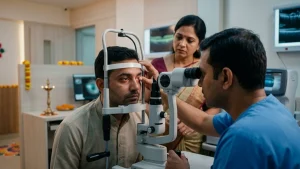
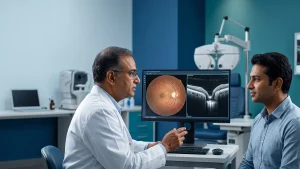
An ophthalmologist may also look at the retina after the dilution of pupils. Also other tests for images or neurology may be used in which the patient\ ‘s reported symptoms point to a different physical cause.
| Diagnostic assessment | Purpose |
| Visual acuity examination | Measures clarity of vision |
| Dilated retinal examination | Checks for retinal tears and other abnormalities |
| Optical coherence tomography (OCT) | Examines retinal structures |
| Neurological assessment | Investigates suspected migraine or vascular conditions |
Treatment and Management
Treatment is based on what is at the root of the issue. When migraine is that which is played out we may see recommendations of identification of triggers, maintenance of regular sleep, and use of migraine medications.
When retinal disease is the kaleidoscope vision causes we may see urgent retinal procedures or other treatment related to the specific condition. Those that have repeat issues should keep a log of their symptoms and seek out medical advice instead of the tendency to think each issue is related to migraine.
Conclusion
Comprehension of the function of the kaleidoscope vision is to tell apart common migraine related visual disturbances from more serious eye issues. While temporary sparkling patterns which present during the aura of a migraine are to be expected, at the first sign of atypical or out of the ordinary visual changes one should seek care.
ASG Eye Hospital does ophthalmic evaluations to determine base eye conditions which in turn guide what care is given. Also it is important for timely assessment to be done when symptoms are of recent onset, persistent, or which also include vision loss.
Frequently Asked Questions
1. What are the most common kaleidoscope vision causes?
Migraine aura is a put out that which kaleidoscope vision causes. Also retinal and vascular issues present similar symptoms.
2. Can kaleidoscope vision happen without a headache?
Yes. A visual aura may happen without a headache. What some may term as migraine aura without headache.
3. Is zigzag vision always related to migraine?
No. While zigzag vision is a common report during a migraine aura, new or different visual symptoms require evaluation.
4. When should someone seek emergency care?
Sudden vision loss, seeing new floaters, a dark curtain, or neurological symptoms are signs that are considered emergencies in retinal issues. See immediate medical care.
5. Can kaleidoscope vision affect only one eye?
Yes, some conditions affect one eye. New monocular symptoms need urgent evaluation because retinal or vascular disorders may be the cause.
Reference Links:
- National Eye Institute (NEI/NIH) – Uveitis
https://www.nei.nih.gov/learn-about-eye-health/eye-conditions-and-diseases/uveitis? - MedlinePlus (U.S. National Library of Medicine) – Uveitis
https://medlineplus.gov/uveitis.html? - National Center for Biotechnology Information (NCBI/NIH) – Uveitis
https://www.ncbi.nlm.nih.gov/books/NBK540993/?