Children use color in play and in school work, at the same time some do have trouble with it. Parents may think this is carelessness. At times it is a sign of color vision deficiency. A colour vision test for children is a tool which may bring to light the issue and also will put in place a support plan at home and in school. Also it may help parents bring up these issues with a health care professional.
What Is Colour Vision Deficiency?
Colour vision impairment which is how some see color different. Red and green are what many have trouble telling apart. In many cases it is hereditary. Also many kids don’t realize that others see colors differently. A colour vision test for children may help to bring to light the issue when they are having frustration with color based tasks. May be put forward when issues are brought to notice.
Signs Parents Should Notice
Common colour blindness signs may go unnoticed. In terms of play and school which is when many of these issues present they may see a child that is consistent in choosing the wrong crayons, mixing up colored objects or having trouble with color coded charts. Also may have issues with maps and worksheets which use color as the only instruction.
Bring up issues in the class room to teachers. If the problems continue, get into a colour vision test for children. Recognize signs of color blindness early which in turn will help adults to modify activities and reduce frustration. Speak to a specialist about color blindness signs which in turn will guide the next steps
| Everyday situation | What parents may notice |
| Drawing | Confusing shades or choosing unexpected colours |
| Schoolwork | Difficulty reading colour-coded charts |
| Sorting games | Mixing objects that mainly differ by colour |
| Daily routines | Trouble identifying coloured items quickly |
How Does the Ishihara Test Work?
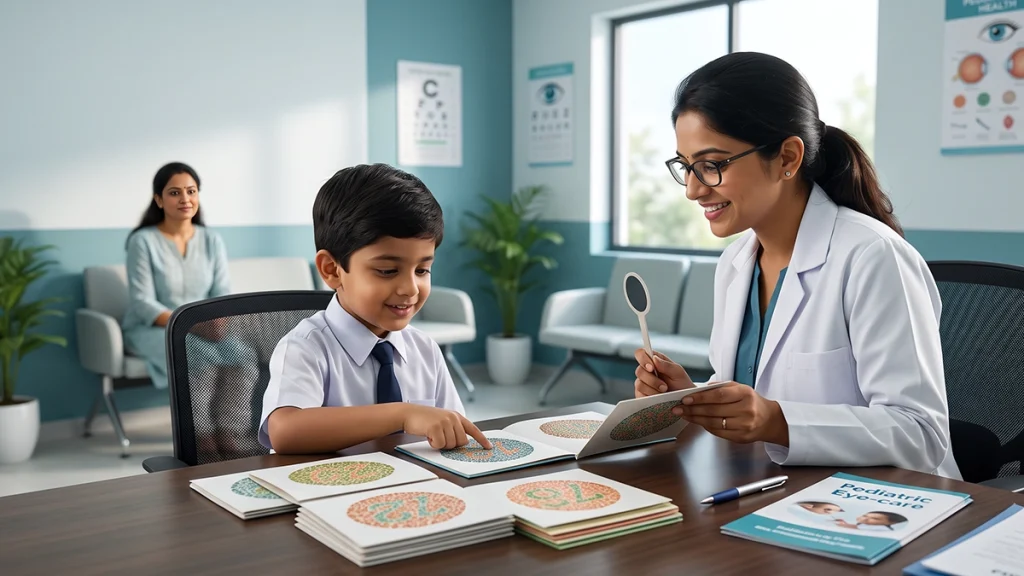
The Ishihara test which is also a very common tool used to identify red green color vision deficiency. A child is presented with a series of colored dots. Some of these dots will form a number, a letter or a picture. Based on the person’s color perception some may see a different figure and some may have trouble identifying the image.
The Ishihara test is a non-invasive and easy procedure. Results of this test are interpreted by a trained professional. The health care provider looks at the child’s age and reports. This is a screen which does not detect all types therefore more tests may be ordered. What colour vision test for children is based on the child’s needs.
When does your child need an eye exam?
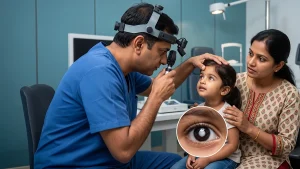
Watch for signs in your child eye test like color struggle, school issues or a family history of color vision deficiency. A child eye test will check general vision but also may include color screening when it is appropriate.
| Examination | Main purpose |
| Visual acuity test | Checks how clearly a child sees |
| Colour vision screening | Checks how well colours are distinguished |
| Ishihara screening | Mainly screens for red-green deficiency |
| Additional colour tests | Explore concerns needing further assessment |
A professional may put forth appropriate tests. For colour vision test for children it is of benefit when issues impact on learning or confidence. Unusual changes in color vision should be looked at right away
Can Colour Vision Deficiency Be Reversed?
Most inherited forms of colour vision deficiency do not have a cure but we do have workarounds. Teachers which do the labeling of diagrams, use symbols and which don’t rely on color as the only cue. Parents which break down tasks into simple steps and which provide reassurance to their children. A colour vision test for children which in turn helps families to better understand what their child’s needs are and how best to include them in day to day activities.
Conclusion
Children may have trouble in identifying some colors. If you see colour blindness signs in your child, bring them to an eye care specialist that does colour vision test for children. Assessment will help to identify the issue and determine what support is needed. ASG Eye Care recommends that parents take their child in for a professional vision assessment.
Frequently Asked Questions
1. At what age can a child have the test?
We may be able to test a child once they are able to follow instructions. An ophthalmologist will be able to give advice on the right time.
2. Is it typical for children to have color blindness?
Some kids are born with inherited color vision deficiency which is more common in boys. Red green deficiency is the most common type.
3. Does the Ishihara test cause pain?
No. The Ishihara test is a simple screening tool. Kids put a look at colored plates and identify what they see.
4. Can color vision play a role in school performance?
It can. Color coded charts and worksheets may be more difficult to interpret. Use of labels, patterns and verbal instructions is recommended.
5. Doesn’t every child have to be screened?
Not all children do. We may put in a child eye test and color screening if we see an issue. If you see colour blindness signs, bring that up with an ophthalmologist.
References
- U.S. National Eye Institute: Testing for Color Vision Deficiency
https://www.nei.nih.gov/eye-health-information/eye-conditions-and-diseases/color-blindness/testing-color-vision-deficiency - GOV.UK: Child Vision Screening Information for Parents
https://www.gov.uk/government/publications/child-vision-screening-information-for-parents/child-vision-screening-information-for-parents