A sudden shift in vision is also very scary which is the case when it is in only one eye. Some report seeing darkness, others report blurred vision or a shadow over what they see. While there may be different symptoms, sudden vision loss in one eye is a sign of a serious health issue. Doctors report sudden visual loss as a medical emergency which they note has a high risk of permanent damage if treated late. Early evaluation is key to determine the cause and in that also which vision is left.
What Does Sudden Vision Loss in One Eye Mean?
Sudden loss of vision in one eye which comes on without warning. May happen in a second, within minutes, or in a matter or a few hours. The change may be to central vision or at the sides of what a person sees. While in some cases there may be pain, often this does not accompany the problem and therefore may be dismissed as less serious. In fact we see that any case of sudden vision loss in one eye in particular is a cause for prompt medical attention. Reasons may be blocked blood flow, retina damage, or a problem with the optic nerve.
Common Causes of Sudden Vision Loss in One Eye
In many cases normal vision is broken by certain factors. As for sudden vision loss in one eye the causes range from retinal diseases to vascular and neurological issues.
Retinal Artery Occlusion
Retina blood flow is interrupted in retinal artery occlusion which is a result of a blockage. This lack of oxygen causes rapid cell damage in the retina. Patients may have painless immediate loss of vision in one eye which sometimes comes without notice. Central retinal artery occlusion is a type of acute retinal ischemia which requires urgent stroke evaluation. Doctors treat retinal artery occlusion as a time sensitive issue which may change the approach and results of treatment.
Retinal Detachment
Retina detaches which is a condition where the retina pulls away from what is supporting it. Patients may report seeing flashes of light, floaters, or a dark curtain coming into their field of vision. This may cause sudden vision loss in one eye and is a reason for emergency ophthalmic evaluation. At the early stage surgical intervention may prevent additional damage to the eye.
Optic Neuritis
Optic neuritis is a condition which sees the optic nerve inflamed. This includes reduced vision and color perception in some patients. Also reported is pain during eye movement. If you have an optic nerve issue that goes untreated or is unexplained it is required that you see a specialist to determine the cause.
Acute Angle-Closure Glaucoma
Acute angle closure glaucoma brings on a sudden increase in intraocular pressure. Symptoms may present with severe pain, redness, headache, nausea, and blurred vision. This is an eye emergency which requires immediate care to reduce pressure and thus prevent damage to the optic nerve.
Symptoms That Require Immediate Medical Attention
The following symptoms may accompany sudden vision loss one eye and help doctors identify possible causes.
| Warning Sign | Possible Concern |
| Sudden painless blindness | Retinal artery occlusion |
| Flashes and dark curtain | Retinal detachment |
| Pain during eye movement | Optic nerve problem |
| Red eye with severe pain | Acute glaucoma |
| Temporary darkened vision | Reduced retinal blood flow |
Patients must present to a doctor with sudden vision loss in one eye also if it improves by itself. Transient episodes may indicate a vascular issue or stroke.
How Do Doctors Diagnose Sudden Vision Loss?
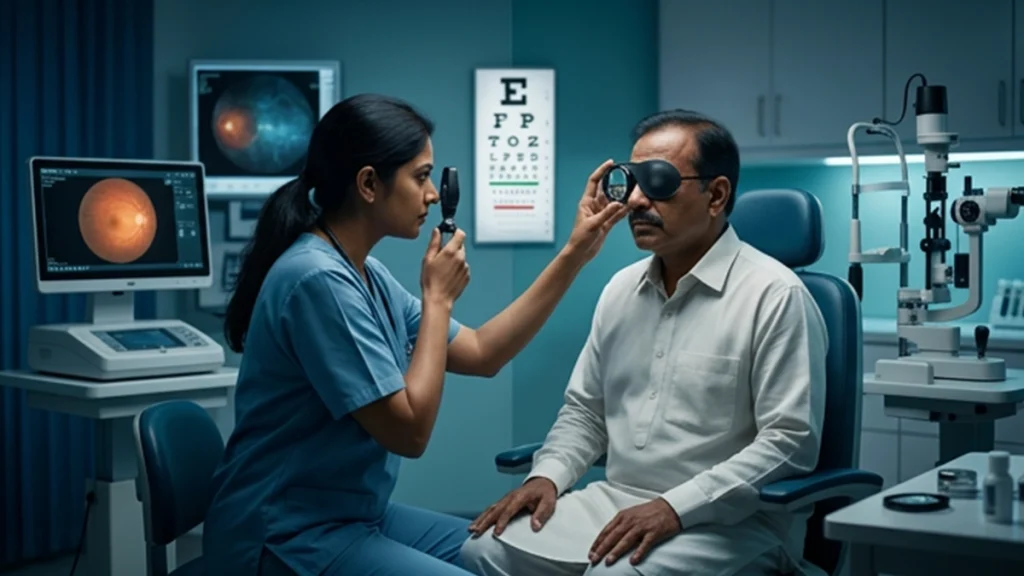
An ophthalmologist will look into sudden vision loss one eye via visual acuity test, pupil exam, eye pressure measurement, and retinal assessment. As per the presented condition, doctors may recommend optical coherence tomography, retinal imaging, blood work, or neurological evaluation. In the case of retinal artery occlusion it is of great importance to do an acute stroke evaluation. Also we may see that there is an issue with the optic nerve which in turn will be investigated via imaging and also with more neurological tests.
Treatment Options for Sudden Vision Loss
Treatment for sudden vision loss one eye depends on the underlying diagnosis and how quickly patients receive care.
| Condition | Possible Treatment Approach |
| Retinal artery occlusion | Emergency stroke evaluation and specialist-directed care |
| Retinal detachment | Laser treatment or retinal surgery |
| Optic neuritis | Specialist evaluation and selected medical treatment |
| Acute angle-closure glaucoma | Emergency pressure-lowering medication and laser treatment |
| Retinal vein occlusion | Retinal injections or other specialist care |
Early diagnosis improves the opportunity to protect vision, although recovery depends on the cause and severity.
When Should Someone Seek Emergency Eye Care?
In the event of sudden vision loss one eye goes to the emergency room right away instead of waiting for the symptoms to pass. Also if vision returns after a few minutes seek immediate care. These may be signs of a temporary blood flow issue. As for eye emergency which include a headache, weakness, facial droop, or speech difficulty this is a cause for concern of stroke. Go to emergency services instead of yourself driving.
Conclusion
Sudden loss of vision in one eye is a warning which requires prompt attention. We see that retinal diseases, blood vessel blockages, glaucoma and nerve problems cause which to affect sight. Identifying symptoms and getting into emergency care right away may help to preserve vision. At ASG Eye Hospital we advocate for prompt ophthalmic evaluation of sudden visual changes and appropriate specialist treatment based on diagnosis.
Frequently Asked Questions (FAQs)
1. Can sudden vision loss in one eye be temporary?
Yes. However, sudden vision loss one eye that is sudden in nature, a temporary circulation issue may be the cause. Prompt medical evaluation is still required even after vision returns.
2. Is sudden vision loss always painful?
No. Conditions that present with retinal artery occlusion may cause painless vision loss. Also we see that acute glaucoma and other diseases present with severe pain.
3. Can an optic nerve problem cause sudden blindness?
Yes. In the case of optic nerve problem which include optic neuritis or reduced blood supply vision may fall off very quickly and prompt evaluation is required.
4. Is sudden vision loss an emergency?
Yes. We note that sudden vision loss one eye is put into the emergency category by doctors because some causes may put permanent damage at risk.
5. Can vision return after sudden vision loss?
Recovery from this varies based on the base disease, when treatment was started, and the degree of damage done. Some patients will see improvement in vision, in others there will be permanent visual impairment.