
ASG Eye Hospital

Lattice Degeneration in High Myopia: Who Needs Monitoring or Preventive Laser?

People who have high myopia usually notice that they require stronger glasses or contacts. Also high myopia may cause problems with the retina at the back of the eye. One condition which requires attention is lattice degeneration high myopia which is characterized by areas of the peripheral retina which have become thin and weak.

Lattice degeneration is not a sure thing to cause vision issues. Many people may not at all know they have it until an eye specialist looks at the retina. Also in the case of lattice degeneration high myopia close inspection is required which is because a very high degree of myopia and lattice degeneration together may cause retinal detachment. The National Eye Institute reports that extreme myopia and lattice degeneration are at risk for retinal detachment.

What Is Lattice Degeneration in High Myopia?

Lattice degeneration is a term used for thin out and weak areas in the peripheral retina. These areas present a latticelike structure during a retinal exam. Also in lattice degeneration high myopia which is an elongated eye shape associated with great degrees of myopia, the structure of the eye puts extra stress on retinal tissue. 

High myopia also reports onset of vitreous changes at an earlier age. Upon pull of the vitreous which is a gel-like substance within the eye, it may cause retinal holes or tears. It is important to note that not all high myopes which have lattice degeneration high myopia will develop retinal detachment.

Retinal FindingWhat It May Mean
Lattice degenerationAn area of thinning in the peripheral retina
Retinal holesSmall openings that may occur within weak retinal tissue
Retinal tearA break that may allow fluid to pass beneath the retina
Retinal detachmentSeparation of the retina that requires urgent medical attention

Who Needs Regular Monitoring?

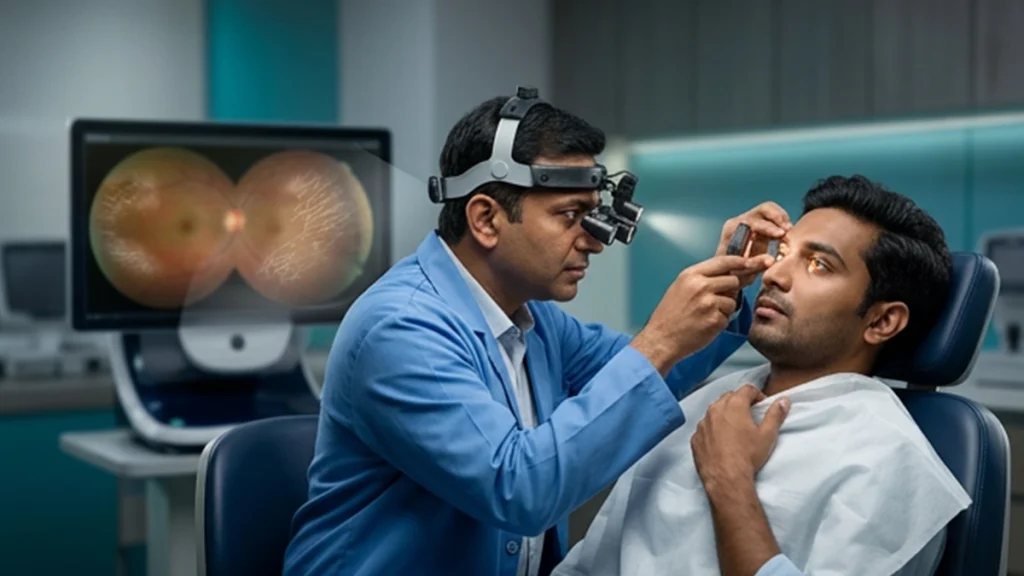
Many patients with lattice degeneration and high myopia just require close observation. An ophthalmologist may also suggest a routine dilated retina exam which is to see that the lattice is stable.

Monitoring is especially important in which a person has high myopia, prior retinal holes, signs of vitreous change, or past retinal issues. Also doctors may examine both eyes closely as retinal changes may present in either eye. 

Patients that have lattice degeneration high myopia should also be aware of warning signs. Sudden onset of floaters, flashes of light, a dark curtain or shadow in the field of vision, or acute vision loss is a cause for emergency evaluation. These symptoms may indicate a retinal tear or detachment. 

When Is Preventive Laser Considered?

Preventive lattice laser treatment does not apply to all patients. It is based on the retinal findings and the individual’s risk profile.

Laser photocoagulation creates small spots of treatment in an at risk retinal area. As these spots heal they form adhesions which in turn secure the retina. Doctors may put in to use lattice laser when there is lattice degeneration which in association with retinal breaks, symptoms or other features which in turn raise the risk of detachment.

The National Eye Institute reports that laser photocoagulation does in fact treat some retinal tears or holes to put a stop to retinal detachment. But it is the ophthalmologist to determine if preventive treatment is required after he has had a look at the retina.

SituationPossible Approach
Stable lattice without concerning breaksRegular retinal monitoring may be advised
High myopia with lattice degenerationCloser follow-up may be appropriate
Lattice with significant retinal holesRetina specialist assessment is important
Symptomatic or concerning retinal tearLattice laser or another treatment may be considered

Can Laser Prevent Every Retinal Detachment?

No treatment is for sure in retinal tear prevention. Laser is used to fortify the retina at what are known to be weak spots, but new tears may present in other areas. 

For which also retinal tear prevention retinal exams and early identification of symptoms are a part. Post procedure of lattice laser patients still must in to the follow up as per ophthalmologist’s recommendation. 

In cases of lattice degeneration high myopia treatment should be very much a personal choice. Some eyes do better with just monitoring, while in others we may see benefit from a preventive approach. 

Frequently Asked Questions

1. Is lattice degeneration common in people with high myopia?

Lattice degeneration is a more common finding in myopic eyes. Also it has been reported that peripheral retinal changes present in very myopic patients. A dilated retinal exam is recommended for detection of these changes.

2. Does lattice degeneration always cause retinal detachment?

No. Many of those with lattice degeneration high myopia do not go on to develop retinal detachment. Risk is a factor of retinal holes, tears, symptoms, changes in the vitreous, and past retinal issues.

3. Does everyone with lattice degeneration need laser?

No. Lattice laser is a treatment which is tailored to the individual retinal findings and risk factors. Stable areas may only require close monitoring.

4. How can I improve retinal tear prevention?

Regular annual eye exams and timely assessment of any new flashes, floaters, shadows, or sudden vision changes is a key to retinal tear prevention.

Conclusion

Lattice degeneration high myopia does not automatically point to a need for laser intervention. Many of these patients can be kept on routine observation as their retina is stable at present. But in cases of retinal holes, tears, new signs and other risk factors the treatment approach changes. In depth retinal evaluation by an ophthalmologist will determine whether a patient should be monitored or if he is a candidate for lattice laser. Also timely evaluation is key in the prevention of retinal tear prevention and in protecting long term vision.

This article is for educational use only and does not supplant a visit or a recommendation for treatment to an ophthalmologist..

References Link

  1. The U.S. National Eye Institute
    https://www.nei.nih.gov/eye-health-information/eye-conditions-and-diseases/retinal-detachment? 

Overview

Job Title: Consultant Ophthalmologist

Location: Pan India
Job Category: Medical Healthcare

Work Employment:  Full time

What you work:

  • Diagnose and treat patients with a focus on Ophthalmologist.
  • Collaborate with senior doctors and multidisciplinary teams.
  • Ensure patient-centric care and follow clinical protocols.
  • Contribute to research, training, or hospital initiatives (if applicable).

Mandatory skills:

  • Relevant medical degree / certification.
  • Strong knowledge of ophthalmology practices / healthcare protocols.
  • Excellent communication and patient-handling skills.
  • Ability to work in fast-paced healthcare environments.

Preferred Qualifications:

  • Experience: 3 to 6 years of experience
  • Prior experience in eye care / multi-speciality hospitals.
  • Fellowship or advanced training in Ophthalmologist.
  • Familiarity with advanced diagnostic tools and surgical techniques.
  • Passion for innovation, patient care, and continuous learning.

Apply For This Positions

This will close in 0 seconds

Overview

Job Title: Optometrist

Location: Amritsar, Punjab 

Job Category: Optometry

Work Employment:  Full time

What you work:

  • Conduct comprehensive eye examinations and vision assessments for patients of all ages.
  • Prescribe and fit spectacles, contact lenses, and low-vision aids.
  • Perform diagnostic tests including refraction, tonometry, perimetry, and OCT imaging.
  • Support consultant ophthalmologists in pre-operative and post-operative patient workups.
  • Counsel patients on eye care, lens hygiene, and follow-up schedules.
  • Maintain accurate clinical records and adhere to hospital protocols.

Mandatory skills:

  • Bachelor’s or Master’s degree in Optometry (B.Optom / M.Optom) from a recognised institution.
  • Valid registration with the relevant state or national optometry council.
  • Proficiency in refraction, slit-lamp examination, and contact lens fitting.
  • Working knowledge of autorefractors, tonometers, fundus cameras, and OCT equipment.
  • Strong communication skills in English, Hindi, and Punjabi.
  • Ability to manage high patient volumes in a fast-paced clinical setting.

Preferred Qualifications:

  • Experience: 1 to 5 years of clinical optometry experience.
  • Prior experience in an eye care or multi-speciality hospital in Punjab.
  • Exposure to paediatric optometry, binocular vision, or low-vision rehabilitation.
  • Familiarity with advanced diagnostic imaging and dry-eye management.
  • Passion for patient care, community eye-health camps, and continuous learning.

Apply For This Positions

This will close in 0 seconds

Overview

Job Title: Optical In-charge 

Location: Panjim, Goa / Mumbai-Worli (Lower Parel) 

Job Category: Optical

Work Employment:  Full time

What you work:

  • Manage day-to-day operations of the optical outlet, including sales, dispensing, and inventory.
  • Guide customers on frame selection, lens options, and coatings based on their prescription and lifestyle.
  • Take accurate frame measurements and ensure precise fitting, adjustments, and after-sales service.
  • Drive optical sales targets and monitor daily, weekly, and monthly business performance.
  • Maintain optimum stock levels, coordinate with vendors, and control shrinkage through periodic audits.
  • Supervise and train optical staff on product knowledge, dispensing standards, and customer service.
  • Coordinate with optometrists and consultants to ensure smooth prescription-to-delivery flow.
  • Ensure visual merchandising, display hygiene, and adherence to brand and hospital standards.

Mandatory skills:

  • Diploma or Bachelor’s degree in Optometry (D.Optom / B.Optom) or equivalent optical dispensing qualification.
  • Minimum 3 years of experience in optical supervisory or in-charge role.
  • Sound knowledge of lens types, coatings, frame materials, and dispensing principles.
  • Hands-on experience with edging, fitting, and basic optical workshop equipment.
  • Proven ability to achieve sales targets and manage inventory and billing systems.
  • Strong communication and interpersonal skills in English, Hindi, and Konkani or Marathi.
  • Working knowledge of POS / retail software and MS Office.

Preferred Qualifications:

  • Experience: 3 to 7 years in optical retail or an eye care hospital optical division.
  • Prior experience managing an optical outlet in Goa or the western region.
  • Exposure to premium and progressive lens brands and specialty eyewear.
  • Familiarity with contact lens dispensing and after-care support.
  • Team leadership, customer relationship management, and continuous learning mindset.

Apply For This Positions

This will close in 0 seconds

Overview

Job Title: Optometrist

Location: Pan India 


Job Category: Optometry

Work Employment:  Full time

What you work:

  • Conduct comprehensive eye examinations and vision assessments for patients of all ages.
  • Prescribe and fit spectacles, contact lenses, and low-vision aids.
  • Perform diagnostic tests including refraction, tonometry, perimetry, and OCT imaging.
  • Support consultant ophthalmologists in pre-operative and post-operative patient workups.
  • Counsel patients on eye care, lens hygiene, and follow-up schedules.
  • Maintain accurate clinical records and adhere to hospital protocols.

Mandatory skills:

  • Diploma / Bachelor’s or Master’s degree in Optometry (D.Optom / B.Optom / M.Optom) from a recognised institution.
  • Valid registration with the relevant state or national optometry council.
  • Proficiency in refraction, slit-lamp examination, and contact lens fitting.
  • Working knowledge of autorefractors, tonometers, fundus cameras, and OCT equipment.
  • Ability to manage high patient volumes in a fast-paced clinical setting.

Preferred Qualifications:

  • Experience: 1 to 5 years of clinical optometry experience.
  • Exposure to paediatric optometry, binocular vision, or low-vision rehabilitation.
  • Passion for patient care, community eye-health camps, and continuous learning.

Apply For This Positions

This will close in 20 seconds