
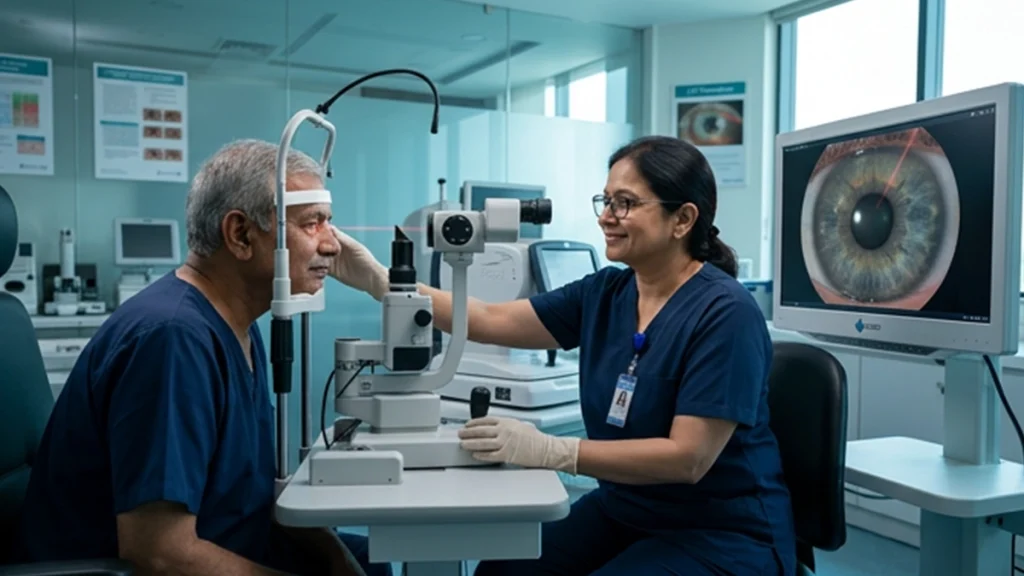
Glaucoma can develop when the eye’s fluid does not drain well and pressure increases. In people with narrow drainage angles ophthalmologists may recommend YAG laser iridotomy which improves fluid flow and which is a step to reduce the risk of angle closure glaucoma. During the procedure the YAG laser makes a small opening in the iris which is the colored part of the eye.
A YAG peripheral iridotomy is also performed as an outpatient procedure which does not require an incision. Though the treatment is but a short while, patients should be made to understand the what of the treatment, why it is recommended, what goes on during the procedure, and what to expect post procedure.
What Is YAG Laser Peripheral Iridotomy?
YAG laser iridotomy is a medical process of the eye which uses laser energy to make a small hole in the peripheral iris. The opening this process creates gives an alternate passage for aqueous fluid as it leaves the eye. It also helps out with pressure related blockages and which in turn improves access to the eye’s natural drainage angle.
Patients at times put forth questions regarding YAG PI full form. In this case YAG PI is YAG peripheral iridotomy. YAG is a yttrium aluminium garnet which is the laser used in the procedure.
The National Eye Institute reports that in angle-closure glaucoma the iris is the cause of fluid drainage blockage at the front of the eye. This results in a quick rise in eye pressure which requires immediate treatment at the onset of an acute attack.
Why Is YAG PI Recommended?
An ophthalmologist may consider YAG PI if an examination finds narrow or closed drainage angles, or if the risk of angle closure is significant. Peripheral iridotomy is intended to lower the likelihood of a dangerous increase in pressure and protect the optic nerve.
A laser peripheral iridotomy is also a part of the treatment after an angle closure event. Also it is true that not all patients with narrow angles require YAG surgery. What is done depends on the eye structure, pressure readings, glaucoma signs, symptoms, and individual risk factors.
| Situation | Why the Procedure May Be Considered |
| Narrow drainage angles | Helps create an alternative pathway for fluid |
| Angle-closure glaucoma | Helps relieve the mechanism contributing to blocked drainage |
| High risk of acute angle closure | May reduce the risk of a sudden pressure rise |
| Previous angle-closure episode | May help prevent another episode when clinically appropriate |
What Happens During the YAG PI Laser Procedure?
Before undergoing YAG PI laser treatment the eye care team does an eye exam which also includes assessment of intraocular pressure. Eye drops are used to prepare the eye, reduce pressure, and numb the surface.
During the YAG procedure the patient will present themselves at a laser station that is similar to the slit lamp which is used for day to day eye exams. After the eye has been anesthetized the doctor will put in a specialty lens which allows them to direct the YAG energy right at the iris.
The doctor performs tuned laser bursts which in turn produce the eye PI opening. Patients report seeing bright flashes or hearing clicks during YAG PI and also some which report a brief flicker sensation. The procedure which also is usually finished in the space of a short out patient visit.
After laser iridotomy, the medical team may check eye pressure again because a temporary pressure rise can occur.
Recovery After YAG Peripheral Iridotomy
Recovery from YAG peripheral iridotomy is usually quick. Vision may be mildly blurry for a few hours and the eye may feel a little strange or gritty. These effects tend to go away as the eye heals.
Doctors may prescribe anti-inflammatory eye drops following YAG iridotomy. Patients who already use glaucoma medication should not stop or change it unless their ophthalmologist specifically advises them to do so.
Follow up is a key element post YAG treatment. The ophthalmologist will check the peripheral iridotomy, measure intraocular pressure, and confirm that the opening is adequate.
| After YAG Treatment | What a Patient May Experience |
| First few hours | Temporary blurred or hazy vision |
| Early recovery | Mild redness, irritation or discomfort |
| Medication period | Prescribed anti-inflammatory or pressure-control drops |
| Follow-up | Eye pressure and laser peripheral iridotomy opening checked |
What Are the Possible Risks of YAG Laser Iridotomy?
YAG laser iridotomy is a common procedure, at the same time no medical intervention is without its risks. We see that in some cases there is a rise in intraocular pressure and inflammation post YAG PI laser use. Also reported is minor iris bleeding.
Some patients report glare, lines, or other light related visual symptoms after laser peripheral iridotomy. Also at times the opening may be incomplete or become inadequate which in turn may require repeat YAG treatment.
Persistent eye pain, increasing redness, or a drop in vision which is a note of something serious after YAG iridotomy should be reported to your doctor. We ask that you see an ophthalmologist right away if you notice any of these symptoms.
Conclusion
YAG laser iridotomy may help treat or prevent angle-closure glaucoma in carefully selected patients. The procedure makes a very small opening in the iris, giving fluid another path to move through and lowering the risk of a dangerous increase in eye pressure.
The need for YAG PI should rather be determined by a full eye exam. If we see narrow angles, high eye pressure, or angle-closure glaucoma we do at ASG Eye Care we assess the condition out and put together the best treatment and follow up plan.
Frequently Asked Questions
1. Is YAG peripheral iridotomy painful?
Most patients do well with YAG peripheral iridotomy which we give beforehand with numbing eye drops. Some report brief discomfort or a flick of a wave during the procedure.
2. What is the YAG PI full form?
The YAG PI full form in this setting refers to YAG peripheral iridotomy. It is a laser based peripheral iridotomy which we use for selected patients with narrow or closed drainage angles.
3. How long does recovery take after YAG PI?
Many patients get back to their normal activities within a short time after YAG PI, though some may experience temporary blurred vision or mild irritation. Recovery instructions will vary by patient.
4. Can YAG laser treatment cure glaucoma?
YAG treatment is a solution for some cases of angle closure in right patients, but it does not reverse vision loss from glaucoma. Some patients may still require glaucoma medication, monitoring or further treatment.
5. Is laser iridotomy needed in both eyes?
Sometimes in certain cases we may suggest a laser iridotomy on both eyes which has in fact developed very narrow angles in each. The ophthalmologist will examine each eye separately before determining what is the best course of action.