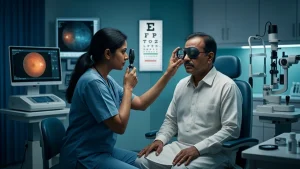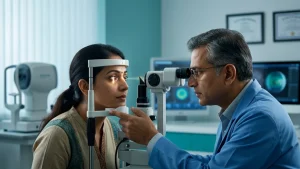
Air pollution is a topic that we think of in terms of the lungs, heart, and respiratory system. But also your eyes are affected by bad air every time you go out. Unlike many internal organs which are protected from the environment, the surface of the eye is an open exposure. Dust, smoke from vehicles, and very small particles in the air thus affect your eyes all day.
In urban settings which include busy cities, industrial areas and places with heavy traffic the issue of Air Pollution and Eye health is very much an issue. Pollution may cause burning, itchy, watery, red, or a sand in the eye sensation. Also we see that in some people who have Dry Eyes or Eye Allergy issues their symptoms tend to do worse on days when the air quality drops.
Government health reports in India also report redness and Eye Irritation as some of the short term health issues related to air pollution. By being aware of these issues you can take steps to protect your eyes and know when to see an Eye Doctor.
How Does Air Pollution Reach and Affect Your Eyes?
The front of your eyes is left exposed when they are open. A thin layer of tears covers this area and also helps keep the eyes comfortable, smooth and protected. Polluted air may interact with this protective layer.
When it comes to Air Pollution and Eyes, particulate matter is a special case. PM2.5 and PM10 are very fine air borne particles. Also we see nitrogen dioxide, sulphur dioxide, ozone, smoke, road dust, and chemical emissions from various sources.
India’s Central Pollution Control Board reports on pollutants like PM2.5 and PM10 as part of the national air quality management. Also the Government of India uses the Air Quality Index to report on air quality and related health issues.
When pollutants get to the ocular surface they may disrupt the tear film and cause inflammation. This may produce symptoms of Eye Irritation which include redness, watering, or discomfort. Also people which live with Dry Eyes or Eye Allergy may see an increase in symptoms.
Common Air Pollutants and Their Possible Effects on the Eyes
Different pollutants may present in the eye in varied ways. Also it is the exposure dose, time of exposure, weather, humidity, and the person’s sensitivity which play a role in what symptoms present.
| Pollutant or Exposure | Possible Effect on the Eyes |
| PM2.5 and PM10 | May contribute to irritation, inflammation, and tear-film disturbance |
| Road and construction dust | May cause gritty sensation, watering, redness, and Eye Irritation |
| Vehicle emissions | May irritate the exposed ocular surface |
| Smoke | Can trigger burning, watering, and discomfort |
| Ozone and gaseous pollutants | May contribute to ocular surface discomfort and tear-film changes |
| Allergens mixed with polluted air | May aggravate Eye Allergy symptoms |
Research reporting on Air Pollution and Eyes health notes that there is a connection between pollution exposure and what we see in the eyes. A meta analysis reports associations with conditions like dry eye disease, conjunctivitis, blepharitis, and allergic conjunctivitis.
Why Does Pollution Cause Eye Irritation?
Eye Irritation is a very present issue which people report to have during high pollution episodes. Pollutants may come to rest on or react with the tear film and the ocular surface. This exposure in turn triggers an inflammatory response.
You will notice redness, stinging, burning, tearing, itching or the sensation of having something in your eye. Eye Irritation may increase after being in traffic or which is near to construction dust and smoke.
The relationship between air pollution and eye health is a very personal one. Some people do fine, while others see symptoms after a short exposure. Contact lens wearers and people with pre-existing eye surface issues may need to take extra precautions.
If Eye Irritation continues after you leave polluted areas, an Eye Doctor can determine if pollution is the cause or if there is another eye issue which requires treatment.
Can Air Pollution Make Dry Eyes Worse?
Dry Eyes is a condition in which the eye does not produce sufficient tears and also when the tear film functions improperly. Pollution may present an extra layer of stress for very sensitive eye surfaces.
Studies into Air Pollution and Eyes report that which we put in our air has an effect on tear film stability and the ocular surface. A multi centre study reported associations between many pollutants and ocular discomfort, tear film instability, ocular injury, and changes in the meibomian glands.
For a person with Dry Eyes this may see more burning, grittiness, fluctuating vision, or discomfort after being out. Low humidity, air conditioning, long screen time, and reduced blinking may play a role. Repeat symptoms should not just be put down to pollution. Dry Eyes have many causes. An Eye Doctor can do a tear film and ocular surface exam to identify what may be the cause of your discomfort.
Air Pollution and Eye Allergy
People prone to Eye Allergy may notice that certain environments bring out their symptoms more. Pollution and airborne allergens go hand in hand especially during times of high dust, pollen, smoke, and traffic related pollution in the air. Common symptoms of an Eye Allergy are itchy eyes, redness, tearing, and eyes which are swollen or uncomfortable. While it may be very tempting, rubbing your eyes actually will make the irritation worse.
The relationship between Air Pollution and Eyes becomes particularly relevant when allergy symptoms repeatedly appear after outdoor exposure.Pollutant exposure is not a guarantee for each attack. But what we do see is a connection between polluted settings and allergic and inflammatory reactions of the eye.
Persistent Eye Allergy issues should be evaluated by a professional. An Eye Doctor is able to tell the difference between an allergy, an infection, dry eye disease or any other cause of redness.
Signs Your Eyes May Be Reacting to Pollution
Pollution related health issues present in a wide range of ways for each person. For some, mild symptoms go away once out of the polluted environment but in others it is a lasting issue.
| Symptom | What You May Notice |
| Eye Irritation | Burning, stinging, gritty sensation, or general discomfort |
| Redness | Blood vessels on the eye surface appear more visible |
| Watering | Eyes produce excess tears in response to irritation |
| Dry Eyes | Dryness, burning, heaviness, or fluctuating comfort |
| Eye Allergy | Itching, watering, redness, or swelling |
| Visual discomfort | Temporary blur or difficulty keeping the eyes comfortable |
These symptoms are a sign but not a sure proof of pollution as the cause. Infection, allergy, contact lens issues, excessive screen time, and other eye health issues may present with the same signs.
How to Protect Your Eyes from Everyday Pollution
Reduce to a minimum what you are exposed for which is a result of pollution that regularly brings out symptoms of discomfort in you. Before you head out for long periods of time, check the local air quality report. This is very useful on days which see poor air quality or heavy smog.
Protective eyewear and sunglasses may reduce your exposure to dust and wind. They don’t fully screen out fine particles but do provide a physical barrier for larger ones.
Avoid the urge to rub which may worsen eye irritation. Also note that rubbing can put dirt into your eyes from your hands. Before touching your face or handling contact lenses, wash your hands.
People who have dry eyes should also note on their screen time. Do regular blinking exercises, take breaks from the screen when you can, and stay away from direct air flow from fans or air conditioners which may ease discomfort. Also if you are using artificial tears for your eyes, get them from your Eye Doctor advice, in particular when you are having symptoms very often.
People with Eye Allergy should stay away from use of random medicated eye drops without medical guidance. Some eye drops are not to be used for long term self treatment.
These may not do away with the issue of Air Pollution and Eyes but they can decrease your exposure to it and also support in day to day eye care.
Who May Need Extra Eye Protection?
Some people will have some different levels of reactions to pollution. In case of Dry Eyes, past Eye Allergy, sensitive ocular surfaces, or regular contact lens use you may see more of an issue.
People which report to be spending great time outside may see greater exposure. This includes commuters, traffic personnel, construction workers, delivery men, and people which work in industrial areas.
Children and seniors also get attention in cases of persistent symptoms. Instead of it being a given that all cases of Eye Irritation are from pollution, we should see to it that we do an exam when discomfort is a common issue. What we see in terms of the effect of Air Pollution and Eyes is a play of environmental exposure and also of individual factors. We do not have a single level of pollution which produces the same eye symptoms in every person.
When Should You Visit an Eye Doctor?
Mild Eye Irritation may improve after your return from a dusty or smoky environment. However, symptoms that persist, present very often or affect daily life require proper assessment.
Consult an Eye Doctor if you experience persistent redness, report light sensitivity, have discharge, swelling, dry eyes that are worse than before, or notice changes in your vision. Immediate medical care is needed for sudden or significant vision changes.
An Eye Doctor can determine what is causing your symptoms which may be related to pollution, Eye Allergy, dry eye disease, infection, corneal issues, or some other condition. Also early evaluation will help to avoid the use of unnecessary medication.
Conclusion
The issue of Air Pollution and Eyes is a topic that has been neglected which is a shame as every day we put our eyes right into the environment. Dust, smoke, particulate matter, vehicle emissions, and gaseous pollutants may affect the surface of the eye and cause discomfort.
Repetitive exposure may cause an increase in Eye Irritation, Dry Eyes, and Eye Allergy issues in which some people may see a worse reaction if they are prone to have sensitive eyes. Also from recent scientific research we see that there is a connection between particulate pollution and ocular surface dysfunction.
Basic precautions may limit exposure, but symptoms that persist should be assessed by a professional. Ongoing redness, irritation, dryness, allergy symptoms, or visual discomfort warrant a consultation with an Eye Doctor at ASG Eye Hospital, who can help determine the cause and recommend suitable treatment.
Frequently Asked Questions
1. Can air pollution really damage the eyes?
Yes, pollution does affect the eyes. From research on Air Pollution and Eyes we see that exposure to pollutants is associated with inflammation, tear film changes, dry eye disease, conjunctivitis, and allergic eye conditions.
2. What are common symptoms of pollution affecting the eyes?
Common signs include redness, wateriness, burning, itching, a sensation of grit in the eye and Eye Irritation. Also some may report a worsening of Dry Eyes or Eye Allergy symptoms.
3. Can pollution cause Dry Eyes?
Pollution is a factor which may cause or contribute to Dry Eyes by playing a role in the tear film and eye surface. But there are many causes of dry eye disease. An eye exam is the way to go for identification of these causes.
4. Does air pollution make Eye Allergy worse?
Pollution may cause Eye Allergy in those with sensitive eyes. Air borne particles and environment allergens can bring on itchy, red, teary and inflamed eyes.
5. Should I wash my eyes after travelling through heavy pollution?
Keeping your face and eyes clean may also help in the removal of dust. Do not rub or splash the affected eyes repeatedly. If signs persist, see an Eye Doctor for proper care.
6. Can sunglasses protect my eyes from pollution?
Sunglasses which may not be the best option for it, do offer some defense against wind and large dust particles. We should also note that they do not fully protect against fine airborne pollutants.
Reference Links
National Centre for Disease Control, Ministry of Health & Family Welfare – Air Pollution and Its Impact on Health
NCDC Air Pollution Health Resources
Government of India – Handbook for ASHA: Air Pollution and Its Impact on Health
NCDC/MoHFW Air Pollution Handbook