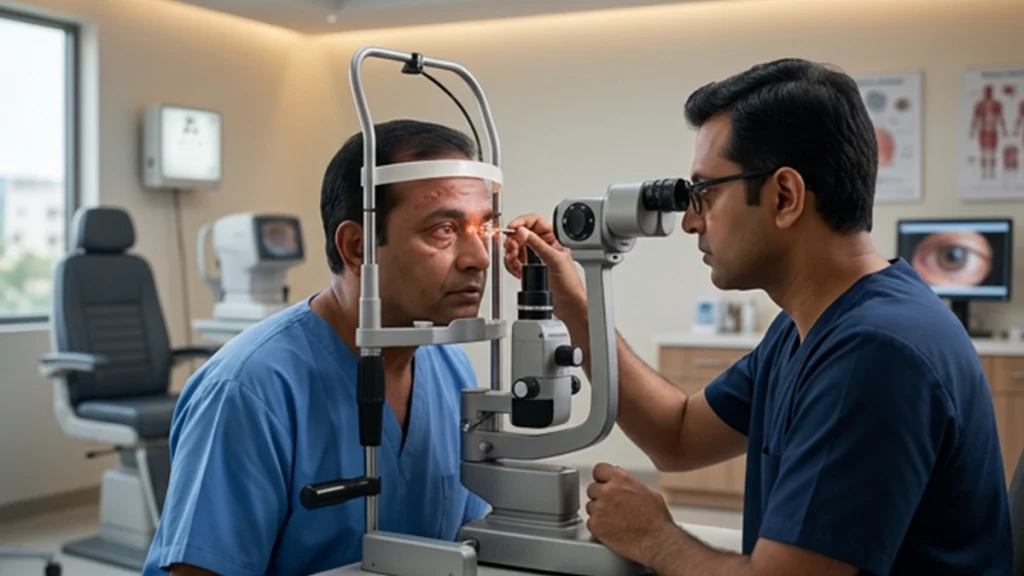
Stress is a factor which goes beyond your mood and sleep. It also plays into how your eyes feel and into your vision. We see many reports of Stress and Blurred Vision during stressful work weeks, emotional times, poor sleep, or extended screen use. Though symptoms may fade once you return to a calm state, persistent changes in vision should be brought to a medical professional’s attention.
Understanding the link between Stress and Blurred Vision is the first step in early response. Stress may bring on temporary visual issues but also blurred vision may be a sign of an underlying eye issue. To protect your Eye Health know when to take a break from stressors and when to see an eye specialist.
Can Stress Really Cause Blurred Vision?
Yes, stress is a factor in some cases of Stress and Blurred Vision. In times of stress the body produces hormones like adrenaline and cortisol. These hormones get the body ready for action. Also they may play a role in focus, pupil size, muscle tension and visual comfort.
Stress may also cause Eye Stress which in turn is made worse by long computer use and poor sleep quality. You may have trouble with concentration of the eye on what is right in front of you at the same time that you try to look at something in the distance. While these are only temporary issues they may present as Vision Problems also when in fact the eye structure is still healthy.
Research has also looked at what psychological stress does to the visual system and eye pressure. But do not assume that Stress and Blurred Vision are a result of anxiety. An eye exam can report refractive errors and other conditions.
Common Signs of Stress-Related Visual Discomfort
People experiencing Stress and Blurred Vision may notice several changes at the same time. Blurring may appear during intense work, emotional strain, prolonged reading, or continuous computer use.
| Symptom | What You May Notice |
| Blurred vision | Difficulty seeing clearly at near or distance |
| Eye Stress | Heavy, tired, or uncomfortable eyes |
| Headache | Pain around the forehead, temples, or eyes |
| Focusing difficulty | Trouble changing focus between objects |
| Dryness | Burning, irritation, or gritty sensation |
| Light sensitivity | Increased discomfort in bright surroundings |
These symptoms do not in all cases result from stress. Also we see that similar Vision Problems may present with dry eye, uncorrected prescription, migraine, or other eye conditions. It is important for Eye Health to pay attention when symptoms recur.
Why Stress May Affect Your Eyes
Stress and Blurred Vision often results from increased muscle tension. We see that stress causes the muscles in your face, neck, and around the eyes to tighten. This tension in turn increases visual discomfort and eye stress.
Modern day living is to blame for this. We see that people under stress are more into their phones and computers. Also they may not be blinking as much and taking enough breaks. This in turn causes dryness and results in Vision Problems. The Indian government’s clinical guidance on computer vision syndrome also reports that reduced blinking during computer use plays a role in affecting the tear film which in turn contributes to dry eye symptoms.
Poor sleep also contributes to Stress and Blurred Vision. For best results eyes should be given proper rest to perform well in day to day activities. Sleep deficiency increases dryness, heaviness, and Eye Stress which in turn makes present Vision Problems more prominent.
Stress-Related Blurring vs Other Eye Problems
Not every episode of blurred vision results from stress. Understanding a few differences can help you decide when an examination may be necessary.
| Situation | Typical Pattern |
| Stress and Blurred Vision | May appear during stressful periods and improve with rest |
| Eye Stress from screens | Often develops after prolonged digital device use |
| Refractive error | Blurring may remain consistent until vision is corrected |
| Dry eye | Vision may fluctuate with burning, irritation, or dryness |
| Other Vision Problems | Symptoms may persist, worsen, or involve other warning signs |
India’s National Program for Control of Blindness and Visual Impairment puts in place a broad spectrum of eye care services for issues like refractive errors, glaucoma, diabetic retinopathy, cataract, childhood blindness, and cornea diseases. This is to say that unexplained Stress and Blurred Vision may not be self diagnosed which may have other causes.
How Can You Reduce Eye Stress?
Managing stress and improving daily visual practices may reduce that which is intermittent in Stress and Blurred Vision. Take breaks for your eyes during screen work. Consciously blink and avoid that which is to look at your phone or computer at one thing for too long. Good sleep also supports Eye Health. Try to maintain regular sleep routines and adequate hydration. Keep your screen at a which is easy on the eyes and use appropriate lighting.
If you are a contact lens wearer it is also possible that an out of date prescription is causing Eye Stress which in turn may cause Vision Problems. We recommend regular eye exams which will identify changes in prescription as well as other issues related to Eye Health.
Stress management practices also improve over all health. Things like deep breathing, exercise, getting enough rest, and which may help with Stress and Blurred Vision when stress is a factor in those symptoms.
When Should You See an Eye Doctor?
Occasional episodes of stress and blurred vision which improve with rest may not always point to a serious issue. But persistent or recurrent blurring does call for an eye exam. See a doctor right away if Vision Problems come on suddenly or worsen. Also seek care if blurred vision is associated with eye pain, flashes of light, new floaters, double vision, very red eyes, or sudden loss of sight.
An ophthalmologist is able to tell what causes Stress and Blurred Vision which may be from Eye Stress, refractive changes, dry eye, or some other condition. Early assessment will protect long term Eye Health and prevent preventable complications.
Conclusion
The fact that there is a relationship between Stress and Blurred Vision which some people report is a thing, especially when emotional stress is combined with fatigue, poor sleep, and extended screen time. Also stress should not be the go to reason for any vision change.
Taking time out, getting quality sleep, reducing Eye Stress, and improving your overall screen time health will support better Eye Health. Also do not ignore persistent Vision Problems. If you notice that your vision is blurry which also returns or it has become severely acute all of a sudden, come in for an eye exam at ASG Eye Care to determine the cause and protect your sight.
Frequently Asked Questions
1. Can anxiety cause temporary blurred vision?
Anxiety and stress may play a role in the development of Stress and Blurred Vision in some people. We see that there is a change in focusing, muscle tension, and visual attention which in turn may cause temporary blur. For persistent symptoms an eye exam is recommended.
2. Can screen time make stress-related blurry vision worse?
Yes. Long term continuous screen use may cause Eye Stress, dry eyes, and focus issues. These issues in turn may bring out Stress and Blurred Vision more in some people which is seen to be an issue during very demanding work weeks.
3. Does sleeping properly improve blurred vision caused by stress?
Adequate sleep reduces fatigue and improves Eye Health. Also it may lower dryness and visual discomfort. But if you have Recurring Vision Problems do not rely on rest alone.
4. How do I know whether my blurry vision is from stress or an eye condition?
You can’t always tell the cause from symptoms alone. Stress and Blurred Vision may be the same as refractive errors, dry eye, or other conditions. A full eye exam is the better option for an answer.
5. Should I visit an ophthalmologist for stress-related blurred vision?
Yes in fact when symptoms are persistent, recurrent or get worse. An ophthalmologist may do an Eye Stress evaluation, rule out base Vision Problems and put you in touch with the best care for your Eye Health.
Reference
National Programme for Control of Blindness & Visual Impairment (NPCBVI) – Directorate General of Health Services, Government of India
NPCBVI – Ophthalmology Division
Standard Treatment Guidelines for Computer Vision Syndrome – Ministry of Health & Family Welfare, Government of India
Standard Treatment Guidelines – Computer Vision Syndrome