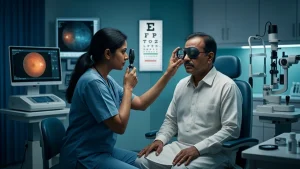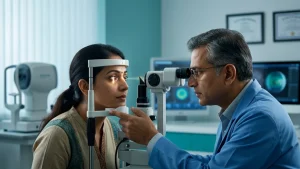
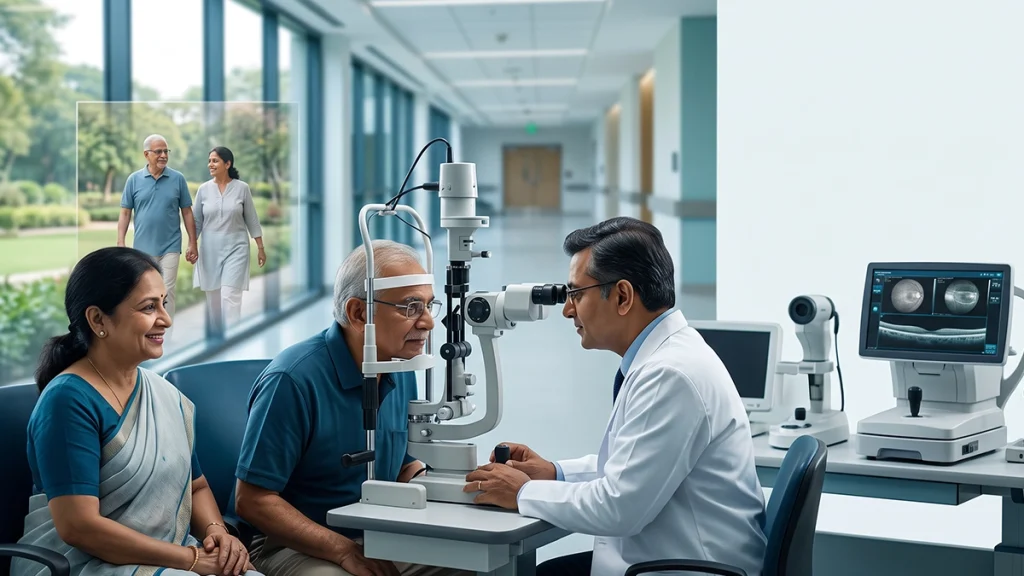
Upon turning 50 our health priorities shift. We pay more attention to our heart, joints, blood pressure, and blood sugar. Our eyes also should be a focus of that attention. Good Eye Care After 50 can help you maintain clear vision, independence, confidence, and quality of life as you age.
Age is not a factor for poor eyesight. That said we see natural changes in the eyes which present as difficulty in reading, at night time driving, or in adjusting to variable light. Also what we see is an increase in the risk of conditions like Cataract and Glaucoma as we age. Some eye diseases present very subtly which may in turn delay diagnosis.
Good news is that we are able to detect many vision issues at an early stage. We support Healthy Aging Eyes for years through regular exams, a healthy lifestyle, and timely treatment. Also a trusted Eye Doctor will see changes which may not yet be affecting your daily vision.
Why Does Vision Change After 50?
Throughout life, the structures in our eyes change. Post 40 the natural lens becomes atrophy which in turn results in reduced flexibility. This causes a very common issue we know as presbyopia. Many at this stage of life report that they have to hold books and phones at arm’s length for comfortable reading.
Other changes that may appear around 50. You may notice that you require more brightness for reading or have trouble adjusting when going from bright sunlight into the dark. Colors may also appear to be less vivid. Night time driving also becomes an issue because of high beam glare.
These issues which are brought up make Eye Care After 50 a more critical issue. Some of these changes are expected, but others may indicate a medical eye issue that may need intervention. A full eye exam is what your Eye Doctor uses to determine what is what.
The National Institute on Aging reports that as we age the risk of some eye diseases increases. Also they recommend regular eye exams which is a good idea since some of these conditions do not present early symptoms.
Common Eye Problems After 50
As we age some health issues become more common. In Eye Care After 50. we look at them.
| Eye Condition | What You May Notice | Why Early Detection Matters |
| Cataract | Cloudy or blurred vision, glare, faded colours, difficulty seeing at night | Treatment can restore clearer vision when the condition starts affecting daily activities |
| Glaucoma | Often no symptoms at first; gradual loss of peripheral vision may occur later | Early diagnosis can help prevent or slow permanent vision loss |
| Age-related macular degeneration | Distortion or difficulty with central vision | Early assessment can help protect useful vision |
| Dry eye | Burning, irritation, watering, gritty sensation | Proper diagnosis can identify the cause and guide treatment |
| Diabetic retinopathy | May cause no symptoms early; later changes can include blurred vision or floaters | Early detection and diabetes management can reduce the risk of serious vision loss |
This does not affect all people the same. That is why at Eye Care After 50 we tailor our care to your individual health, family history, medications, and lifestyle.
Cataract After 50: What Should You Know?
A Cataract is what forms when the usually clear lens within the eye becomes opaque. Age is a primary factor in this which the National Eye Institute reports on. They note that for the most part cataracts are a result of natural eye changes as we age.
A cataract may cause vision to appear cloudy, hazy, or less colorful. Bright light may cause glare. Also some people report that night driving becomes more difficult. Also in some cases we see frequent changes in spectacle prescription.
Having a Cataract doesn’t always require right away surgery. Your Eye Doctor will determine how it is affecting your vision and daily routine. In the early stages, updated glasses and better lighting may help. When the condition starts to interfere with day to day activities, your specialist may bring up cataract surgery.
Regular Eye Care After 50 at which in turn will help to track changes as opposed to waiting until your vision is greatly impaired.
Glaucoma Can Progress Without Warning
Glaucoma is a disease which requires special attention as some of its forms do not present early warning signs. It affects the optic nerve which is the pathway that transmits visual info from the eye to the brain.
The CDC reports that open-angle Glaucoma which is the most common form of the disease does not usually present early symptoms. Thus early detection plays a key role in preserving vision.
This is another reason to have comprehensive eye exams included in Eye Care After 50 which in turn should not be at the expense of basic vision tests. We may see that a person sees well or doesn’t from a look at an eye chart, but this does not present the full report card on the health of the eye.
Your Eye Doctor may perform a number of tests which include evaluation of the optic nerve, measurement of eye pressure, study of the drainage angle, or use of visual field and imaging tests as is needed. If Glaucoma is diagnosed treatment may consist of medications, laser procedures, surgery, or a mix of these based on the patient’s condition.
Regular Eye Exams Matter Even When Your Vision Feels Fine
Many people only go to the eye clinic once their glasses are no longer in perfect condition. After age 50 that’s not a good practice.
In the field of Eye Care After 50 we focus on prevention in addition to correction. A full dilated eye exam which is performed by an Eye Doctor will check the internal structures of the eye and also to identify the early signs of disease.
The National Institute of Health reports that at age 50 it is recommended for people to have routine dilated eye exams which may vary according to risk and health history.
People which have diabetes, high blood pressure, a family history of Glaucoma, past eye issues, or other risk factors may require more frequent monitoring. Your Eye Doctor will be able to put together an appropriate schedule.
Everyday Habits for Healthy Aging Eyes
Protecting Healthy Aging Eyes is a full time job which goes beyond getting regular check ups. What you do daily plays a role in the health of your eyes over time. Include a variety of foods in your diet which include lots of veggies, fruits, whole grains, nuts and what is appropriate for you of the omega 3 fatty acids. Also pay attention to that which is out of balance in your body like diabetes, cholesterol, and blood pressure as these also play a role in the health of your eyes.
UV protection is key. We see that sunglasses which block out ultraviolet rays are great at reducing your exposure to it. Also give up smoking which plays a role in many eye diseases.
Digital devices have become a part of our daily routine at all ages. We see an increase in temporary dryness and eye strain from long screen sessions. To help with this, take a break from time to time, blink often, and position the screen in a comfortable place.
These may not promise that you will totally avoid Cataract or Glaucoma. But we do present them as a practical base for Eye Care After 50 which in turn supports Healthy Aging Eyes.
How General Health Affects Your Eyes After 50
Eye health is tied to general health. Diabetes which in turn can cause damage to retinal blood vessels is a factor. Also high blood pressure may affect blood vessels within the eye. Some drugs may also play a role in vision or in raising eye pressure.
For this issue we recommend that Eye Care After 50 include a discussion of your health history. Tell your Eye Doctor of any diagnosed conditions, medications you are on, past surgeries, and also any in your family of serious eye disease.
Regular health check ins also play a role in Healthy Aging Eyes which in turn sees chronic conditions managed better and their impact on vision reduced.
Changes You Should Not Ignore
Not every vision change is simply part of aging. Sudden symptoms require prompt attention.
| Vision Change | What You Should Do |
| Sudden loss or major reduction of vision | Seek urgent eye care |
| New flashes of light or many new floaters | Arrange an urgent eye examination |
| Severe eye pain with redness | Seek prompt medical assessment |
| New double vision | Contact an eye care professional |
| Gradually worsening cloudy vision | Schedule an examination for possible Cataract or another cause |
| Loss of side vision | Ask your Eye Doctor about conditions including Glaucoma |
The National Institute on Aging reports that for sudden vision loss, many new floaters, flashes, eye pain, double vision, or large amounts of redness and swelling seek medical care right away. Identifying these warning signs is key to Eye Care After 50.
Protecting Vision for an Active Life
Good eyesight does so much more than just read. It is for driving, for walking safely, for recognizing faces, for using digital devices, for cooking, for work, and for enjoying hobbies. In that way Healthy Aging Eyes play a role in independence. Also poor vision may increase the issue of moving around in unfamiliar spaces.
Your approach to Eye Care After 50 will change as your health does. Diabetics will require a different range of services from those with a strong family history of Glaucoma. A person with early Cataract may need more frequent check ups than those whose eyes are still stable.
The aim is not to fear aging. The aim is to notice changes early and consult with your Eye Doctor for which in turn will inform your decisions.
Conclusion
Ageing affects our eyes in many ways, but we should not accept loss of useful vision without getting a proper evaluation. Eye Care After 50 and beyond you have the best chance to catch problems early and protect your sight.
Regular check ups, healthy lifestyle options, protective measures against UV rays, and good management of diabetes and blood pressure support Healthy Aging Eyes. As we age we see an increase in conditions like Cataract and Glaucoma but today’s diagnosis and treatment methods provide very good intervention for many age related eye issues.
If at age 50 you have not had a full eye exam recently we suggest you set up a consult at ASG Eye Hospital. Proactive Eye Care After 50 will help you to see the people, places and moments that matter to you.
Frequently Asked Questions
1. How often should I have an eye examination after 50?
The appropriate interval varies based on your eye health and risk factors. For Eye Care After 50 we recommend regular comprehensive exams. People with diabetes, high blood pressure, a history of eye disease, or a family past of Glaucoma may do well with more frequent exams.
2. Is blurred vision after 50 always caused by a Cataract?
No. A cataract is a possible cause, but also may present with blurred vision which in turn is a result of refractive changes, dry eye, retinal issues or other health issues. An ophthalmologist evaluation will determine the cause and if in fact treatment is necessary.
3. Can Glaucoma occur without symptoms?
Yes. Some types of Glaucoma progress without us noticing any symptoms in the early stages which is why we still see the value of routine exams. If the condition is caught before moderate vision loss sets in, your Eye Doctor has a better chance at managing it.
4. Can diet support Healthy Aging Eyes?
A healthy approach to eating supports Healthy Aging eyes as it does for your overall health. Include a wide range of veggies, fruits, whole foods and proper sources of healthy fats. Diet is in addition to and not a substitute for regular health checks and medical care.
5. Does everyone develop a Cataract with age?
Age related changes cause Cataract to become more common, but the age at which it appears and the rate of progression is variable. Smoking, diabetes, UV exposure, certain medications, past eye injury, and other factors play a role in risk.
6. What is the most important step for Eye Care After 50?
Regular at which one should get is that for Eye Care After 50 annual exams are very valuable. They are able to catch issues before you see large scale symptoms. Also important is to maintain your health in general, to not smoke, to protect your eyes from UV rays, and to follow the advice of your Eye Doctor.
Reference Links
Government / Authoritative Reference:
National Eye Institute (NIH), Taking Care of Your Vision After 50: View the official NEI resource
https://www.nei.nih.gov/about/education-and-outreach/outreach-materials/taking-care-your-vision-after-50?utm_source=chatgpt.com
Additional Government Reference:
National Institute on Aging (NIH), Aging and Your Eyes: Read the official NIA guidance
https://www.nia.nih.gov/health/vision-and-vision-loss/aging-and-your-eyes?utm_source=chatgpt.com