Eyesight changes often very gradually which is why it is easy to dismiss early warning signs. You may put it down to tiredness, extended screen use, the aging process, or an out of date prescription. Also some Early Signs of Vision Loss may present themselves as changes in the retina, optic nerve, lens or other internal structures of the eye. By recognizing them early you may be able to get in for care at the right time.
Not all changes are a sign of serious disease. That said we do pay attention to persistent Vision Loss Symptoms, repeated Blurred Vision, or other Eye Disease Signs. An eye exam is a good way to tell a simple focusing issue from a which requires treatment.
Why Early Vision Changes Matter
Some eye diseases progress without much warning. Glaucoma, for instance, may harm the optic nerve before noticeable changes in vision appear. According to the CDC, many people with glaucoma are unaware that they have it. That is why recognizing the Early Signs of Vision Loss matters, even when your eyes feel fine.. Read the CDC information on common eye disorders.
The National Eye Institute reports that which may apply to activities like reading and driving. We must assess rather than ignore Persistent Vision Loss Symptoms, Blurred Vision, or Eye Disease Signs.
1. Persistent Blurring or Hazy Vision
One out of the early signs of Vision Loss which you may notice is that which of the time becomes blurry. You may have trouble with reading small print, recognizing faces, or seeing road signs. If the issue persists after rest or use of your usual glasses, arrange for an eye exam.
Blurred vision is also a sign of refractive errors, dry eye, cataract, retinal problems, or other health issues. It is of more importance when it comes on suddenly or does not improve over time.Also these Vision Loss Symptoms may be associated with other Eye Disease Signs.
2. Difficulty Seeing at Night
You may notice that after sunset it is more difficult to drive, and you struggle in dimly lit rooms, or having a hard time in the dark. These are Early Signs of Vision Loss, especially when these symptoms present themselves.
Poor quality vision is a feature of a number of eye health issues. When you notice these Vision Loss Symptoms report if the issue is more severe in one eye. Night time trouble may also present with Blurred Vision or reduced color intensity. These can also provide useful Eye Disease Signs during an examination.
3. A Sudden Increase in Floaters
Floaters in the eye can present as dots, threads, cobwebs, or little shadows that move into your field of vision. It’s normal to have some which come and go. But a sudden appearance of many more is a note of Early Signs of Vision Loss.
The National Eye Institute reports that a sudden appear or a dark curtain coming over your field of vision may be signs of retinal detachment. Read the National Eye Institute guidance on retinal detachment. These Vision Loss Symptoms while maybe at first present as only slight blurred vision require prompt evaluation.
4. Flashes of Light
Flashes can present as sparks, lightning streaks, or brief camera flashes at the edge of your vision. A new pattern may be an early signs of vision loss, also when new floaters appear at the same time.
Some retinas present with no pain at all. Flashes in combination with Blurred Vision, a shadow, or reduced side vision are important Eye Disease Signs. Do not wait several days for sudden symptoms to go away on their own.
5. A Curtain, Shadow, or Missing Area
A report of a dark curtain, shadow, or blank spot in your field of vision is one of the Early Signs of Vision Loss which requires urgent care. Retinal detachment is a cause of this type of visual change.
These Vision Loss Symptoms may present without pain. You should see your eye care professional at once if you experience a sudden loss of part of your visual field.
| Visual Change | What You May Notice | Recommended Action |
| Persistent blur | Text or faces look less sharp | Arrange an eye examination |
| New floaters with flashes | Spots or light streaks appear suddenly | Seek prompt assessment |
| Curtain or shadow | Part of your view looks blocked | Seek urgent eye care |
| Poor night vision | Dim areas become difficult | Discuss it during an eye examination |
| Distorted vision | Straight lines look bent | Arrange a timely assessment |
6. Loss of Side Vision
Peripheral vision also allows you to see people, vehicles, and objects without having to turn your head. It may narrow without you being aware. You may hit furniture or miss things at the edges. This is one of the Early Signs of Vision Loss.
Glaucoma causes loss of peripheral vision as the optic nerve deteriorates. In some cases there are no clear Eye Disease Signs at first. Regular eye exams are the way to go in identifying changes which may not be noticed in day to day life.
7. Straight Lines Looking Wavy
Doors, windows frames, tiles, or printed materials should be straight. When they start to appear wavy or bent the change may represent early signs of Vision Loss which affects central vision.
Age related macular degeneration can present with blurred or distorted central vision. Also reported is the appearance of straight lines as wavy. Any new change in one eye should be evaluated which may present when reading or recognizing faces becomes difficult.
8. Trouble Reading or Recognising Faces
Vision issues don’t always present a grand issue. Reading fine print, identifying a person from a distance, or seeing details on a phone may gradually deteriorate. These are also Early Signs of Vision Loss. When brighter lights don’t improve the issue, see an eye care professional. Central vision changes, issues with contrast, focusing, or lens related problems may impact daily activities.
9. New Double Vision
Double vision is a condition which presents as two of the same image from a single object. It may present in one eye only or may only appear when both eyes are open. Also a new onset of double vision is one of the early signs of vision loss which requires a medical evaluation. Causes of double vision are various. Sudden onset of double vision with weak muscles, severe headache, facial droop or any other neurological signs requires prompt medical attention.
10. Colours Looking Faded or Contrast Becoming Poor
White items may appear drab, colors may seem faded, or objects may disappear into their background. These are some of the early signs of vision loss which also includes when color perception is different in each eye.
Reduced contrast which may also include trouble with discerning between shades that were once easily told apart can make stairs, reading, and night time driving more difficult. Persistent changes should be brought to a doctor’s attention as they may indicate a problem with the lens, retina, optic nerve, or other internal structures of the eye.
| Vision Pattern | Possible Effect on Daily Life | Why an Eye Check Helps |
| Central distortion | Reading and face recognition become harder | The macula and retina can be assessed |
| Narrow side vision | Objects are missed at the edges | Visual fields can be tested |
| Poor contrast | Dim areas and stairs become difficult | Several conditions can affect contrast |
| Colour changes | Colours appear dull or unequal | The retina, lens, or optic nerve may need review |
| Double vision | Reading or driving becomes difficult | Eye alignment and other causes can be assessed |
When Should You Seek Urgent Eye Care?
Some Early Signs of Vision Loss require quicker response. Sudden sight loss, a curtain or shadow, many new floaters, repeated flashes, severe eye pain, or sudden double vision require prompt medical care.
The National Eye Institute reports that if you have retinal detachment warning signs you should seek care right away. Also they recommend going to the emergency for acute angle closure glaucoma which may present with very bad pain in the eye, redness, nausea, and blur. For more gradual changes get a full exam. If you have Persistent Vision Loss Symptoms, ongoing Blurred Vision, or notice new Eye Disease signs which aren’t improving or which have your current glasses at a loss for what to do, get it looked at.
How an Eye Examination Can Help
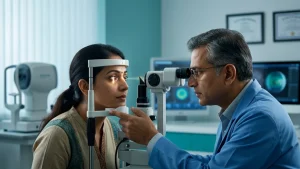
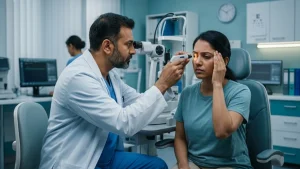
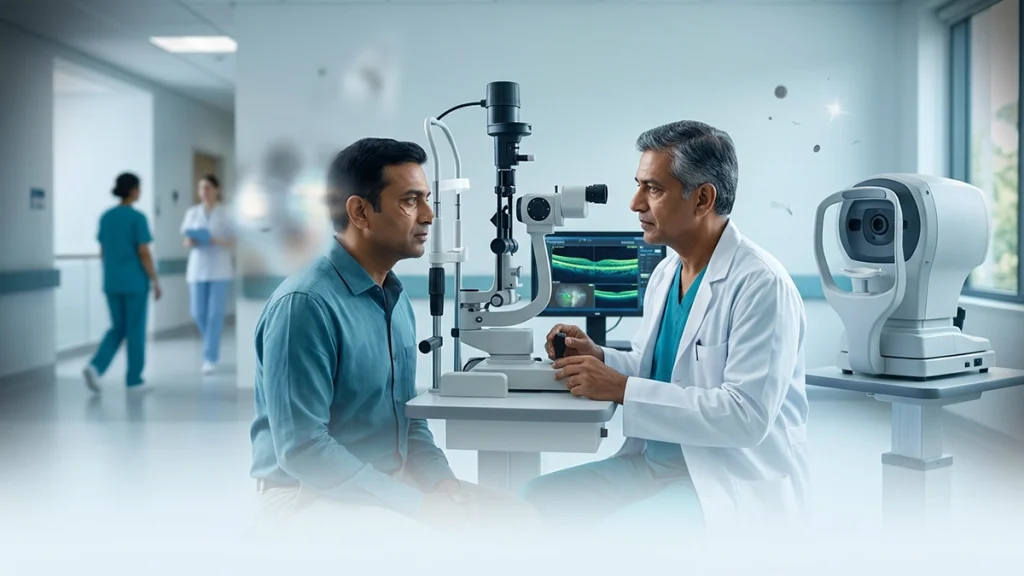
In fact an eye exam goes beyond checking for spectacle power. What we do is determine visual acuity, eye pressure, retina, optic nerve, eye movement, and visual fields based on what you are presenting.
The same early signs of vision loss may present in many different causes. Also similar vision loss symptoms which in one person may be from a refractive error and in another from retinal disease. Blurred vision alone is not enough to determine the cause. Other Eye Disease Signs may go unnoticed until a detailed exam is done.
Conclusion
The Early Signs of Vision Loss may not be dramatic. We see small changes in clarity, night vision, side vision, color, contrast, or image shape. By paying attention to the Early Signs of Vision Loss you may be able to recognize when a routine vision change requires professional assessment.
Do not delay until your sight has deteriorated greatly before getting help. Timely evaluation of Vision Loss Symptoms, persistent Blurred Vision, and also other Eye Disease Signs is key to determine the cause and for proper care. Should you have a sudden or large scale vision change, see a doctor at once.
Frequently Asked Questions
1. What are the most common early warning signs of vision loss?
Common Early Signs of Vision Loss include persistent blur, poor night vision, sudden floaters and flashes, reduced side vision, distorted lines, color changes, and difficulty reading. As the causes may differ, an eye exam is important.
2. Can vision loss start without pain?
Yes. Some eye issues may present with no pain at all. Painless Vision Loss Symptoms are still important to note as glaucoma and some retinal conditions may develop very gradually before any obvious change is seen.
3. Is blurred vision always a sign of serious eye disease?
No. Blurred vision can be a result of refractive errors, dry eyes, fatigue or other correctable causes. But sudden, persistent or worsening blur should be evaluated by an eye care professional.
4. Which eye disease signs need urgent attention?
Sudden vision loss, a curtain-like shadow, many new floaters, repeated flashes, severe eye pain, or sudden double vision can be urgent Eye Disease Signs. Seek prompt medical assessment rather than waiting for a routine visit.
5. Can regular eye exams detect problems before symptoms appear?
Yes. Some early signs of vision loss may go unnoticed in day to day life. An exam may identify changes in eye pressure, the optic nerve, retina, or lens which may not yet be affecting your everyday vision.
6. Should I get an eye test if only one eye seems affected?
Yes. One eye can fill in for the other in which case the issue may go by unnoticed. As for what is an early sign of vision loss, it may present as unequal clarity, color, distortion, or side vision which should be brought to the attention of a health care professional.