Good health of the eyes requires a wide range of nutrients which also puts in note that Vitamin E for Eye Health is a key player as it plays a role in protecting cell membranes from oxidative damage. The eyes are exposed to light and also use great amounts of oxygen which is why a varied diet in terms of Eye Antioxidants plays a role in the long term Vision Protection. It is important to note that Vitamin E is not a cure for eye disease and also that a high dose supplement does not take the place of a balanced diet.
Comprehending the Vitamin E Benefits begins with what the nutrient does. Vitamin E is a group of fat soluble compounds, out of which alpha-tocopherol is the form that meets human requirements. It plays a role in limiting the reactions of reactive oxygen species which occur when fats oxidize. This role is what puts Vitamin E for Eye Health in the discussion with Eye Nutrition for Eye Health although clinical results may vary based on the person, condition and full picture of nutrient play.
What Is Vitamin E and Why Do the Eyes Need It?
The retina which is the light sensitive tissue at the back of the eye has within it cells which require stability in order to function properly. As a fat soluble vitamin, Vitamin E is found in cell membranes which it does put to use in its anti-oxidant role which in turn protects lipids from oxidation. This plays a role in the connection between Vitamin E for Eye Health in terms of Retina Health, which we see in practice but does not guarantee that high doses will improve all people’s eyesight.
Vitamin E also plays a role in the immune system and in cells signally. In terms of what people do daily, the best Vitamin E Benefits come from including in your diet nuts, seeds, vegetable oils and leafy vegetables. Also by including these foods in your diet you will be providing your body with healthy fats, minerals, carotenoids and what some may term as Eye Antioxidants which in total will improve overall Eye Nutrition.
How Vitamin E May Support Healthy Vision
A major role of Vitamin E for Eye Health is to support the body’s defense against oxidative stress. Free radicals are produced during normal metabolism and by environmental exposures. Eye Antioxidants don’t put up an invisible barrier around the eyes, what they do is support healthy tissue and play a role in overall metabolic health.
Another area we look at is Retina Health which includes Age Related Macular Degeneration or AMD. The National Eye Institute’s AREDS and AREDS2 studies reported that certain high dose combinations of vitamins and minerals may slow the progression from intermediate to advanced AMD in appropriate patients. Vitamin E was just one component in the mix so it is not fair to attribute the results to that vitamin alone. The formula did not prevent AMD from appearing in the first place and also did not reduce the development of cataracts.
For folks that don’t have Intermediate AMD every day, Vision Protection includes a healthy diet, regular eye exams, protection from the sun, exercise, control of diabetes and blood pressure, and stopping smoking. Vitamin E for Eye Health is a part of this broad approach which is not to say it doesn’t play a role but that it isn’t a stand alone solution.
Vitamin E, the Retina and Oxidative Stress
The retina transforms light into what the brain perceives as images. This process is active and energy consuming which also puts the retinal tissue at risk of oxidative activity which is the reason for research into Eye Antioxidants and Retina Health. While we have a biological explanation for a certain action, it doesn’t mean that a supplement will in fact prevent retinal disease in humans.
Observational studies report that high dietary intakes of vitamin E are associated with lower AMD risk in some groups; in terms of research trials though we do not see consistent results for vitamin E alone. As for the best clinical data we see that the full AREDS or AREDS2 supplements are beneficial in specific AMD stages. Thus the best description of what Vitamin E Benefits does is that it plays an antioxidant role, for which a diagnosed eye issue is a pre-requisite.
This issue is of importance in responsible Eye Nutrition. What we see in a person with healthy eyes is that they should not self diagnose with AREDS2 just because it has antioxidants. As for someone with intermediate AMD the question should be put to an ophthalmologist if the treatment is right. This is the way Vitamin E for Eye Health should be used based on evidence not advertising.
Best Food Sources of Vitamin E
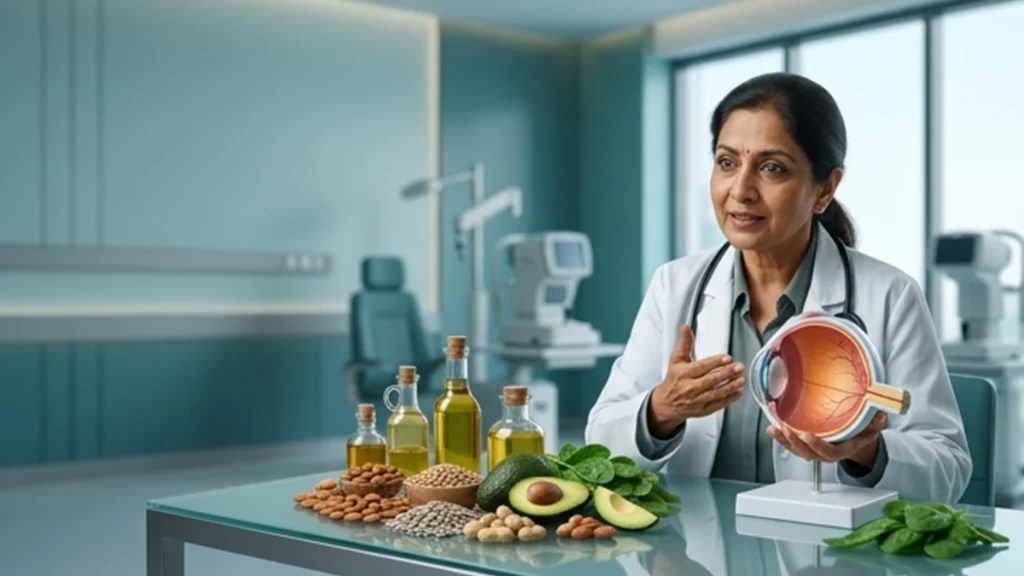
Food first nutrition is what we see as the safe way out for most people in terms of meeting your routine requirements. The NIH reports that which are important are vegetable oils, nuts, seeds, leafy vegetables and also fortified cereals. As vitamin E is a fat soluble vitamin, meals that include healthy fats will improve absorption. A practical Eye Nutrition approach is to pair veggies with a small portion of nuts, seeds or unsaturated oil.
| Food source | Approximate vitamin E per serving | Simple way to include it |
| Wheat germ oil, 1 tablespoon | 20.3 mg | Use a small amount in suitable uncooked dishes |
| Sunflower seeds, about 28 g | 7.4 mg | Add to curd, oats or salads |
| Almonds, about 28 g | 6.8 mg | Choose an unsalted portion as a snack |
| Sunflower oil, 1 tablespoon | 5.6 mg | Use within a balanced cooking-oil intake |
| Hazelnuts, about 28 g | 4.3 mg | Add a measured portion to breakfast |
| Peanut butter, 2 tablespoons | 2.9 mg | Spread thinly on whole-grain toast |
| Boiled spinach, half a cup | 1.9 mg | Include with dal, roti or rice |
| Boiled broccoli, half a cup | 1.2 mg | Serve as part of a mixed vegetable meal |
These food based Vitamin E Benefits which in turn makes it easy to include in a diet for Vitamin E for Eye Health also which is at the same time putting in other nutrients. Almonds and sunflower seeds are a source of vitamin E and healthy fats, spinach does well with carotenoids, and a wide variety of plant foods present more Eye Antioxidants. The aim is to have a varied diet that supports Vision Protection, not to eat the same items daily.
How Much Vitamin E Do Adults Need?
The Institute of Medicine reports that the dietary requirement for adults at or over 14 years of age is 15 mg of alpha-tocopherol per day which increases to 19 mg during lactation. This is very different from the 400 IU of vitamin E which is put forth in the AREDS2 for certain AMD patients’ care as opposed to a regular daily dose.
This issue is at the core of what we see in terms of Vitamin E Benefits. More may not be better. For routine Vision Protection a healthy diet which includes fruits and vegetables and a regular eye care routine is what is put forth instead of a clinical trial dose.
Food, Regular Supplements and AREDS2 Are Not the Same
People use “eye vitamin” and “vitamin E supplement” interchangeably which is not the case. They don’t.Vitamin E for Eye Health may include regular food intake, a standard multi vitamin or a specialized AREDS2 formula. Each has a different purpose, dose and research support.
| Approach | Intended role | What patients should know |
| Vitamin E-rich foods | Meet nutritional needs | Suitable for most people and supplies several nutrients |
| Standard multivitamin | Fill selected dietary gaps | Check labels and avoid duplicating nutrients |
| Vitamin E-only supplement | Correct a clinician-identified need | Not proven to prevent AMD or cataracts when used alone |
| AREDS2 formula | Slow AMD progression in certain patients | Use after an eye examination and medical discussion |
| General “eye health” supplement | Commercial wellness product | Marketing language does not establish effectiveness |
This study reports on what we found in Eye Nutrition which we present as a case for personalized care. We see that a healthy adult’s requirements are very different from that of a person with malabsorption, deficiency or intermediate AMD. Also the same product does not fit for all even in regard to Retina Health.
Can Vitamin E Prevent Cataracts?
Current research does not report that vitamin E supplements prevent cataracts. AREDS and AREDS2 did not find an overall effect on cataract development. Thus Vitamin E for Eye Health should not be put forth as a method to reverse cataract growth or to avoid surgery.
For those of you that are into Vitamin E for Eye Health, what we see is that which is practical for Vision Protection is to separate healthful practices from health claims. Cataract symptoms like glare or blurred vision require an eye exam, not a do it yourself treatment with pills.
Vitamin E Deficiency and the Eyes
True vitamin E deficiency is rare in healthy individuals and is more so when a condition which affects fat absorption is present. Severe deficiency may result in nerve and muscle damage which also may include retinopathy. In such cases medical treatment is required as opposed to casual dietary changes.
For example in the case of chronic malabsorption or a reported deficiency, Vitamin E for Eye Health may play a role in a comprehensive treatment plan but that which is put forth as Vitamin E Benefits must be supported by medical research. We aim to restore normal function not to improve vision beyond what is normal. An ophthalmologist, physician and dietitian may have to work together at times to coordinate Eye Nutrition with the care of the base health issue.
Are Vitamin E Supplements Safe?
Vitamin E in common foods does not have a connection to the issues of bleeding which is seen with large dose supplements. High dose supplements may disrupt blood clotting and may in fact increase risk of bleeding, also with use of anticoagulant or antiplatelet drugs. Also, Vitamin E may play a role in the interaction of some medications so it is important that patients report all which they are taking.
This safety issue is a part of what we know about Vitamin E Benefits. “Natural’ does not mean risk free. People on blood thinners, prior to surgery, that live with a bleeding disorder, or who are on complex treatment should check with your health care provider before high doses. Safe Vision Protection is based in large part from avoiding preventable interactions.
Building an Eye-Friendly Eating Pattern
A simple approach to get your Vitamin E for Eye Health is to vary your food choices throughout the week. At breakfast you could have oats and seeds, at lunch try leafy greens, and as a snack include a measured out portion of unsalted nuts. This not only gives you vitamin E but also packs in fiber, carotenoids and other Eye Antioxidants.
Variety is key for Retina Health, we don’t see one nutrient which does it all. Lutein and zeaxanthin are found in the macula, at the same time vitamins C and E play in different areas of antioxidant defense. Good Eye Nutrition is in the mix of food groups rather than in a single pill.
People that have diabetes, hypertension or high cholesterol should follow the specific advice for those conditions which in turn affect the whole body systems that in fact include the eyes. This broader approach which makes Vitamin E for Eye Health a component of a total health strategy and which also rules out health claims of total Vision Protection.
When Should You Consult an Eye Doctor?
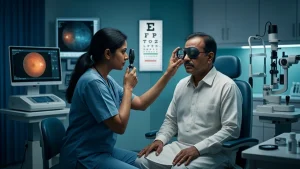
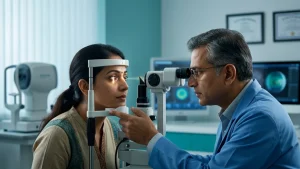
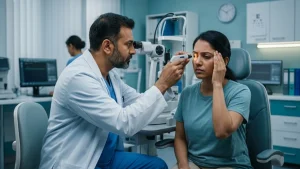
Nutrition out of the question for a medical exam. You have sudden vision loss, new flashes or floaters, a curtain like shadow, eye pain, injury, or when your vision is changing very fast in which case in comes the prompt assessment. Gradual loss of vision, problems with glare, trouble reading or when your central vision is affected also do well to be checked.
An ophthalmologist will check the retina, note signs of cataract or AMD, and determine if a specialized formula is needed. This is to preclude use of high dose Eye Antioxidants for which we have only a presumed benefit in Retina Health. A diagnosis transforms general nutrition advice into a personalized care plan.
Conclusion
Vitamin E for Eye Health is a piece of a total health and eye care plan. It works in conjunction with other Eye Antioxidants, and also supports healthy diet choices which in turn support Retina Health and long term Vision Protection. While it is a great component, it does not prevent all eye diseases, reverse cataracts or take the place of a medical exam.
Using the responsible approach to Vitamin E for Eye Health includes a diet of a variety of foods, health management in general, eye protection, and regular check ups. Patients with AMD, malabsorption, deficiency or complex medication regimens should speak with health care professionals about supplements. This balanced approach includes the true Vitamin E Benefits in Eye Nutrition which also weaves in science based practices.
At ASG Eye Hospital we provide for our patients routine eye check ups, cataract assessment, retina care and we cover the main areas of ophthalmic subspecialties. Book in for a consultation when you have persistent vision changes or when you require personal advice on an eye supplement.
Medical Disclaimer: This article is to provide general information which does not take the place of an ophthalmologist, physician or registered dietitian’s diagnosis or treatment.
10 Best Juices for Eye Health, Best Diet Plan for Healthy Eyes and Vision, Vitamin A for Eye Health,
Top Eye-Healthy Foods Every Child Needs, Vitamin B12 Deficiency and Blurred Vision, Vitamin C for Eye Health
Frequently Asked Questions
1. Is Vitamin E Good for Eyesight?
Vitamin E in Eye Health reports antioxidant action and also supports normal cell function, we must note that it does not improve visual sharpness or correct refractive issues. It is most valuable as part of a full Eye Nutrition. If you have blurred vision go get your eyes checked.
2. Can Vitamin E Prevent Age-Related Macular Degeneration?
Vitamin E has not been shown to prevent AMD. In certain patients a specific AREDS2 formulation does see improvement in progression. The Vitamin E Benefits in this regard belong to the full tested formula which is of course the AREDS2 mix and not vitamin E by itself.
3. Which Foods Are Useful Sources of Vitamin E?
Almonds, sunflower seeds, wheat germ oil, sunflower oil, hazelnuts, peanuts, spinach and broccoli are great options. A varied diet which includes these Eye Antioxidants also supports Vision Protection which in turn may not require high dose supplements.
4. Does Vitamin E Improve Retina Health?
Adequate vitamin E supports healthy antioxidant defense which is related to Retina Health. Also it has been reported that extra vitamin E does not repair retinal damage or treat retinal disease. New distortion, flashes or floaters require an ophthalmologist.
5. Should Everyone Take AREDS2?
No. AREDS2 is for certain stages of AMD and includes high levels of many nutrients. People without AMD or with an early stage of the disease do not see the same benefit. Food based Vitamin E for Eye Health is different from that of AREDS2.
6. Can Too Much Vitamin E Cause Harm?
Excessive intake of vitamin E supplements may increase your risk of bleeding and also may interact with some medications. For general Vision Protection do not use high dose capsules at will, which is without professional advice.
7. Is Vitamin E a Treatment for Dry Eyes?
Vitamin E is a great addition to overall health but is not a solution for dry eye. Dry eye can be caused by a variety of things and does best with care that is specific to its cause. An assessment is really what you need instead of assuming Vitamin E Benefits will help in all cases.
8. How Should Vitamin E Be Combined With Other Nutrients?
Meals that include vegetables, fruits, whole grains, pulses, nuts, seeds and healthy fats in appropriate amounts provide a wide range of Eye Antioxidants and in turn better Eye Nutrition. For supplements, wait for a defined health issue.