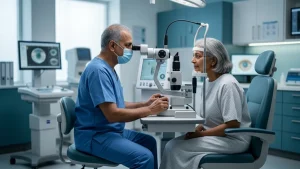

Your doctor has diagnosed you with a cataract. Very soon the question follows. Should you go ahead with the operation right away or play it safe and wait? Many ask at cataract surgery at what age? The honest answer is a surprise to most patients. Age is not the determining factor. Your eyesight and how it affects your day to day life is. This guide goes into when surgery is the right choice for you and what may happen if you wait too long.
What Is a Cataract?
A cataract is a cloudy area in the natural lens of the eye. The lens which is behind the colored part of the eye focuses light. MedlinePlus reports that proteins in the lens break down with age. The lens slowly becomes stiff and cloudy. Mild clouding often begins at 60. By 75 most people have cataracts which affect vision.
Some people develop cataracts at a younger age. Diabetes, eye injuries, smoking, long term steroid use and too much sun can cause it to happen at a faster rate. Babies can be born with it. That is why there is no set age for cataract surgery at what age should take place.
Is There a Cataract Surgery Age Limit?
No. There is no set cataract surgery age limit at either end. We do cataract surgery on children and on adults in their 90’s. What we look at is your health in general and the degree to which the cataract is affecting your vision.
Many families think it is too late for an older parent to have surgery. In most cases that is a baseless fear. There is no cataract surgery age limit which is put forth by medical guidelines. MedlinePlus reports that you and your eye doctor determine when surgery is right for you. Pre op health checks are what really count for surgery not the date of your birth.
When to Get Cataract Surgery
So when to get cataract surgery? MedlinePlus reports that usually what doctors do is recommend it when you are having a hard time with daily tasks like driving or reading even with the use of glasses. In the early stage new glasses, brighter lights and a magnifier may be sufficient.
Watch out for tell tale signs in your day to day life. You may notice blurry or cloudy vision, faded colors or glare from car headlights. Some people see halos around lights or they report to get new glasses very often. We go in depth into each of these symptoms in our guide on cataract symptoms. If these signs are making your daily tasks hard, it is time to discuss with your doctor when to get cataract surgery.
| Sign | What You Notice | What to Do |
| Blurry or cloudy vision | Things look foggy | Book an eye check |
| Glare and halos | Headlights feel blinding at night | Avoid night driving, see a doctor |
| Faded colours | Colours look dull or yellow | Ask about surgery timing |
| Frequent power changes | New glasses do not help for long | Discuss surgery |
| Trouble reading or driving | Daily tasks feel hard | Plan surgery soon |
What Waiting Too Long Actually Costs You
Many people put off cataract surgery for years which is a shame as we determine at what age to have it done. Some are scared of the procedure, and others wait for the cataract to fully ripen. That old notion no longer stands. We can do very well with the surgery at any stage. In fact what we are seeing is that there are mature cataract risks to waiting too long.
The first issue is safety. Vision impairment increases the risk of falls and traffic accidents. The second issue is that the operation is more difficult. A very dense lens requires more effort to remove.
The third issue is the most serious. MedlinePlus reports that in very rare cases of advanced cataract the condition may progress to affect other parts of the eye. This in turn may cause glaucoma pain and internal eye swelling. These mature cataract risks may cause permanent damage to sight.
There is another hidden cost. A thick cataract which also blocks the doctor’s view of the retina. Also until the cataract is removed some issues like diabetic eye disease can not be treated. So the mature cataract risks go beyond the health of the lens itself.
Cataract Surgery at 60: Is It the Right Time?
At 60 many people are asking at cataract surgery at what age. By this age most still work, drive and travel. For them cataract surgery at 60 is a way to protect an active lifestyle. Some at 60 have only mild clouding and may wait to see what happens.
If you are already experiencing vision blur from your cataract surgery at 60 you may want to go ahead with cataract surgery. Recovery is quick and you will return to your normal life soon. Today’s cataract surgery is performed with a small incision and a foldable lens. MedlinePlus reports that recovery is about 2 weeks and that for the most part people do well.
| Age Group | What Is Common | What to Do |
| Under 40 | Rare, often linked to injury, diabetes or steroids | See a doctor quickly |
| 40 to 59 | Early clouding in some people | Yearly eye checks |
| 60 to 74 | Mild to moderate cataract is common | Decide based on daily vision |
| 75 and above | Most people have cataracts that affect vision | Plan surgery with your doctor |
Choosing the Right Lens
Your doctor will also assist you in the choice of lens. Some lenses correct for distance vision only. Others which we have which also improve close vision. You can check out our guide on cataract surgery cost and lens options for that info.
Conclusion
People ask cataract surgery at what age the truth is your sight is what counts not your age. There is no set age limit for the surgery and waiting may in fact bring serious mature cataract risks. Know when to get cataract surgery age limit by how your vision is affecting your daily life. At 60 or 85 it is best to discuss with your doctor what age is right for you. At ASG Eye Hospital our surgeons will give you the clear info you need. Still not sure cataract surgery at what age? Book an eye check with ASG today.
Frequently Asked Questions
1. Cataract surgery at what age is best?
There is no best age. Doctors perform cataract surgery at what age based on how the cataract is affecting your day to day life.
2. Is there a cataract surgery age limit for older adults?
No. People at the age of 80 and 90 may still do very well with surgery after we do some basic health tests.
3. When to get cataract surgery if I have diabetes?
Talk to your doctor about the mature cataract risks. They may advise for early surgery which in turn will allow them to check and treat your retina.
4. What happens if I wait too long?
Main mature cataract risks present as hard operations, painful glaucoma and swelling in the eye.
5. Is cataract surgery at 60 too early?
Not if your vision is poor. At age Cataract surgery at 60 which is safe for the most part.