Why Delhi Smog Hits Your Eyes First
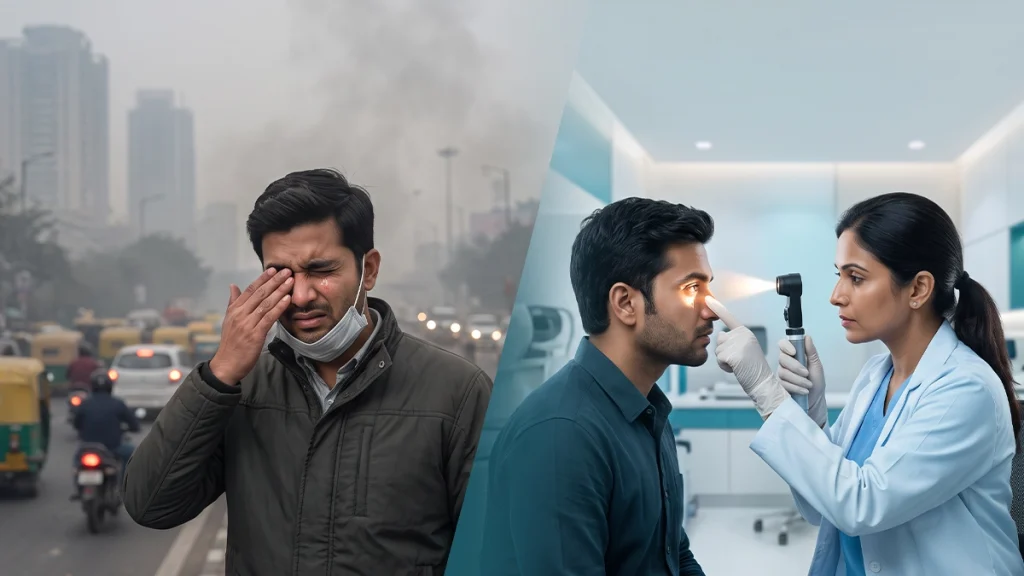
Every November, Delhi wakes up under a grey sky. Your eyes sting before you even leave home. The link between air pollution and eyes gets less attention than lungs. Yet your eyes meet the smog head-on, with no filter. Eye doctors see a sharp rise in burning eyes in Delhi smog season.
The Union Health Ministry’s advisory lists eye irritation as a common short-term effect. It is recommended you see a doctor if your eyes turn red or watery. Knowing how air pollution and eyes react helps you act early. This guide covers the eight main ways air pollution and eyes collide, and how to stay safe.
What Smog Does to Your Eye Surface
A thin tear film which is a layer of moisture covers the front of your eye. It keeps the cornea moist and clear. Smog reports PM2.5, nitrogen dioxide, ozone and smoke. These particles get into the tear film and cause it to break down. You then feel dryness, redness and grittiness.
Doctors who study air pollution and eyes call this surface stress. It builds the longer you stay outdoors. Understanding the science of air pollution and eyes makes prevention much easier. Learn more in our guide on Air pollution and eye health.
8 Ways Air Pollution Damages Your Eyes
The effects of air pollution and eyes range from mild discomfort to real infection. Here are the eight problems we see most.
| Problem | What You Notice | Main Trigger |
| Dry eye | Gritty, tired eyes | Tear film breakdown from PM2.5 |
| Burning and stinging | Hot, sharp feeling | Ozone and nitrogen dioxide |
| Redness | Pink or bloodshot whites | Widened blood vessels |
| Allergic conjunctivitis | Itching, watering, puffy lids | Road dust and pollen |
| Eye infection | Discharge, sticky lids | Germs riding on particles |
| Light sensitivity | Squinting in daylight | Irritated cornea |
| Blurred vision | Blur that clears on blinking | Unstable tear film |
| Contact lens trouble | Dry, scratchy lenses | Particles trapped under lenses |
Dry eye is the main issue. Smog causes tear production to drop and so the eyes dry out faster. If dryness persists past two weeks, it’s a good idea to look into proper Dry eye treatment.
Burning and redness are also very common smog effects on eyes. Ozone irritates the nerve endings in the cornea and blood vessels also dilate. If you keep wondering Why are my eyes red, smog may be the cause. Mild air pollution eye irritation usually subsides once you reduce your exposure.
Road and construction dust cause itching and watering. Rubbing is to be avoided as it invites in germs which in turn raises the risk of Eye infections and inflammation. Over weeks air pollution and eyes also have more subtle issues like light sensitivity and short blurry spells.
How to Protect Your Eyes from Delhi Smog
You cannot clean the city’s air alone. Still, simple habits break the cycle between air pollution and eyes early. Treat this table as your daily checklist for air pollution and eyes care.
| Protective Step | How It Helps | When to Do It |
| Wear wraparound glasses | Blocks dust and smoke | Every time you step out |
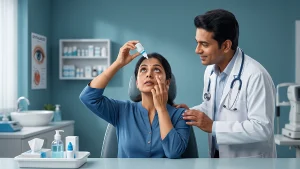
| Use preservative-free lubricating drops | Restores the tear film | Two to four times a day |
| Rinse eyes with clean water | Washes off particles | After coming home |
| Check the AQI on SAMEER or SAFAR | Helps plan outdoor time | Each morning |
| Run an air purifier indoors | Cuts indoor particles | Through the night |
| Drink enough water | Supports natural tears | All day |
Wrap in glasses is the easiest solution for air pollution and eyes strain. In Delhi smog which is what we are seeing at present eye drops will bring relief but do not use steroid drops without advice.
Plan your day according to the AQI which is the best indicator we have for air pollution and eyes risk. When the index reads “very poor” cancel that morning walk. Keep windows shut at peak hours and instead of sweeping which only throws dust in the air, try mopping. At home these steps will reduce dust allergy eyes flares. Trade in your contact lenses for glasses on bad air days. Smart choices regarding air pollution and eyes add up over that long winter.
When to See an Eye Doctor
Not all cases of air pollution and eyes issues do in fact require a doctor. Most symptoms resolve within a day in an indoor setting. Book in for an exam if redness persists for the past 3 days. See a doctor right away for pain, thick discharge or sudden blur. Also at risk are children, older adults and diabetics which tend to feel the smog effects on eyes more strongly.
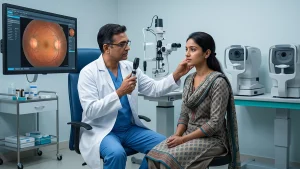
At ASG Eye Hospital, specialists check your tear film and cornea. They know how air pollution and eyes interact in a city like Delhi. Early care stops smog damage from turning chronic.
Conclusion
Delhi’s air quality issue isn’t going away soon. Also you have a choice as to how it affects your health. We look at what you can do about air pollution and eyes. Wear glasses, use the right eye drops, track the AQI and improve your indoor air quality. Don’t ignore redness or pain which doesn’t go away. Taking air pollution seriously today is the first step in protecting your vision for years. Still having issues? Book a check up at your nearest ASG Eye Hospital.
Frequently Asked Questions
1. Can air pollution cause permanent eye damage?
Short term exposure usually causes temporary irritation. In the case of air pollution and eyes, we see that long term exposure is linked to chronic dry eye and other health issues.
2. Why do my eyes burn more in winter?
Winter is the worst for air pollution and eyes in North India. Cold still air traps smoke near to the ground. Also stubble burning and traffic add to it. That mix is what causes burning eyes in Delhi smog each November.
3. Are eye drops safe to use daily?
Preservative free lubricating drops are in general a safe daily option. Redness relief and steroid drops to avoid unless prescribed.
4. How do I tell dust allergy from infection?
Dust allergy eyes itch and water in both eyes. Infections bring thick discharge or pain. Unsure? Get checked.
5. Do air purifiers help my eyes?
Yes. Cleaner indoor air reduces air pollution eye irritation, especially with windows closed.
6. Should I worry if my eyes feel fine?
Yes. Damage linked to air pollution and eyes can build quietly, without symptoms. A yearly eye exam catches it early.