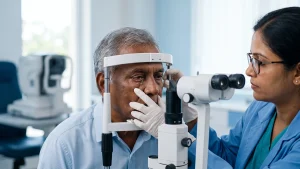

An at times eye lid twitch may happen after a bad nights sleep, a very stressful day out, or too much caffeine. It usually goes away without treatment. But if you have persistent, forceful blinking or lids which close unexpectedly may be a sign of blepharospasm. Out of which you should be aware to go in for an eye exam and talk to a specialist about blepharospasm treatments.
What Is Blepharospasm?
Blepharospasm is a disease which causes the muscles around the eyes to spasm out of control. It may begin as a slight eye twitching which then turns out to be more regular or forceful. In some people the lid will fully close which in turn can disrupt reading, driving, or other daily activities. What we term a simple eyelid spasm is very common and is usually a result of fatigue, stress, dry eyes, or caffeine. Not all eye tics are blepharospasm.
Common Symptoms and Causes
Blepharospasm is a term for what is in fact a muscle spasm of the eye area. It may start out as a mild case of eye twitching which then progresses to more frequent or forceful spasms. In some people the lids will close completely and this may in turn interfere with reading, driving, or other daily activities. What is usually referred to as eyelid spasm is a more common issue and is related to fatigue, stress, dry eyes, or caffeine. Not all eye twitches are a sign of blepharospasm.
When to Get Medical Advice?
Book a spot for an eye exam if your twitches have been going on for many weeks, your eyelid is closed fully, or the spasm is a part of your daily life. Go to see your doc right away if also you have a droopy lid, redness, swelling, discharge, or changes in vision. If the eyelid spasm also affects your cheek or mouth get in to see your health care provider. We will review your symptoms, medicines, and past health issues, then do an exam of your eyes and eyelids.
Treatment Options for Blepharospasm
The appropriate blepharospasm treatment is based on the cause and the severity. Should dryness or irritation play a role in your symptoms the ophthalmologist may put you on a regimen of lubricating drops or treatment for the base issue. For the simple twitch which is out of the ordinary we may see that better sleep, stress management, and reduction in caffeine does the trick, but these are not a replacement for medical care in persistent cases.
For that which has been diagnosed as botulinum toxin blepharospasm for treatment. What we do is target the affected muscles and put in place measures which in turn reduce the involuntary spasms. The results are not permanent which is why we see our patients back in for repeat sessions every few months. We do see some temporary side effects like eyelid drooping, dry eyes, double vision. That is why we go over the benefits and risks with you prior to treatment. Also ask your specialist if this is the right treatment for botulinum toxin blepharospasm and medical history.
Surgery is an option for some patients that do not respond to injection therapy. We will go over which is right for you. Also we develop a custom blepharospasm treatment plan which improves symptoms and quality of life. Also your specialist can go into detail how our treatment with botulinum toxin blepharospasm differs from other treatments.
Everyday Twitching Compared With Blepharospasm
| Feature | Occasional eyelid twitch | Blepharospasm |
| Pattern | Brief, intermittent movement | Repeated, sometimes forceful contractions |
| Common triggers | Stress, fatigue, caffeine, dry eyes | Often no single clear cause |
| Effect on daily life | Usually mild and temporary | May interfere with reading, driving, or keeping eyes open |
| Next step | Rest and address possible triggers | Eye examination and discussion of treatment |
What do you need to bring to your appointment?
Report in what you see at the start of the issue, how they progress and which eyes are affected. Also include your sleep routine, caffeine intake, medications you are on and any other symptoms. This will help your health care provider in the assessment of the eye twitching and in to determine the best care. Do not discontinue prescribed meds without first speaking to the provider. Also keep a log of each eyelid spasm episode which may help your doctor to identify patterns.
| Symptom or situation | Recommended action |
| Mild twitch after poor sleep | Rest, improve sleep, and monitor symptoms |
| Twitching with dry or irritated eyes | Ask a clinician about suitable lubricating drops |
| Persistent or worsening spasms | Arrange an eye examination |
| Eyelids closing involuntarily or facial twitching | Seek prompt medical assessment |
Conclusion
An occasional twitch may go away on its own, however in the case of repeat lid closure which issues of comfort, confidence, and daily performance may present. If your symptoms persist or begin to interfere with routine we recommend that you see an eye specialist. Early evaluation is key to identify the cause of the blepharospasm treatment.
Frequently Asked Questions
1. Is it true that all eyelid twitches are blepharospasm?
No. Most brief eyelid spasm episodes are harmless and go away on their own. Blepharospasm is less common which may cause the repeated forceful closing of the eyelids.
2. What is the typical treatment?
For diagnosed blepharospasm treatment includes botulinum toxin injections. Your specialist will determine the best option after they examine you. The treatment is aimed at controlling symptoms which in most cases does not lead to a cure.
3. Are botulinum toxin injections safe?
A specialist has evaluated your health history and is the one to give you the botulinum toxin blepharospasm. We see side effects of this treatment so do come in and go over the benefits and risks at your appointment.
4. When should I see an eye doctor?
If the twitching goes on for a few weeks, causes your eyelid to close, affects your whole face, or goes along with other eye symptoms seek an evaluation. Persistent eye twitching is something which shouldn’t be ignored.
5. Can lifestyle changes help with spasms?
More sleep, stress management, and reducing caffeine may improve those which are common in the eyelid. But if you are dealing with persistent eyelid spasm a diagnosis and proper treatment is needed.
Government and Official Medical References
- National Eye Institute, U.S. National Institutes of Health: Blepharospasm
https://www.nei.nih.gov/eye-health-information/eye-conditions-and-diseases/blepharospasm - MedlinePlus, U.S. National Library of Medicine: Eyelid Twitch
https://medlineplus.gov/ency/article/000756.htm - MedlinePlus, U.S. National Library of Medicine: OnabotulinumtoxinA Injection
https://medlineplus.gov/druginfo/meds/a608013.html