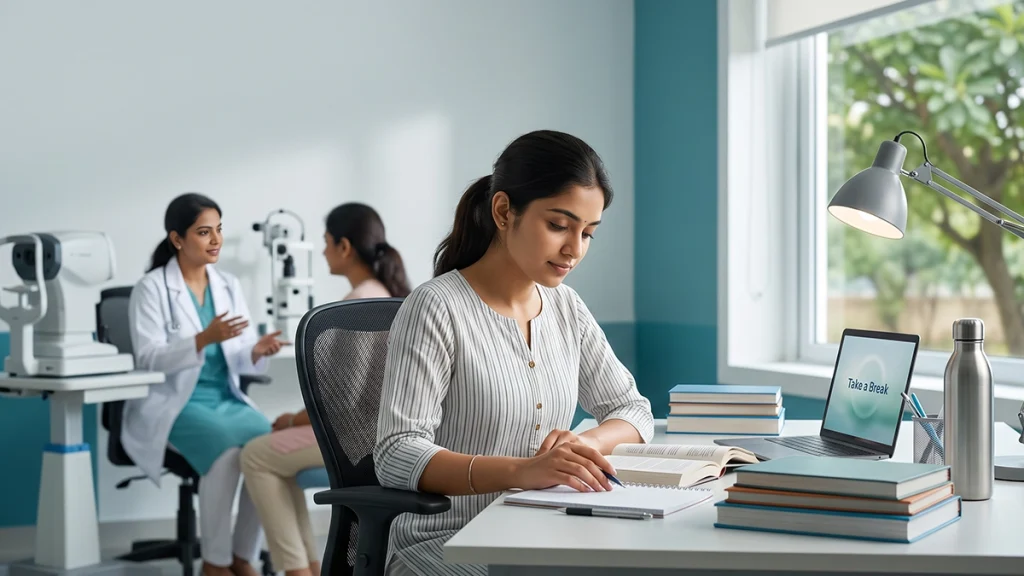
Long in the eyes from that time spent in books and at the computers which leaves them tired. For good eye care for students we see breaks, lighting, sleep, and knowing when to get help.
Why Eyes Feel Tired During Study
Reading and use of digital screens requires close focus. Students may experience dryness, headaches, or blurred vision. These are signs of study eye strain. Glare and an unsuitable environment also contribute to the issue.
Student eye care health is a matter of notice which issues at an early stage. In terms of student eye care we must speak up. Signs such as squinting often, trouble with what the teacher writes on the board, and in general blurred vision are reasons to see an eye care professional.
Practical Habits for Long Study Hours
Follow the 20-20-20 Rule
For each day as a eye care for students do a short visual break every 20 minutes. At a distance of about 20 feet that which you look at for at least 20 seconds. The National Eye Institute puts forth this practice. It is a easy aspect of eye care for students.
Make the Study Area Comfortable
Keep a distance of arm’s length for the screens. Adjust the text size, use easy on the eyes lighting, and reduce glare. These changes will support student eye care and practical eye care for students.
Blink and Pause Regularly
People tend to blink less at screens which in turn causes dry eyes. Break and stretch in between study sessions. A short walk is also a great way to combat screen and study fatigue. Regular breaks may reduce screen and study fatigue as well as improve focus.
Eat Well and Protect Your Sleep
Eat a variety of foods, stay hydrated, and maintain a regular sleep schedule. At night avoid the blue light from screens which makes it hard to wind down. A balanced routine supports eye care for students; no food is a substitute for professional care
Do Not Ignore Recurring Symptoms
Arrange for an eye exam if you are still having headaches, blurred vision, or discomfort. Prescribe which glasses are given to you and do not use medicated drops unless your doctor says so. For Study eye strain try rest which may help but if your symptoms persist in that case a check up by an eye care professional is needed
A Simple Study-Day Guide
Use this table to build healthier habits.
| Study situation | Helpful habit | Why it may help |
| Reading or screen work | Look into the distance every 20 minutes | Breaks up close focus |
| Online classes | Adjust screen distance and reduce glare | Improves viewing comfort |
| Long revision blocks | Stand, stretch, and rest your eyes | Adds a break from close work |
| Evening study | Keep a regular bedtime | Supports rest and concentration |
| Reading feels difficult | Check vision rather than squinting | May identify a vision problem |
Symptoms and What to Do
| Symptom | First step | When to seek care |
| Dry or irritated eyes | Blink and take a screen break | If it continues or returns |
| Headache while reading | Check lighting and rest | If frequent or severe |
| Blurred vision or squinting | Stop straining to see small text | Arrange an eye examination |
| Sudden vision loss or severe eye pain | Do not wait for it to settle | Seek urgent medical care |
Conclusion
Set up a great working environment for yourself, eye care for students, sleep enough, and if you see that symptoms are not going away get professional help. eye care for students isn’t about eliminating all screen time; it is about using screens in a balanced way and paying attention to early warning signs. At ASG Eye Care we can help Student eye care and families find the right professional care. If you experience sudden vision loss or severe eye pain you should seek medical care immediately.
Frequently Asked Questions
1. What can students do to protect their eyes over long study periods?
For consistent eye care for students should have regular breaks, use comfortable lighting, maintain a proper screen distance, get enough sleep and see an eye check when symptoms persist.
2. What is the cause of eye strain from study?
During periods of intense close work which may go for a long duration as in the case of students Study eye strain we see that they tend to blink less and take fewer breaks. Also reported are dryness and headaches but should note that if the issue is recurring it is best to get it checked out.
3. Does screen time always damage eyesight?
No. Long screen sessions may cause temporary visual strain but is not usually linked to permanent eye damage. Have a break, this may ease screen and study fatigue.
4. How often do students have to break from screen time?
Do the 20-20-20 rule and also get up for movement breaks to reduce screen and study fatigue.
5. At what point should a student see an eye specialist?
Persistent blurred vision, repeated reading headaches, frequent squinting, or ongoing discomfort is a sign it’s time for an eye exam. Good student eye care practice is to seek help for these issues instead of ignoring them.
Government and Medical References
- National Eye Institute (NIH), Healthy Vision Tips
https://www.nei.nih.gov/eye-health-information/healthy-vision/nei-for-kids/healthy-vision-tips - National Eye Institute (NIH), Keep Your Eyes Healthy
https://www.nei.nih.gov/eye-health-information/healthy-vision/how-eyes-work/keep-your-eyes-healthy - Centers for Disease Control and Prevention (CDC), Preventing Vision Loss
https://www.cdc.gov/vision-health/prevention/index.html - Centers for Disease Control and Prevention (CDC), Keep an Eye on Your Child’s Vision
https://www.cdc.gov/vision-health/prevention/youth-vision-problems.html