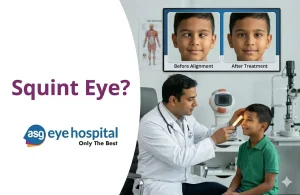

A child may have straight eyes while playing then one eye turns in or out at other times. An Intermittent squint child is a reason to get an eye exam even if the eyes seem normal in between. If you see that an intermittent squint child is exhibiting this pattern of behavior get that child in to see the eye doctor instead of waiting for it to become a constant issue. An intermittent squint may go unreported by the child.
What Does a Squint That Comes and Goes Mean?
A squint which is also known as strabismus is a condition where the eyes point in different directions. In the case of an intermittent squint child their eyes may drift during times of tiredness, illness or daydreaming.
One issue may be intermittent exotropia which is when one eye turns out and the other looks forward. The American Association for Pediatric Ophthalmology and Strabismus (AAPOS) reports that this outward turn may present more in a child when they are tired or sick. Also over time intermittent exotropia may happen more often which is why regular checks are important. The specialist can go into how intermittent exotropia plays out in your child.
Signs Parents Should Look For
Parents may see that one eye is wandering, a child may shut one eye in bright light, frequent eye rubs or an atypical head turn. These strabismus signs should be brought to the attention of a professional. Note when the signs appear and if they are increasing in frequency. Report back on repeated strabismus signs before the visit.
| What you notice | What to do |
| One eye turns inward or outward | Arrange an eye examination. |
| Child closes one eye in bright sunlight | Note when it happens and mention it to the specialist. |
| Head tilting or frequent eye rubbing | Ask for an assessment of vision and alignment. |
| Blurred or double vision | Seek prompt medical advice. |
When to Take Your Child in for an Eye Exam?
Book in for an appointment at the first sign of a recurring eye turn, even if it goes away quickly. For intermittent squint child see a professional right away. A short home video may help the doctor.
A sudden squint requires emergency medical attention, also if it is associated with severe headache, vomiting, weakness or any other new neurological signs. In the case of an intermittent squint child we recommend a full eye exam to check vision, eye movements and how well both eyes work together. The child should follow the specialist’s advice.
How Is It Diagnosed and Treated?
An ophthalmologist looks at each eye’s vision, movement and alignment. What we find out from that exam guides child squint treatment. The right child squint treatment is based on the cause and cause of that which is affected.
| Treatment option | When it may be considered |
| Prescription glasses | When a focusing problem contributes to the eye turn. |
| Patching | When the specialist recommends treatment for reduced vision in one eye. |
| Regular monitoring | When follow-up can track alignment and visual development. |
| Eye muscle surgery | When the eye turn occurs often or affects binocular vision. |
Glasses may benefit some children, also patching is a form of treatment for amblyopia which we do recommend after evaluation by a specialist. Surgery may be done when there is frequent misalignment of the eyes or the child has issues with using both eyes together. Do not start out on patching or eye exercises without professional input. Each child squint treatment plan will be a result of in depth evaluation and the specialist will go over the expected outcomes and the follow up plan.
Conclusion
An intermittent eye turn is still a cause for concern. Should you notice your intermittent squint child that comes and goes, in that case arrange for an appointment with an eye specialist instead of waiting for the issue to become a constant one. Timely evaluation is key for an intermittent squint child.
Frequently Asked Questions
1. Can a child outgrow a squint that comes and goes?
An intermittent squint child in which is affected from time to time does have an assessment by the specialist who will also recommend appropriate monitoring or care. The eye turn may become less frequently noticed but it does not in all cases fully go away.
2. Is intermittent exotropia a big issue?
It varies by child. Intermittent exotropia may include monitoring or treatment if the eye turns out more often, causes issues or affects binocular vision.
3. Which signs indicate your child is due for an eye exam?
Look for eyes that wander, which eye closes in bright light, head tilt or reports of blurry vision. These strabismus signs do well to see the professional if they present repeatedly.
4. Does every child need medical intervention?
No. Some do better with regular check ups, some wear glasses, have patching or require surgery. The specialist will recommend a course of action based on the exam results. Do not begin at home a child squint treatment without first seeking out clinical advice. Follow the care plan which is given to you by your health care provider.
Government Health References
1. National Eye Institute (NEI). Strabismus. https://www.nei.nih.gov/learn-about-eye-health/eye-conditions-and-diseases/strabismus
2. MedlinePlus. Strabismus.
https://medlineplus.gov/strabismus.html