
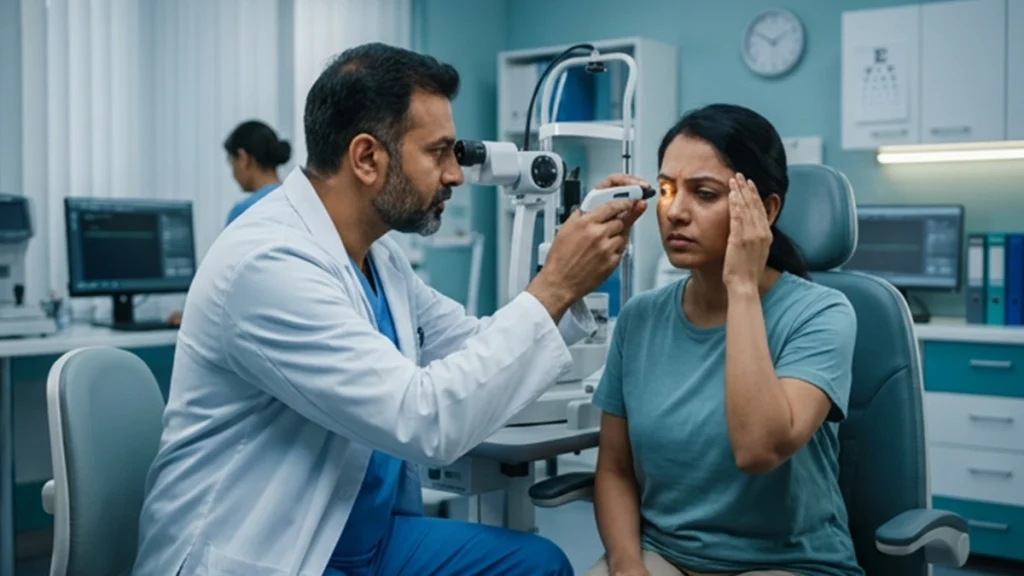
Understanding Eye Pain With Headache and Nausea
Experiencing eye pain, headache nausea at the same time may be very worrisome, in particular when symptoms come on suddenly. Also at times these symptoms present with migraine or sinus issues. But also eye pain, headache nausea may be a sign of a serious eye condition which requires prompt medical attention. Identifying warning signs will help people to get timely care and in turn save their vision.
One issue is acute angle closure which is a condition that the fluid in the eye does not drain right. Pressure can build up very fast and affect the optic nerve. If you develop pain in the eye, a headache, nausea along with a red eye, blurred vision or seeing colored rings around light do not wait for symptoms to go away. That set of symptoms may be a sign of an eye emergency.
How High Eye Pressure Can Affect Vision
The eye is a constant producer and disposer of fluid which it uses to regulate internal pressure. When the outflow of that fluid is blocked, pressure may rise very suddenly. In the event of a closure angle attack this high eye pressure symptoms may present almost immediately. Severe pain may shoot to the forehead and may be followed by nausea or vomiting.
Not for all headaches and nausea does it point to an eye issue. But eye pain, headache, nausea which also brings along vision changes is a reason for urgent attention. Untreated acute angle closure can cause permanent sight loss. By recognizing the high eye pressure symptoms early on we help patients see the value in a prompt visit.
| Symptom | Why it matters |
| Severe eye pain with headache | May indicate a sudden rise in eye pressure |
| Redness and blurred vision | Can occur during an acute glaucoma attack |
| Rainbow-coloured rings around lights | May accompany changes in the cornea caused by raised pressure |
| Nausea or vomiting with eye pain | May indicate a serious condition requiring urgent assessment |
When Should You Seek Emergency Eye Care?
A sudden onset of eye pain, headache, nausea should not be ignored which also brings about vision changes. A red eye, severe discomfort, blurred vision and vomiting point towards acute angle closure. These are signs of high eye pressure which require immediate assessment, rather than a wait for a routine appointment.
If these symptoms present suddenly go to the ER or get urgent ophthalmological care. Also do not drive yourself if you are affected, also don’t use someone else’s eye drops, we also do not recommend home remedies. Acute angle closure is a eye emergency which has to be treated as soon as possible to lower pressure and in turn prevent optic nerve damage.
Other issues can present as eye pain which may be due to inflammation, infection and injury. A health care professional should do an exam to determine the cause. Also if at any point symptoms of eye pain, headache, nausea improve only temporarily it is of great importance to get in for a check up if you had severe symptoms or reported visual changes.
How an Eye Specialist Diagnoses the Problem
An ophthalmologist will ask what time symptoms started, what their severity is and if vision has changed. We may do visual acuity testing, inspection of the front of the eye and eye pressure measurement. Based on what we find, we may also look at the drainage angle and optic nerve.
These assessments help to identify high eye pressure which in turn is used to tell apart acute angle closure from other causes. Proper diagnosis is key as treatment varies by condition. A person may present with eye pain, headache, nausea in which case they will need immediate pressure reducing treatment for which there may be other causes which will require a different approach. Timely evaluation can reduce the risk of permanent damage.
Treatment and Recovery
Treatment is based on what the diagnosis is and the degree of it. In the case of acute angle closure which causes a sudden pressure increase an ophthalmologist may use medication to reduce the pressure and also perform laser treatment which improves fluid outflow. At times inpatient care may be required. It is up to the patient to follow the specialist’s advice and to report to all recommended follow up visits.
The goal is to control pressure and protect the optic nerve. What we find is that treatment does not always reverse damage which is why early intervention is key. Any person that is experiencing eye pain, headache, nausea with sudden vision changes should treat it as an eye emergency, do not wait for a regular eye appointment.
| Clinical finding | Recommended response |
| Sudden severe eye pain with nausea and blurred vision | Seek emergency assessment immediately |
| Persistent eye discomfort without sudden vision changes | Arrange prompt professional evaluation |
| Recurrent headaches with visual symptoms | Seek medical advice to identify the cause |
| Diagnosed high eye pressure | Follow the ophthalmologist’s monitoring and treatment plan |
Conclusion
Eye pain, headache and nausea are common but sudden symptoms which present with redness or blurred vision may be a sign of a serious condition. Acute angle closure is a very important cause which presents very quickly and affects the optic nerve. We see in acute angle closure that pressure rises greatly and it is a0 report of this that may cause loss of vision. It is important to identify high eye pressure symptoms and to seek prompt treatment which may help to protect vision. If your symptoms point to an eye emergency go immediately to the emergency room instead of waiting for them to pass.
Frequently Asked Questions
1. Can eye pain and nausea be a sign of glaucoma?
Yes. In the case of acute angle closure which comes on suddenly very painful eyes, headaches, nausea, redness and blurred vision may present. These symptoms call for prompt medical attention as the condition in fact may cause sight loss.
2. Are high eye pressures always a symptom in itself ?
Not really. Some types of glaucoma progress very slowly and may not show any symptoms at all. That said there is a type that presents with a very painful headache and blurred vision which is a medical emergency.
3. Should eye pain that comes with a headache be ignored if it goes away?
No. Temporary relief does not rule out serious issues. If you have eye pain, headache, nausea with sudden vision changes, redness in the eye or vomiting which may improve over time see us in the emergency department.
4. What to do in case of an emergency in the eye?
Medical or ophthalmic attention is needed right away. Do not treat yourself with unsupervised eye drops and do not get behind the wheel if your vision is impaired. Early diagnosis has the best chance at saving your sight.
Reference links
- National Eye Institute — Types of Glaucoma https://www.nei.nih.gov/eye-health-information/eye-conditions-and-diseases/glaucoma/types-glaucoma
- MedlinePlus — Glaucoma Tests https://medlineplus.gov/lab-tests/glaucoma-tests/
- American Academy of Ophthalmology — What Is Glaucoma? https://www.aao.org/eye-health/diseases/what-is-glaucoma