Living with retinitis pigmentosa (RP) may transform how a person performs in day to day tasks in particular in low light or new settings. RP is a group of inherited retinal diseases which over time degenerate the light sensitive cells in the retina. At early stages we see night blindness, which is followed by a retinitis pigmentosa management and in some people a tunnel vision. While at present we do not have a cure for most types of RP what we do have is appropriate management which in turn helps people make the most of what vision they have left and plan for what is to come.
Understanding Retinitis Pigmentosa
Retinitis pigmentosa does progress over time but the rate and pattern of it does vary from person to person. What we see is that rod photoreceptors go first. This is the reason why night blindness may appear before any noticeable daytime vision issues. As peripheral vision goes down a person may develop tunnel vision, which in turn makes navigation in crowded or familiar environments difficult.
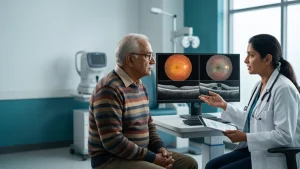
Effective in the retinitis pigmentosa management we first must do a thorough assessment of each patient’s retina. Also through regular follow up an ophthalmologist is able to track vision progress and to identify other ophthalmic issues which may present with RP.
| Common Change | How It May Affect Daily Life |
| Night blindness | Difficulty seeing or moving safely in dim lighting |
| Reduced peripheral vision | Trouble noticing objects approaching from the side |
| Tunnel vision | A narrower visible area despite useful central vision |
| Reduced central vision in later stages | Reading, recognising faces and detailed tasks may become harder |
Tests Used to Assess Retinitis Pigmentosa
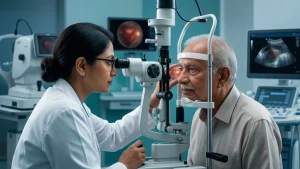
A very large element in the care of retinitis pigmentosa management. is the comprehensive retinal exam. We may also check visual acuity and peripheral vision before we do a dilated retina look. Also based on the patient we may order up more in depth tests.
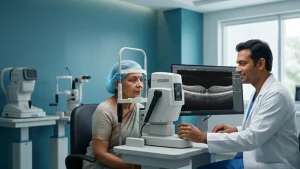
Optical coherence tomography (OCT) produces in depth retinal images. For Electroretinography (ERG) we measure how retinal cells react to light. Visual field testing reports the degree of peripheral vision loss. Also Fundus autofluorescence imaging may play a role in which doctors assess retinal changes. As a team these tests may guide long term retinitis pigmentosa management.
Why RP Genetic Testing Matters
Because of the inherited nature of RP genetic testing plays a key role in evaluation. Many genes may be the cause. A genetic test may identify the disease causing variant which in turn will help determine the specific inherited retinal disorder.
Genetic tests which are performed by the National Eye Institute are reporting that they may help in the identification of what type of RP a person has. Also genetic info may present a picture of how the condition will play out over time.
RP genetic testing is also not always definitive. We may find a known disease associated with genetic change, an unclear genetic variant, or no at present identifiable cause. For that reason it is best to use a combined approach of genetic results, clinical exam and retinitis pigmentosa management.
Genetic Counselling and Family Planning
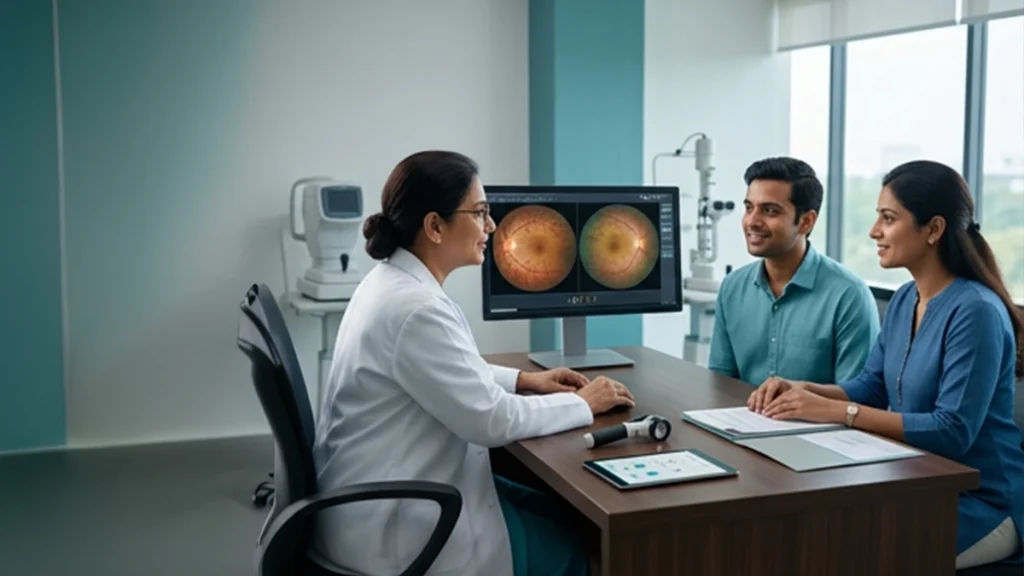
Genetic counseling which is a tool that we have for patients and families to better understand what RP genetic testing shows. We go over inheritance patterns in the family, which relatives may also be carriers of a genetic change, and we address questions related to family planning. Retinitis pigmentosa management is more informed and tailored.
| Support Area | Role in Retinitis Pigmentosa Management |
| RP genetic testing | May help identify the genetic cause and inheritance pattern |
| Genetic counselling | Helps families understand results and possible inherited risks |
| Regular retinal testing | Tracks structural and functional vision changes |
| Low-vision rehabilitation | Supports safer and more independent daily activities |
Low-Vision Support for Everyday Life
Low vision care is also a very important aspect of retinitis pigmentosa management. It is aimed at maximizing what vision is left instead of trying to restore what has been lost.
Magnification tools, proper lighting, electronic reading devices and accessibility features do better for everyday tasks. In terms of training, we see that orientation and mobility helps folks with tunnel vision to move around more easily. At home, we may also see which changes done in the home reduce issues related to night blindness.
As vision changes a personalized rehabilitation plan may also change. For many it works well to combine retinal follow up with low vision services as a management approach to retinitis pigmentosa management.
Conclusion
Living for many with RP is a long term issue which is to say that we are looking at a series of treatments over time as opposed to a single cure. Regular retinal exams, RP genetic testing, genetic counseling and low vision rehabilitation are elements which go into a personal retinitis pigmentosa management plan. Those that have night blindness, narrowing peripheral vision or tunnel vision should seek out a full retinal evaluation. At ASG Eye Care we put into practice a model in which an ophthalmic specialist will assess retinal health and go over what testing is appropriate, what monitoring is needed and what supportive care is available which we tailor to the person’s needs.
FAQs
1. Can retinitis pigmentosa be cured?
At present there is no cure for most cases of RP. But in terms of retinitis pigmentosa management, we do have management options, low vision rehabilitation and regular eye exams which do improve quality of care and use of what sight is left.
2. What are the common early symptoms of RP?
Night vision deficit and peripheral vision loss are early present symptoms. As peripheral vision degenerates further some report tunnel vision.
3. Is RP genetic testing necessary?
RP genetic testing may determine which genes are involved in the disease and how it is passed on. An ophthalmologist or genetics professional will determine if testing is right for you.
4. Can genetic testing predict exactly how my vision will change?
No. RP genetic testing may provide useful details but is not always able to determine the extent or severity of future vision loss.
5. How can low-vision rehabilitation help?
Low vision rehabilitation provides training in practical areas such as reading, mobility and daily activities. It is a key element in the retinitis pigmentosa management, which also includes as visual needs change.
References
- National Eye Institute (NEI), National Institutes of Health – Retinitis Pigmentosa
https://www.nei.nih.gov/eye-health-information/eye-conditions-and-diseases/retinitis-pigmentosa - NCBI Bookshelf, National Library of Medicine/NIH – Nonsyndromic Retinitis Pigmentosa Overview (GeneReviews)
https://www.ncbi.nlm.nih.gov/books/NBK1417/ - NIH Genetic Testing Registry – Retinitis Pigmentosa Genetic Testing
https://www.ncbi.nlm.nih.gov/gtr/