Cataract surgery is when we put in artificial lenses in place of the cloudy natural ones which at times results in better vision. But some patients report that their eyesight goes back to being hazy which may happen months or even years after the surgery. This is not that the cataract has come back. What may have happened is a condition called posterior capsule opacification (PCO). In that case we use a YAG laser after cataract surgery which is a solution for restoring clearer vision.
The process is a quick one which does not require another cataract surgery. An ophthalmologist will first do an eye exam to determine if PCO is the cause of vision change.
Why Can Vision Become Cloudy After Cataract Surgery?
During cataract surgery the surgeon removes the cloudy natural lens and puts in an artificial intraocular lens. What is left is a thin capsule which supports the new lens. With time cells may grow across the back of that capsule and cause it to become cloudy.
This issue is known as posterior capsule opacification. It causes cloudy vision after cataract surgery, glare, reduced contrast and difficulty seeing bright lights clearly. The National Eye Institute reports that also which is referred to as an after or secondary cataract.
When signs of PCO appear in your daily vision an ophthalmologist may recommend YAG laser after cataract surgery.
| Vision change | Possible effect of PCO |
| Blurred or hazy eyesight | Objects may appear less sharp |
| Glare | Bright lights may become uncomfortable |
| Reduced contrast | Colours and details may appear less distinct |
| Poor night vision | Driving or seeing in dim light may become difficult |
What Is YAG Capsulotomy?
YAG capsulotomy which is a laser based procedure that creates a small opening in the cloudy posterior capsule. This opening in turn allows light to pass through more clearly to the retina.
During the performance of YAG laser after cataract surgery the artificial lens usually ends up in the same place. The ophthalmologist in this case uses a laser which is put on the cloudy capsule behind the lens.
The intervention as such is mostly for a short while of a few minutes. Also per NHS guidance the term YAG capsulotomy is a short procedure we use to produce an opening in the misty lens capsule.
When Is YAG Laser After Cataract Surgery Needed?
Not all people that develop mild PCO will need PCO treatment right away. An ophthalmologist may give in to treatment when the cloudiness starts to put into play with daily vision issues.
For example YAG laser after cataract surgery will come into play when an individual has issues with reading, driving, bright lights or routine visual activities. Some patients report the change as if the cataract has returned.
Before putting a patient into PCO treatment, the doctor will perform an eye exam. This exam is done to rule out others which may cause reduced vision.
What Happens During the Procedure?
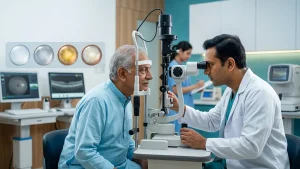
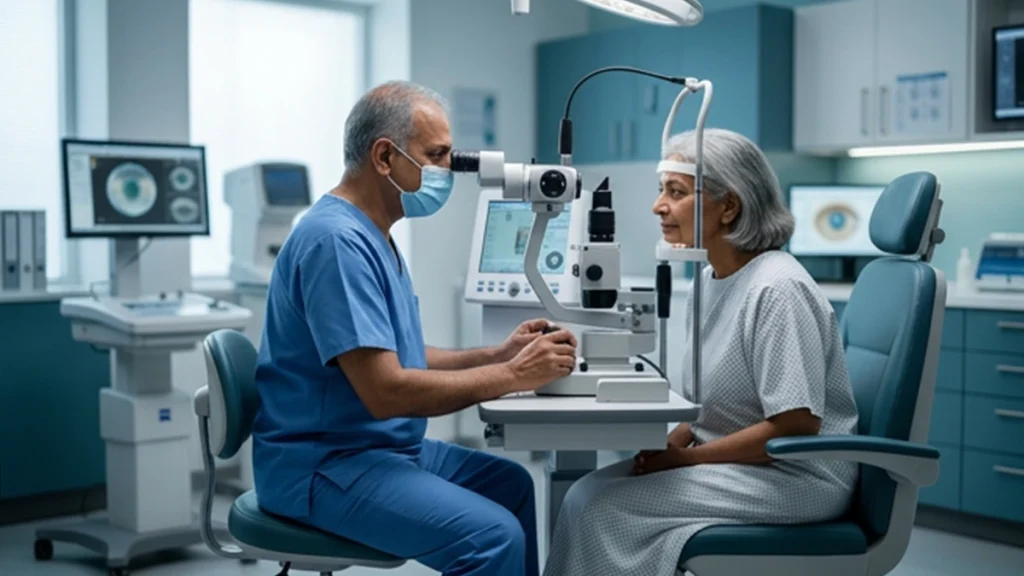
Before the YAG laser after cataract surgery the clinical team will check vision and eye pressure. Also at times they will use eye drops which cause the pupil to dilate. Then the patient sits at the laser machine which is of the same equipment used in a routine eye exam.
In the ophthalmologist’s care the laser is applied to the cloudy capsule. The laser makes a small central opening which does not include the artificial lens. During YAG capsulotomy. Patients may note flashes of light or hear clicking sounds.
| Stage | What you may expect |
| Before treatment | Eye examination and pupil-dilating drops |
| During treatment | Short laser procedure with flashes or clicking sounds |
| Immediately after | Temporary blurred vision from dilating drops may occur |
| Recovery | Vision may improve as the eye settles |
What to Expect After YAG Laser Treatment
Many patients report improved vision post YAG laser after cataract surgery although improvement does vary between individuals. Dilating drops which are used may cause temporary blur in eyesight, thus it is advised that patients follow up with their ophthalmologist’s advice on when it is safe to drive and which activities to avoid.
Some people report transient floaters after YAG capsulotomy. Also in some cases an ophthalmologist will check eye pressure post treatment if it is indicated.
Although we often perform YAG laser after cataract surgery no eye procedure is without risk. There may be raised eye pressure, inflammation, retinal swelling or retinal detachment as possible complications. While these are not common issues we advise that patients speak to their ophthalmologist regarding their individual risks.
Conclusion
After surgery which goes well you may develop blurred vision which is a worrying issue but Primary Compensatory Oscarization is a known cause of this. When PCO affects your day to day vision the YAG laser after cataract surgery is used to create a clearer path for light through the capsule.
If after cloudy vision after cataract, glare or a gradual loss in clarity do not assume the cataract has returned and get an eye exam. At ASG Eye Hospital our ophthalmology team will examine your eye, determine the cause and also which if any post surgery treatment like YAG laser after cataract surgery
FAQs
1. Is the YAG laser after cataract surgery painful?
In the case of YAG laser after cataract surgery it is reported to be pain free. Anesthesia in the form of eye drops may be used and the procedure itself usually takes only a few minutes.
2. How soon can YAG laser be done after cataract surgery?
There isn’t a universal timeline for everyone. PCO may present itself a few months or even a few YAG laser after cataract surgery. Your ophthalmologist will put forth a recommendation for the YAG laser once the capsule has clouded enough to impair vision.
3. Can cataracts return after surgery?
The original cataract does not return because we remove the cloudy natural lens. Also, Posterior Capsule Opacification may develop which causes cloudy vision after cataract and it may have similar symptoms to the original cataract.
4. Is YAG capsulotomy a surgery?
YAG capsulotomy is a laser based procedure which we do not classify as a cataract surgery. It produces an opening in the cloudy capsule which is behind the artificial lens. .
5. Is PCO treatment always necessary?
No. Mild PCO treatment may not need right away treatment if vision is good. Treatment usually steps in when the cloudiness impacts daily life or visual quality.
References Links
- National Eye Institute – Types of Cataract (Secondary Cataracts)
https://www.nei.nih.gov/eye-health-information/eye-conditions-and-diseases/cataracts/types-cataract - Cambridge University Hospitals NHS – YAG Laser Posterior Capsulotomy Following Cataract Surgery
https://www.cuh.nhs.uk/patient-information/yag-laser-posterior-capsulotomy-following-cataract-surgery/