Eye redness may at first appear to be no big issue. But if it comes back with pain, blurred vision, or sensitivity to light, it may be a sign of something more serious. One possible cause is behcet syndrome, a rare inflammatory condition that can affect blood vessels throughout the body.
Also which is what we know as Behcet’s disease, this condition affects the mouth, skin, joints, blood vessels, nervous system and eyes. Eye inflammation in particular does require attention as it may cause repeat attacks which in turn may damage the retina and affect vision. The National Eye Institute reports that Behet’s disease also causes blurry vision, eye pain, and redness.
What Is Behcet Syndrome?
Behcet syndrome is a chronic inflammatory disease which presents with inflamed blood vessels in diverse areas of the body. Symptoms come in flares. At other times a person may have no symptoms at all which may go on for a while and then have a relapse.
Some people also refer to it as silk route disease or silk road disease which at the time was more prevalent in areas along the old Silk Road. In medical literature it is reported that there was a greater incidence in the Mediterranean, Middle East, and Far East.
You may also come across terms like behcet, behcett, bechet syndrom, or bechet syndrome in an online search. These usually do refer to the same condition which said Behçet’s disease is the standard medical term.
Recurrent mouth ulcers are what you may notice with Behcet’s disease. Also Genital ulcers, skin changes, joint issues, and eye inflammation can also present. A behcet ulcer may look like a common mouth sore which is why recurrent ulcers along with eye symptoms should see a doctor.
| Area affected | Possible symptoms |
| Eyes | Redness, pain, blurred vision, floaters, light sensitivity |
| Mouth | Recurrent painful ulcers |
| Skin | Acne-like spots or tender lesions |
| Joints | Pain and swelling |
| Blood vessels | Inflammation and vascular complications |
How Does Behcet Syndrome Affect the Eyes?
Eye involvement in Behcet syndrome mostly present as uveitis. Uveitis is a type of eye inflammation. The National Eye Institute reports that blurry vision, floaters, pain in the eye, redness, and sensitivity to light are among the most reported symptoms of uveitis.
In Behcet’s disease inflammation may affect the front of the eye, the back or both. When many parts of the uvea are inflamed, what is noted is panuveitis. Retinal blood vessels also may be inflamed.
The eye issues related to Behcet’s are of a relapsing nature. Symptoms improve and then return. Repeat posterior uveitis can cause retinal damage which is why early diagnosis is key. In Behcet’s we should take note of any sudden change in vision even if past attacks resolved.
Uveitis Symptoms You Should Not Ignore
Uveitis in Behcet’s may appear very suddenly. Signs of which include red or painful eyes, new floaters, blurred vision, light sensitivity, and vision loss require prompt medical evaluation. The NHS reports that eye inflammation in Behcet’s disease can cause painful red eyes, photophobia, floaters, blurred vision, and sudden vision loss.
| Eye symptom | Why assessment matters |
| Blurred vision | May indicate active inflammation |
| Eye redness | Can accompany anterior uveitis |
| Light sensitivity | Common with inflammation inside the eye |
| Floaters | May occur when inflammation affects deeper eye structures |
| Sudden vision reduction | Requires urgent medical attention |
How Is Behcet Syndrome Diagnosed?
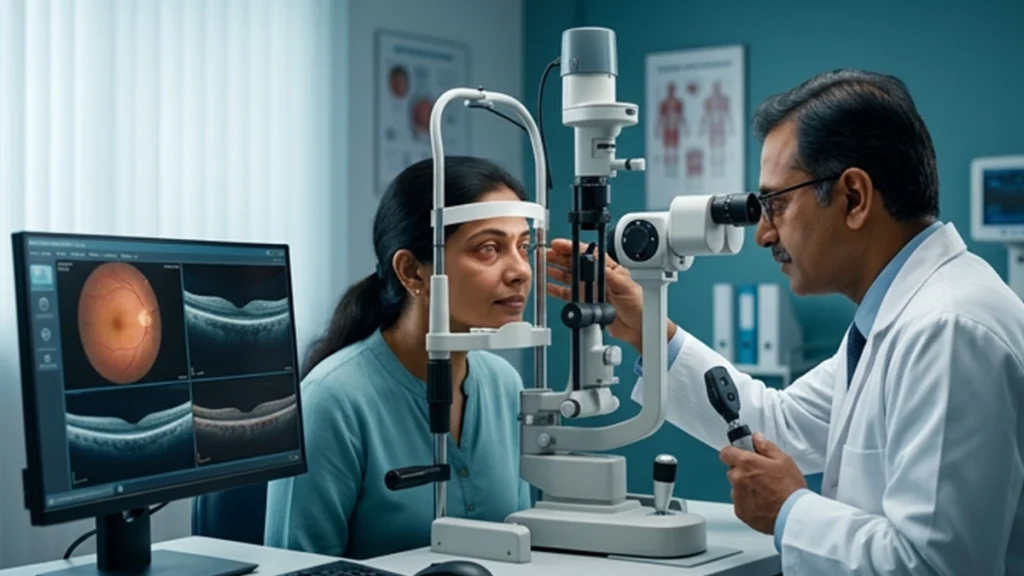
In many cases there isn’t a single diagnostic test which confirms Behcet’s syndrome. Doctors look at the pattern of symptoms, medical history which includes recurrent ulcers, skin changes, vascular issues and eye inflammation. An ophthalmologist may do a dilated eye exam of the front and back of the eye. As per what is found, retinal imaging, optical coherence tomography or fluorescein angiography may be used to assess inflammation
In the case of Behcet’s disease which affects more than the eyes we may see a care team that includes an ophthalmologist in conjunction with a rheumatologist or any other Behcet’s disease specialist. This team based approach allows for the assessment of both ocular and systemic aspects of the disease.
Behcet’s Disease Treatment for Eye Inflammation
The primary aim of behcet’s disease treatment is to suppress inflammation, reduce attack frequency, and preserve vision. Treatment varies by which part of the eye is affected and the degree of inflammation. Corticosteroids are useful for active inflammation. Also Posterior uveitis or retinal vasculitis usually require systemic immunosuppressive or immunomodulatory treatments. Biologic agents may also be used in selected patients with severe or refractory disease.
Treatment for behcet syndrome must be individualized. Patients must see that they do not begin, stop or change steroid and immunosuppressive regimens without a doctor’s say so. Also it is important to have regular follow up as treatment in Behcet’s is aimed at preventing further inflammatory attacks which may happen at any time and not just to feel better in the present.
Conclusion
Living with behcet syndrome requires attention to symptoms that may come and offset of symptoms. In the case of the eyes, it is very important as repeated uveitis attacks may damage the retina and cause visual issues.
If you are a Behcet’s disease patient that presents with redness, pain, floaters, light sensitivity, or blurred vision, in that case do get in for an ophthalmic exam as soon as you can. Timely intervention in behcet’s disease treatment,regular follow up, and a team approach to care may help in reducing inflammation and in the long term will protect your eye health.
FAQs About Behcet Syndrome and Eye Health
- Can Behcet syndrome cause blindness?
Severe and repeated cases of Behcet’s can threaten sight when inflammation affects the retina or retinal blood vessels. Early diagnosis and proper treatment can reduce this risk.
- What are the common eye symptoms of Behcet’s disease?
Typical symptoms of Behcet’s disease include blurred vision, redness, pain, floaters, and light sensitivity. Sudden vision loss requires prompt medical attention.
- Is uveitis common in Behcet syndrome?
Yes. Uveitis is a main eye issue in Behcet syndrome. It affects the front, back, or many areas of the eye.
- Is Behcet’s disease curable?
There is no cure for Behcet’s disease at present, but treatment may put the inflammation in check and manage symptoms.
- When should I see a Behcet’s disease specialist?
See a medical professional if you have recurrent mouth or genital ulcers which also see eye inflammation of an unexplained cause. A Behcet’s disease specialist and ophthalmologist will do a more in depth assessment when required.