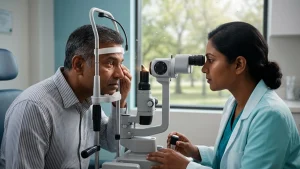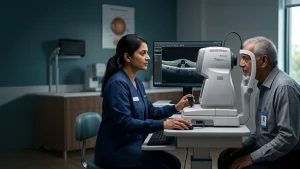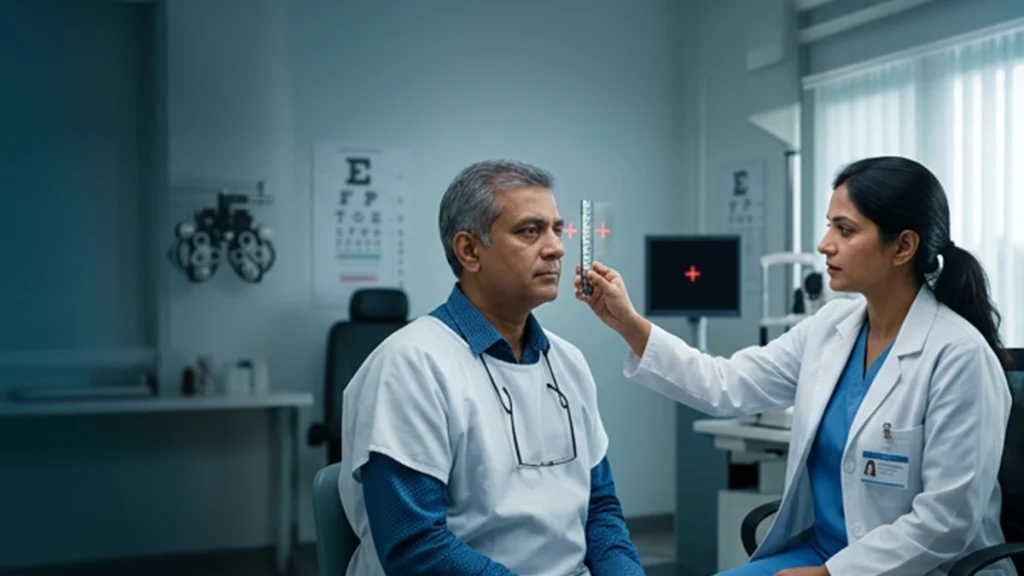
Seeing reports of a single entity in two different forms at the same time is a disquieting experience. This is what we term as diplopia or double vision. The images may present themselves side by side, on top of each other, or at a rotation. Also some people report Diplopia in itself is a disease. It is a symptom which may present when there are issues with the eye, eye muscles, nerves or brain. Some cases are due to minor problems while at other times it is a serious condition that may require immediate medical care. The pattern of the double vision helps doctors in their approach to the correct diagnosis and appropriate diplopia treatment.
What Is Diplopia?
Diplopia is the experience of a double image when in fact there is only a single image present. Also doctors put it into 2 categories monocular and binocular diplopia. This distinction is important as a clue to the origin of the problem.
In monocular diplopia the second image stays present when the unaffected eye is covered. Intra ocular issues in the affected eye may cause this to happen. As for binocular diplopia, covering either eye usually causes the second image to go away. That is a sign which the eyes may not be aligning properly. NIH hosted clinical literature also reports that this is a key early step in the assessment of double vision.
| Type | What Usually Happens | Possible Source |
| Monocular diplopia | Double vision remains when viewing through the affected eye | Cornea, lens, refractive or other optical problems |
| Binocular diplopia | Two images appear with both eyes open and disappear when either eye is covered | Eye alignment, muscles, cranial nerves or neurological pathways |
What Are the Common Diplopia Causes?
There is a large variety of diplopia causes for which self diagnosis is not appropriate. Monocular diplopia may present with refractive errors, dry eye, corneal abnormalities, cataracts or other visual issues. The National Eye Institute reports that refractive errors bring on symptoms which include double vision, blurred vision and eye strain.
The causes of binocular diplopia are many. Eye misalignment which is strabismus plays a key role. Also problems with the third, fourth or sixth cranial nerves which do affect coordinated eye movement. Also we see that hypertension, myasthenia gravis, orbital disorders, trauma and some neurological conditions play a role. NIH reports that diplopia may present with ophthalmic, neurological or extraocular muscle issues.
Even out issues with eye teaming which may result in double vision. For example the National Eye Institute reports that convergence insufficiency may cause blurry or double vision during close in tasks.
How Is Diplopia Diagnosed?
A careful diplopia diagnosis starts with identifying what exactly brings out the symptom and when. Your ophthalmologist may ask if the double vision goes away when I cover one eye. Also the doctor may ask if the images are at a horizontal, vertical or diagonal angle.
During a diplopia diagnosis,the ophthalmologist will test visual acuity, eye alignment, pupil responses and eye movements. Also in the full scale eye exam other issues related to the refractive, corneal or lens may be brought to light. As per what we find we may also require to do a neurological assessment, blood tests or imaging.
| Assessment | Why It May Be Done |
| Eye alignment and movement examination | Checks how well both eyes work together |
| Visual acuity and refraction | Looks for optical or refractive causes |
| Pupil and neurological assessment | Checks for possible nerve-related signs |
| CT or MRI when clinically indicated | Helps investigate certain orbital or neurological diplopia causes |
What Is the Treatment for Diplopia?
The which diplopia treatment you require depends on its cause. We do not have a universal therapy for everyone. Which might be corrective glasses or contact lenses we use when there is a visual component to monocular diplopia.
For binocular diplopia we may use prism lenses in some cases as a tool to get the two images to align. Also at times temporary occlusion will help with that which is troublesome while we look into and treat the base issue. In other cases we may see that it is due to a problem with the eye muscles, nerves, orbit or a systemic disease and thus we will treat that which is found. Some may also require eye muscle surgery when that is the best clinical approach. So in fact what we do for diplopia is to treat the issue as well as the symptom. The exact treatment plan should come out of a full diplopia work up instead of from home remedies.
When Does Double Vision Need Urgent Attention?
Sudden onset of double vision is a matter which requires medical evaluation at once; specially when it’s associated with very bad headaches, abnormal pupillary response, or other nervous system symptoms. NIH reports that emergency medical evaluation is needed for any acute case of double vision, also when it is brought on by a headache or a pupillary issue.
New onset double vision following an injury also will need your doctor’s care. Early intervention allows doctors to diagnose the serious cause of the diplopia and begin proper treatment right away.
Conclusion
Diplopia has many causes which may range from a visual issue to a problem with eye movement and neurological paths. It is very important for us to first determine if your diplopia is monocular or binocular. Should you be living with persistent or acute double vision we recommend you come in for a full eye exam to see what is causing the diplopia, get an accurate diagnosis, and find the best route of treatment. At ASG Eye Hospital we give out in depth assessments for every patient. Please do not delay having that evaluation.
Frequently Asked Questions
- Can diplopia go away on its own?
Some cases of diplopia do improve as the base condition improves. But persistent or sudden double vision should be evaluated by a professional because the outcome depends on the cause.
- Is binocular diplopia serious?
Binocular diplopia is a symptom of many conditions which range from eye alignment issues to neurological disorders. An accurate diplopia diagnosis is key to determining the cause and how urgent it is.
- Can glasses help with diplopia?
For some causes of diplopia glasses may help. Also Prisms in glasses also may help selected patients with binocular diplopia which is based on their eye alignment and what we see in the exam.
- How do doctors identify diplopia causes?
We evaluate the pattern of double vision, eye movements, alignment and overall eye health. Also we may run additional tests to support the diplopia diagnosis when needed.
- What is the best diplopia treatment?
There is no universal diplopia treatment. Treatment is based on what is causing the problem which may be from the eye itself, eye alignment, muscles, nerves or another medical condition.