Have you ever seen that your pupils appear abnormally large in bright rooms? They are meant to open wide in low light. But if they remain that way or don\’t react as they should to light, that may be mydriasis. Mydriasis meaning a pupil which is abnormal or which is wide at an unusual time. In some cases the change is temporary and harmless. In others it may be from medication, eye injury, or a problem with the nerves which control the pupil. A sudden change, in particular of one eye, requires close attention.
What Is Mydriasis?
If you are wondering what is mydriasis, it is a condition of the dilation of the pupil. In medical mydriasis definition is described as an abnormally large pupil which also does not respond as it should to light. The U.S. National Library of Medicine’s MeSH resource reports mydriasis to be a pupil dilation greater than 6 mm which also fails to react to light stimulation.
To define mydriasis means in simple terms think of a pupil which is larger than it should be for the present light. Also note that this term is often misspelled as midriasis, but the correct medical spelling is mydriasis. Pupil size changes throughout the day. The iris has muscles which cause the pupil to get larger or smaller in response to light. Thus a large pupil in the dark does not always mean mydriasis.
Common Causes of Mydriasis
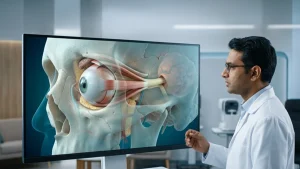
Several causes of mydriasis. In some of our eye exams we put in dilating drops which allow us to see the back of the eye better. Also certain drugs and chemical exposures may cause the pupils to increase in size. Nerve issues may also play a role in this. For instance issues with the oculomotor or third cranial nerve may cause large pupils which also may present with double vision, eye movement issues, or a drooping eyelid.
Eye or head injuries are another possible cause. Traumatic mydriasis is the result of injury which in turn damages the iris sphincter the muscle which causes the pupil to constrict. Thus the pupil may appear larger, more out of shape, or less reactive to light.
| Possible cause | What may happen |
| Normal response to darkness | Pupils enlarge temporarily |
| Dilating eye drops | Temporary mydriasis after an eye examination |
| Medicines or chemical exposure | One or both pupils may become enlarged |
| Eye trauma | Traumatic mydriasis or an irregular pupil may occur |
| Nerve problems | Dilated pupil may occur with eyelid or eye-movement changes |
| Certain eye conditions | Pupil size and light response may become abnormal |
Miosis vs Mydriasis: What Is the Difference?
Understanding the difference between miosis vs mydriasis is simple. Miosis is when the pupil gets smaller, and mydriasis is when it gets larger. We see these changes mostly in how the eyes adapt to different lighting. In terms of mydriasis vs miosis what doctors look at goes beyond pupil size. Also they look at if both pupils are the same and the speed at which each pupil reacts to light.
| Feature | Mydriasis | Miosis |
| Pupil appearance | Enlarged | Constricted |
| Normal light association | More common in darkness | More common in bright light |
| Main change | Pupil widens | Pupil narrows |
| Medical concern | Persistent or abnormal dilation | Persistent or abnormal constriction |
What Is Unilateral Mydriasis?
Unilateral mydriasis is a condition which presents as one pupil being more dilated than the other which in turn is a different size. Not all variation in pupil size is a result of disease. MedlinePlus reports that in some healthy people slight differences may occur. However a new or persistent difference does require a medical work up.
Possible single sided mydriasis causes may include accidental exposure to some drugs or eye drops, prior eye surgery, iris injury, nerve dysfunction, also other eye or neurological issues. Unusual appearance of mydriasis in one eye is of greater alarm when associated with headache, eye pain, double vision, loss of vision, vomiting, a drooping eyelid, confusion, or recent head trauma.
When Should You Seek Medical Care?
A student which may present itself as large and swollen for some time after administration of dilation medications usually has a known reason for it. But, when the dilation of the pupil is for no apparent reason or appears suddenly it should not be a matter of routine.
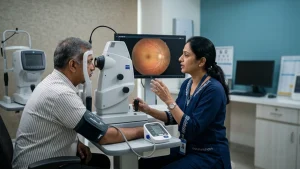
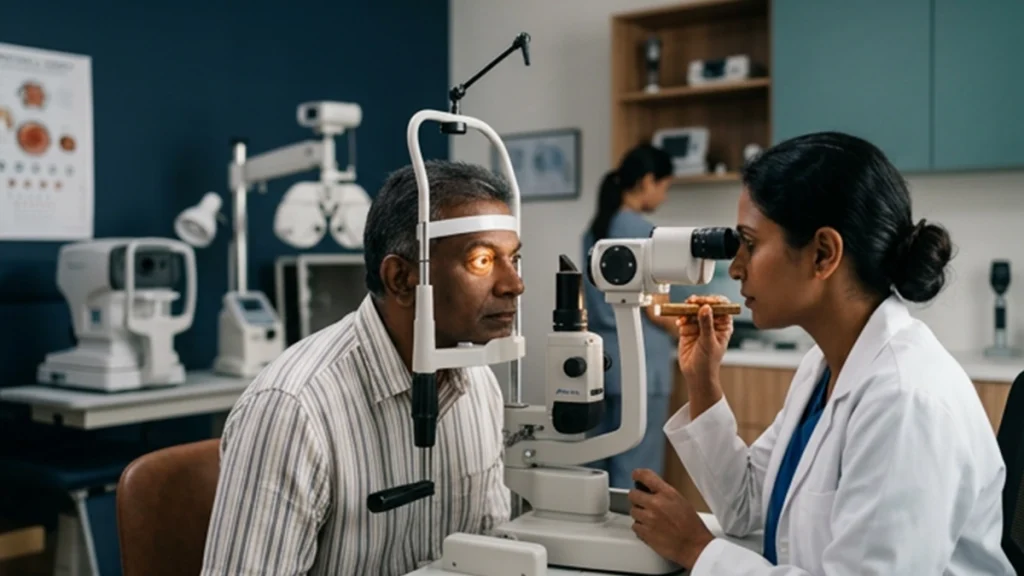
Go see the emergency medical personnel at once if your mydriasis appears out of the blue after an eye or head injury. Also bring in prompt medical care when a dilated pupil is present along with serious headache, blurred or double vision, eye pain, vision loss, vomiting, or a drooping eyelid. MedlinePlus also says that you should get a medical work up for sudden changes in the size of your pupils, especially when other neurological or visual symptoms are present. An ophthalmologist is able to look at the size and form of the pupil and its response to light. Also the doctor may go over what drugs you are on, past injuries, and any other symptoms in order to determine what is the cause of the mydriasis.
Conclusion
Pupils change in size according to the lighting which they are exposed to, thus a large pupil is not always something to be worried about. But persistent or sudden mydriasis may sometimes point to an eye, medication related, traumatic, or neurological issue. Pay special attention to sudden unilateral mydriasis, traumatic mydriasis, or pupil dilation which also brings about pain or vision changes. An ophthalmologist is able to determine what is causing the enlarged pupil and if in fact more in depth testing or treatment is required.
For unexplained pupil changes or any other eye symptoms it is advised that you schedule a full eye evaluation with ASG Eye Hospital.
Frequently Asked Questions
- Is mydriasis always dangerous?
No. Mydriasis is a normal response to the dark or use of certain eye drops. But if it is persistent or without cause, an eye exam is in order.
- What is the simplest mydriasis meaning?
By which mydriasis meaning is simply the pupil enlarging and dillating beyond what is usual for that situation.
- What causes traumatic mydriasis?
Also, traumatic mydriasis will present when an eye injury has affected the iris sphincter or other elements that control pupil size.
- What is the difference between miosis vs mydriasis?
In terms of miosis vs mydriasis, miosis is the constriction of the pupil, and mydriasis is the dilation.
- Should unilateral mydriasis be checked by a doctor?
New onset of unilateral mydriasis should be looked at in detail especially if the cause is not clear or if there are associated symptoms like headache, eye pain, double vision, or drooping eyelids.