High blood pressure affects more than just the heart. Over time it may cause damage to the small blood vessels of the retina which is the light responsive tissue in the back of the eye. Also known as hypertensive retinopathy. Through hypertensive retinopathy grading doctors are able to see the extent of retinal damage and thus determine the seriousness of a patient’s high blood pressure.
Also many are free of hypertensive retinopathy symptoms. That is why it is very important for people with hypertension to have routine eye exams. Changes in the eye may also present signs of very high blood pressure that has been present for some time.
What Is Hypertensive Retinopathy?
Hypertensive retinopathy is a result of persistent high blood pressure which in turn damages retinal blood vessels. These vessels may become narrow, thin, or lose their flexibility. In more severe cases we see retinal bleeding, fluid leakage and optic disc swelling.
When doctors hypertensive retinopathy grading. they will be looking at these changes. Also it is to be noted that the different hypertensive retinopathy stages reflect the extent of the vascular and retinal damage.
As per MedlinePlus which is a service of the U.S. National Library of Medicine higher blood pressure and a longer term hypertension play a role in the increased degree of retinal damage.
Hypertensive Retinopathy Grading Explained
A typical description of the hypertensive retinopathy grading scale which puts retinal changes into 4 grades is used. We see that which may be mild narrowing of retinal arteries at one end of the scale to very severe retinal and optic nerve involvement at the other.
| Grade | Typical retinal changes |
| Grade 1 | Mild narrowing of retinal arterioles |
| Grade 2 | More obvious narrowing with arteriovenous crossing changes |
| Grade 3 | Grade 2 changes with haemorrhages, cotton-wool spots or exudates |
| Grade 4 | Severe changes with optic disc swelling and possible macular involvement |
This hypertensive retinopathy grading scale is a tool which we use to describe the degree of disease. But also it is the ophthalmologist’s role to take blood pressure and general health into account.
Signs and Symptoms of Hypertensive Retinopathy
Early in the course of hypertensive retinopathy symptoms are often not present. Some only find out about htn retinopathy during a routine dilated eye exam. In advanced disease hypertensive retinopathy symptoms which may include blurred or reduced vision.
Also very high blood pressure may present with a headache and sudden visual changes that require urgent medical care. In serious cases hypertensive retinopathy signs we see narrowing of retinal arterioles, arteriovenous nicking, retinal hemorrhages, cotton-wool spots and hard exudates.
Also doctors may note the salus sign in hypertensive retinopathy in which a retinal vein is pushed aside at an arteriovenous crossing. Also reported is silver wiring in hypertensive retinopathy which is the term for the very different look of affected retinal arterioles.
Hypertensive Retinopathy vs Diabetic Retinopathy
The issue with hypertensive retinopathy as compared to diabetic retinopathy is that although they both affect retinal circulation these are for different reasons.
| Feature | Hypertensive Retinopathy | Diabetic Retinopathy |
| Main underlying condition | High blood pressure | Diabetes |
| Common changes | Arteriolar narrowing, AV changes, haemorrhages | Microaneurysms, haemorrhages, leakage |
| Main management focus | Blood pressure control | Blood glucose and systemic risk control |
Also it is noted that in practice hypertensive retinopathy vs diabetic retinopathy, often coexist. A detailed retinal exam is what we use to tell them apart.
Diagnosis, ICD-10 and Treatment
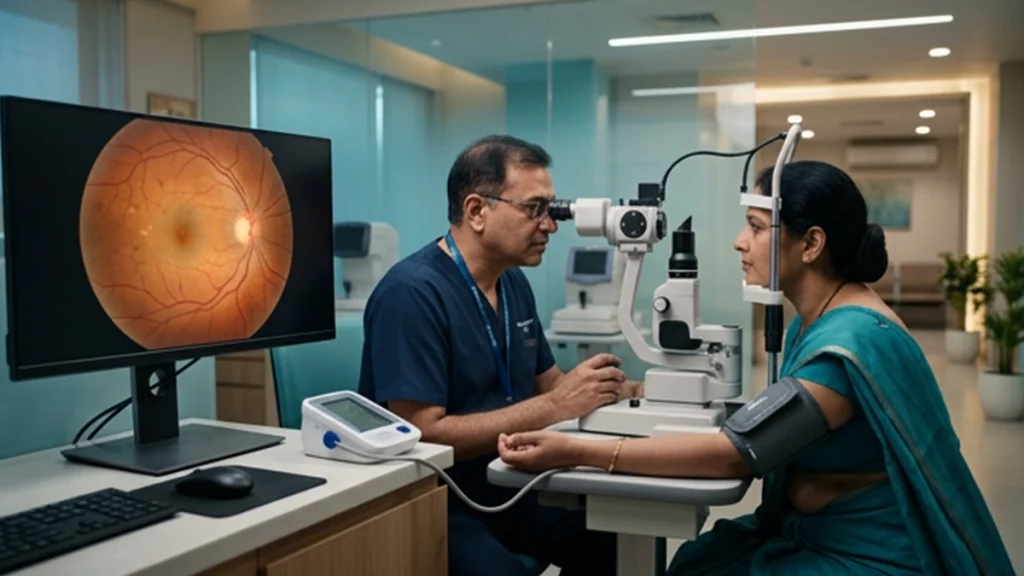
An ophthalmologist at the time of a full retinal exam can identify signs of hypertensive retinopathy. Also at the time which is clinical we may recommend additional retinal imaging. We use Hypertensive retinopathy grading to determine the level of change which is present.
As for people that are looking for hypertensive retinopathy ICD 10 codes it is known that they may see that which they do vary by affected eye. In the U.S. In the CMS report we see H35.031 for right eye, H35.032 for left eye, H35.033 for bilateral disease and H35.039 for when the eye is not specified.
Mainly in hypertensive retinopathy treatment we are to get that blood pressure under control with medical supervision. In the eye care setting we also do follow up on retinal changes and look out for complications. Educational searches like what you may do for hypertensive retinopathy ppt are to provide general info, but should not take the place of a proper eye exam.
Conclusion
Hypertensive retinopathy serves as a visible indicator of what high blood pressure is doing to the small blood vessels in the body. We may through education of the hypertensive retinopathy grading, recognising hypertensive retinopathy signs, and receiving timely hypertensive retinopathy treatment support better eye and general health.
If you have hypertension and notice blurred vision or sudden changes in eyesight an eye exam should not be put off. At ASG Eye Hospital we have ophthalmologists which do retina evaluation, report on what they see and will put in place what care is required based on what is found at the exam.
Frequently Asked Questions
1. Can hypertensive retinopathy cause blindness?
Severe disease may present in the macula or optic nerve at which time vision can be impaired. We see that early diagnosis plus proper blood pressure management will in fact reduce the chance of more damage.
2. What are the early hypertensive retinopathy symptoms?
It is also the case that many people with high blood pressure have no retinopathy symptoms in the very early stages. That is why it is recommended that people live with hypertension get their eyes checked prior to the onset of visual issues.
3. Is hypertensive retinopathy reversible?
It has also been found out that some retinal changes go back to normal once blood pressure is brought under control. But that which has done extensive damage to the macula or optic nerve will still be present.
4. Why is hypertensive retinopathy grading important?
Also, Hypertensive retinopathy grading is what health care providers use to report the extent of retinal damage as well as point out which cases may need in-depth systemic work up.