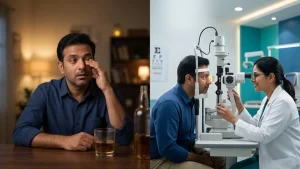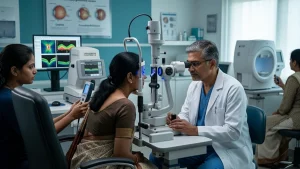
Most people think of exercise in terms of weight management, heart health, or stronger muscles. But the connection between Exercise and Eye Health is an issue which we should pay more attention to. Your eyes require healthy blood vessels, stable blood pressure, balanced blood sugar, and efficient Blood Circulation. Regular physical activity supports these elements and may in turn improve Healthy Vision.
A sedentary lifestyle isn’t a sure fire thing for eye disease. But inactivity does play a role in health issues which in turn may damage the eyes. Thus into the picture steps Exercise and Eye Health which may help you in your choice of lifestyle changes at the same time as you go on with regular eye check ups.
What Is the Connection Between Exercise and Eye Health?
Exercise and Eye Health plays a role in which it is through the health benefits that physical activity provides to the whole body. What we put our bodies through in terms of exercise improves cardiac health and also helps the body to better manage blood pressure, cholesterol, weight and blood glucose.
These also play a role in Eye Health. The retina and optic nerve require a good supply of oxygen and nutrients. With proper blood circulation they get what they need via a network of small blood vessels.
Research also reports on how physical activity plays into intraocular pressure. We see that moderate aerobic activity may cause a drop in eye pressure which is temporary. But do not use exercise as a substitute for your prescribed glaucoma treatment or for your regular eye exams.
| Effect of Physical Activity | Possible Relevance to the Eyes |
| Supports cardiovascular fitness | May support healthy Blood Circulation |
| Helps manage blood sugar | Important for reducing diabetes-related complications |
| Helps manage blood pressure | Supports overall vascular health |
| May temporarily influence eye pressure | Relevant when studying Exercise and Eye Health |
| Supports weight management | May reduce systemic health risks that can affect Eye Health |
Can Lack of Exercise Harm Your Eyes?
Lack of physical activity in itself doesn’t usually damage the eyes. What we see is its connection to issues like obesity, high blood pressure, cardiovascular disease, and type 2 diabetes.
Diabetes is a disease which requires special care in relation to Exercise and Eye Health. What we see is high blood sugar over time damages small retinal blood vessels which in turn leads to diabetic retinopathy. The CDC reports that exercise is a great tool in managing diabetes also they note that physical activity plays a protective role for the eyes.
Regular activity may play a role in Healthy Vision as part of a large-scale prevention health strategy. It improves blood circulation and supports metabolic health. At the same time, it is important to note that regular exercise does not guarantee protection against all eye diseases.
Exercise, Blood Circulation and the Eyes
Healthy eyes require a steady blood flow. The retina is very active tissue which at the same time the optic nerve plays the role of carrying visual info from the eye to the brain. Healthy blood circulation supports these structures.
This is why Blood Circulation is at the core of what we discuss in terms of Exercise and Eye Health. Regular physical activity improves cardiovascular health which in turn helps the body to efficiently deliver oxygen rich blood.
Research reports on changes in ocular blood flow post exercise. As for the in depth long term effect of exercise on certain eye diseases we are still in the research stage. Thus exercise should support professional Eye Health rather than replace it.
Can Exercise Help Maintain Healthy Vision?
Regular physical activity plays a role in Healthy Vision in that it helps to manage many of the risk factors which play a role in eye disease. For people with diabetes better blood glucose control is very important. Also exercise may play a role in IOP. We note that moderate aerobic exercise has been seen to cause temporary reductions in eye pressure but that responses do vary by the type of activity and also by the individual.
For most people, walking, cycling, swimming, or other moderate activities can form part of a lifestyle that supports Exercise and Eye Health and general wellbeing.
| Lifestyle Habit | Role in Supporting Healthy Vision |
| Regular moderate exercise | Supports cardiovascular and metabolic health |
| Managing blood sugar | Helps reduce diabetes-related eye complications |
| Managing blood pressure | Supports healthy Blood Circulation |
| Balanced nutrition | Provides nutrients needed for normal eye function |
| Regular eye examinations | Helps identify Eye Health problems early |
Is Every Type of Exercise Good for the Eyes?
Not all physical activities have the same effect on intraocular pressure, that is. With moderate aerobic exercise, we may see a short term drop in intra ocular pressure, on the other hand with intensive resistance training which may include heavy lifting that also has breath holding we may see that pressure go up.
This doesn’t mean that people with glaucoma have to forgo exercise. What we do see is that each issue of exercise and eye health has to be looked at separately. For anyone which includes but is not limited to glaucoma, retinal disease, recent eye surgery, or any other major eye issue we advise you to check with your ophthalmologist what is and isn’t right for you.
How Much Exercise Is Helpful for Eye Health?
Consistency is key more so than intense bursts of activity. For good health which includes better Blood Circulation, blood sugar management, heart health, and Healthy Vision regular walking or other moderate physical activity is what you should do.
If you’ve been inactive, go slow and gradually increase your activity. And if you have any medical or Eye Health issues it’s best to chat with your doctor before making large changes to your exercise routine.
Conclusion
Exercise plays a role in Eye Health which is a factor to consider beyond specific eye care practices. Physical activity improves blood circulation, blood sugar levels, cardiovascular health and also plays into the health of your eyes over the long term.
Exercise is a great component in health but it is not a prevention for all eye diseases and should not be used as a substitute for treatment. What we put forth is that having an active lifestyle also has a balanced diet, good control of chronic issues, and regular in-depth eye exams is a better approach to Eye Health. Should you see sudden changes in vision, persistent blurring, flashes, floaters or any other atypical symptoms we at ASG Eye Hospital advise you to seek out medical attention right away.
FAQs
1. Can lack of exercise cause poor eyesight?
Lack of exercise is not a cause of refractive errors like myopia or hyperopia. But inactivity does play a role in the development of health issues which in turn may affect Eye Health over time.
2. Does exercise improve blood circulation to the eyes?
Physical activity is a key factor in improving cardiovascular health and also in your blood circulation. In research we see that which eye exercises do best for blood flow is still being looked at.
3. Can exercise prevent glaucoma?
Exercise does not guarantee to prevent glaucoma. Some studies report of temporary decreases in intraocular pressure after moderate exercise. It is still very important to have regular glaucoma screenings.
4. Is walking good for eye health?
Walking is a great option for moderate exercise. It supports Blood Circulation, metabolic health, and cardiovascular fitness which in turn contributes to better Healthy Vision.
5. Can people with eye diseases exercise?
Many people with eye issues can still be active. But some retinal conditions, glaucoma, recent operations, or other issues may call for changes in exercise. Check with your ophthalmologist for personal advice.