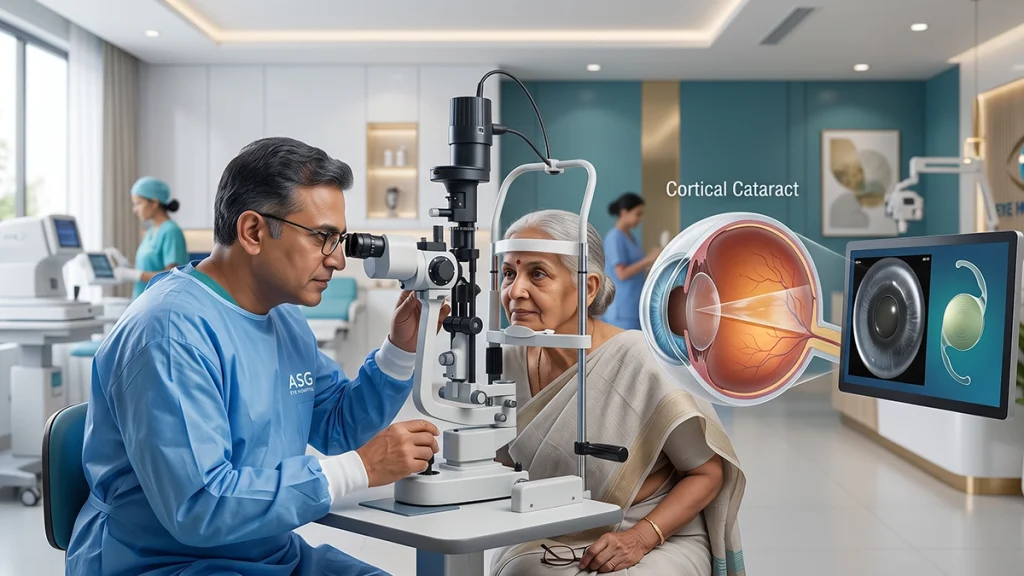
A cataract forms when the usually clear eye lens instead becomes cloudy. This cloudiness may slowly take out of the picture which light brings into the retina. A cortical cataract is a which we see play out in many cases of age related cataract that affect the outlying layers, or cortex, of the eye’s natural lens. It usually appears as white, wedge shaped or spoke-like areas that slowly migrate toward the center.
Understanding the cortical cataract’s meaning, what its signs are, and how it progresses can help people to get proper eye care at the right time. While in the early stages this may only bring minimal issues, an advanced cortical cataract can affect reading, driving, night vision, and other daily activities.
What Is a Cortical Cataract?
A cortical cataract forms in the lens cortex, which is the outer layer of the lens that surrounds the central nucleus. Research reports that see changes in the former present with fluid clefts and spoke-like or wedge shaped opacities in this part of the lens.
The simple cortical cataract meaning is clouding which begins in the periphery of the natural lens. As these cloudy areas grow toward the center they may scatter incoming light and reduce visual acuity.
The term cortical senile cataract is used for when this type of cataract develops as part of the aging process. In ophthalmic literature you may also come across older or more specialized terms such as cupuliform senile cortical cataract.
What Causes Cortical Cataract?
Ageing is a key factor in the development of a cortical cataract. As time goes by the proteins and internal structures of the lens undergo changes. These changes may bring about a reduction in lens transparency which in turn plays a role in cataract development.
Other factors that may put you at risk for cataracts. Diabetes, smoking, prolonged ultraviolet exposure, past eye injuries, certain eye surgeries, and long term steroid use may increase your risk. Also may be a genetic component that plays in. Also some people will see the word corticated in medical info which they may find confusing. In general medical use, to say something is corticated means it is related to the cortex or outer layer of a structure. It should not be mistaken for a diagnosis of cortical cataract.
Symptoms of Cortical Cataract
Symptoms of a cortical cataract present mildly at the early stage. As time goes the cloudiness progresses which in turn may cause blurred or hazy vision. Headlights at night and sunlight may also become an issue. Glare from lights and halos around them also report to increase.
Night time driving is a particular challenge with a cortical cataract which may scatter light that enters the eye. Also some see a dimming of colors, double vision in one eye, or frequent changes in their prescription for glasses. These symptoms also may present with other eye problems which is why it is important to have an eye exam.
| Stage | Typical Changes | Possible Effect on Vision |
| Early | Small peripheral cortical opacities | Little or no noticeable vision difficulty |
| Developing | Spoke-like opacities extend inward | Glare, halos and mild blurred vision |
| Advanced | Larger areas of the cortex become cloudy | Reduced clarity and difficulty with daily activities |
| Mature | Extensive lens clouding | Significant visual impairment |
Cortical Cataract Stages and Progression
At the first stage of cortical cataract it may present at the periphery of the lens. As these changes at first do not affect the visual axis a person may not notice them. As the cortical cataract progresses, spoke-like areas of opacification may grow towards the center. Light scatter may increase which in turn may cause issues with glare and night vision. In the advanced stage of cortical senile cataract routine tasks may be interfered with.
The term cupuliform senile cortical cataract is not as commonly used in day to day patient care. If you see this term on a report from an ophthalmologist they can explain what it means in relation to the individual lens changes.
How Is Cortical Cataract Diagnosed?
An ophthalmologist may diagnose a cortical cataract at the course of a full eye exam. Tests may consist of visual acuity test and lens study with the use of a slit lamp. Also a dilated eye exam is a tool the doctor uses to look at other internal structures in the eye.
Understanding the cortical cataract meaning from an eye specialist is useful because cataract type alone does not determine treatment. Doctors also consider how much the condition affects vision and daily life.
Treatment for Cortical Cataract
Treatment is based out of the degree to which the cortical cataract impacts daily life. At the early stages we may see which of the updated spectacles, better lighting, and glare reduction will give some relief in terms of comfort for the patient. That said, these options do not actually treat the cloudy lens.
When a cortical cataract significantly affects vision, cataract surgery is the definitive treatment. In surgery the cloudy natural lens is removed and replaced with an artificial intraocular lens. The National Eye Institute reports that surgery is the treatment which removes cataracts.
| Treatment Approach | When It May Be Considered | Purpose |
| Updated spectacles | Mild cortical cataract | Improve functional vision temporarily |
| Better lighting | Early symptoms | Make reading and close work easier |
| Regular monitoring | Cataract not significantly affecting life | Track progression |
| Cataract surgery | Significant visual difficulty | Remove cloudy lens and implant an artificial lens |
People affected by cortical senile cataract should have a consultation with an ophthalmologist to determine the proper time for surgery which may be before very poor vision sets in. At ASG Eye Care we recommend that an eye exam determine whether a particular individual’s visual issues are best treated by cataract surgery or through a decision to simply monitor the cataract.
Conclusion
A cortical cataract is a slow developing type which may not be noticed until it is well along. Signs of the condition include glare, halos, blurred vision and progressive night time vision issues which may prompt assessment. Regular eye exams are very important for seniors and people with risk factors for cataract.
If a cortical cataract begins affecting reading, driving, work, or daily independence, an ophthalmologist can assess its severity and discuss appropriate treatment. Early evaluation helps patients understand their condition and make informed decisions about cataract care.
Frequently Asked Questions
1. What is the cortical cataract meaning?
The cortical cataract meaning is used to describe cataract formation in the outer cortex of the natural eye lens. It may present as wedge shaped or spoke like cloudy areas.
2. Is cortical cataract serious?
At first a mild cortical cataract may not cause great issues. But as it progresses it may bring on glare, blurred vision and also trouble with everyday activities.
3. What is cortical senile cataract?
A cortical senile cataract is a type of age related cataract which affects the cortex of the lens. This condition usually develops slowly.
4. What does corticated mean?
The term corticated is used to describe something which pertains to a cortex or outer layer. It is important that the term corticated not be taken to mean the same as cataract.
5. What is cupuliform senile cortical cataract?
Cupuliform senile cortical cataract is a more technical language used for age related cortical lens changes. An ophthalmologist will use this term as per the results of a particular eye exam.
6. Can cortical cataract be treated without surgery?
Early signs of cortical cataract may at times be improved with the use of spectacles and better lighting. These measures do not remove the cataract itself. When vision issues impact daily life that is when surgery becomes an option.
Government and Authoritative Reference Links
Directorate General of Health Services, Ministry of Health & Family Welfare – National Programme for Control of Blindness and Visual Impairment (NPCBVI):
https://dghs.mohfw.gov.in/opthalmology-division.php?
Maharashtra Public Health Department – National Programme for Control of Blindness and Visual Impairment:
https://phd.maharashtra.gov.in/en/scheme/national-program-for-control-of-blindness-and-visual-impairment/?