Shingles is known for a painful skin rash but also may cause serious issues when it affects the face which includes the forehead, eyelids, nose and the areas around the face. Shingles eye may in fact damage internal structures of the eye and will not be reversed without immediate medical attention.
Doctors term this condition herpetic ophthalmic shingles (HOS). What we see is the varicella zoster virus which also causes chicken pox to reactivate in a nerve which supplies the face and eye. If you see shingles around eye area take note of the symptoms which are serious and get an ophthalmic exam as soon as possible.
What Is Shingles in the Eye?
Shingles in the eye is a result of the varicella zoster virus which has affected the ophthalmic branch of the trigeminal nerve. This infection may cause a pain rash across one side of the forehead, scalp, upper eyelid, or nose. In some people shingles near eye structures also cause inflammation within the eye.
The CDC reports that herpes zoster ophthalmicus causes acute or chronic eye complications at times which may include vision loss. This is why evaluation at the first sign of shingles near the eye is very important.
Not all shingles eye which affect the eye do permanent damage. Also it is a risk that waiting out symptoms without seeing a health care professional may allow the inflammation to progress.
What Are the Common Shingles in Eye Symptoms?
The first presentation of shingles in eye symptoms may be in the form of a burning, tingling, sensitivity to light, headache or pain which may present itself in one side of the face. Then may also see the development of a blistery rash around the forehead, eyebrow, eyelid, or nose. Eye symptoms may also present at the same time as the above mentioned symptoms of a few days later.
| Symptom | What You May Notice |
| Facial rash | Painful blisters on one side of the forehead or around the eye |
| Eye redness | Red or irritated appearance |
| Eye pain | Burning, aching, or deeper discomfort |
| Light sensitivity | Difficulty looking at bright light |
| Blurred vision | Reduced or hazy eyesight |
| Eyelid swelling | Puffy, tender eyelids |
People which present with eye shingles may also have excessive tearing or discomfort upon blinking. A rash which goes to the tip or side of the nose indicates a greater risk for ocular involvement. That said, in some cases this sign may be absent. Still, any report of vision changes or severe eye pain is a reason to see a health care professional.
Can Shingles Eye Cause Vision Damage?
Yes. Shingles of the eye may affect a few very important eye structures. The National Eye Institute reports that when shingles affect the cornea they may produce inflammation and scarring.
A shingles eye infection may cause conjunctivitis, keratitis, uveitis or other inflammatory issues. In more severe cases the infection may go after the retina or the optic nerve. Also we see that in herpetic eye disease which is about half of shingles cases may develop some sort of ocular issue.
| Eye Complication | Possible Effect |
| Conjunctivitis | Redness and irritation |
| Keratitis | Corneal inflammation and blurred vision |
| Uveitis | Pain, redness and light sensitivity |
| Corneal scarring | Persistent reduction in vision |
| Raised eye pressure | Risk of secondary glaucoma |
| Retinal or optic nerve involvement | Potential serious vision loss |
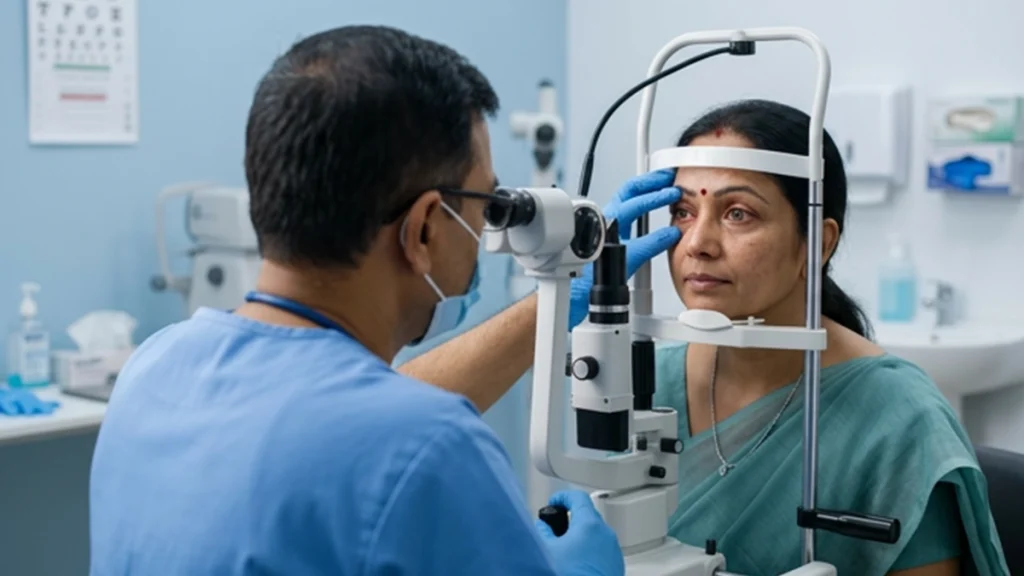
Because shingles in the eye can affect different structures, an ophthalmologist may perform a detailed eye examination rather than assessing the skin rash alone.
Who Is More at Risk?
The risk of getting shingles also goes up with age. Also people with weak immune systems are at higher risk of severe disease. Also we see shingles around eye complications in other adult groups.
Previous cases of chicken pox cause the virus to lie dormant in nerve tissue for years. When the virus reactivates in a facial nerve, that is when eye shingles may present.
How Is Shingles of the Eye Treated?
Treatment of shingles of the eye is with antiviral medication which is prescribed by a doctor. Early start of antiviral therapy reduces viral activity and may also reduce the chance of ocular complications.
Treatment is based on what part of the eye is affected. In that which uveitis, increased eye pressure, or corneal issues present we may put in additional medications as prescribed by the ophthalmologist. Do not self treat shingles eye symptoms with steroid eye drops as their improper use may in fact aggravate some eye conditions.
Regular follow-up can also matter because some complications of shingles in the eye can develop after the skin rash begins improving.
When Should You See an Eye Doctor?
Seek immediate medical attention when shingles near eye may cause redness, pain, swollen eyelids, light sensitivity, or changes in vision. A rash which appears on the forehead, eyelid, or nose also requires prompt assessment.
Do not delay until you see severe shingles in eye symptoms which present themselves; instead get in to see an ophthalmologist at the first sign of trouble. At that early stage an ophthalmologist may identify the inflammation and also do what is necessary to protect your delicate eye components.
Conclusion
A prompt that requires timely response is given for shingles which is a form of eye infection as opposed to a watchful waiting approach. Shingles of the eye may at first present as facial pain and a blistering rash but also may go on to cause redness, light sensitivity, blurred vision or more in depth inflammatory issues.
If you present with shingles in eye symptoms, shingles around eye, or shingles near eye see an ophthalmologist. Early diagnosis and proper treatment may help control the infection, reduce inflammation, and also will decrease the chance of preventable vision problems.
Frequently Asked Questions
1. Can shingles around the eye affect eyesight?
Yes. Shingles around eye area may progress to ocular inflammation. If the cornea, uvea, retina, or optic nerve become involved, eyesight may be affected.
2. Is shingles in the eye an emergency?
Shingles in the eye requires urgent medical evaluation as complications which may threaten vision. Very significant eye pain, redness, light sensitivity, or sudden vision changes should have prompt attention.
3. What does eye shingles feel like?
Eye shingles which may present with a burning facial pain, tenderness, puffy eyelid, redness, tearing, light sensitivity, or blurred vision. Symptoms do vary from person to person.
4. Can shingles near eye areas spread into the eye?
Yes. Shingles near eye tissues may affect the nerve which supplies the eye and its structures. This is the reason why it is recommended by doctors to have an eye exam when shingles breaks out on the face, nose, or eyelids.
5. Can shingles eye cause permanent vision loss?
A very serious issue with shingles which affects the eye may cause permanent vision damage in which large scale corneal, retinal, or optic nerve issues present. Early intervention is key to reducing that risk.
Reference Links
CDC – Clinical Features of Shingles (Herpes Zoster)
https://www.cdc.gov/shingles/hcp/clinical-signs/index.html?utm_source=chatgpt.com
National Eye Institute (NIH) – Corneal Conditions: Shingles
https://www.nei.nih.gov/eye-health-information/eye-conditions-and-diseases/corneal-conditions/other-types-corneal-disease?utm_source=chatgpt.com
NCBI Bookshelf – Herpes Zoster Ophthalmicus
https://www.ncbi.nlm.nih.gov/sites/books/NBK557779/?utm_source=chatgpt.com