Thyroid issues go beyond affecting your weight, energy levels, or heart rate. They also cause visible changes in your eyes. Some see dryness and irritation, others notice swelling, double vision, or eyes out of place.
One of the primary eye issues related to thyroid disorders is Thyroid Eye Disease. It mostly presents in patients with Graves’ disease which is an autoimmune issue that causes an over active thyroid. But also it is noted that eye issues and thyroid hormone levels do not always follow the same trend.
Recognizing the signs of early eye changes is important as timely evaluation may protect from discomfort, eye movement issues, and vision problems. Also in regard to thyroid symptoms which may go along with eye changes we tell patients that they may use this as a guide to speak to an ophthalmologist or endocrinologist
What Is Thyroid Eye Disease?
Thyroid Eye Disease is an autoimmune issue which effects the tissues around the eyes. Also known as thyroid associated ophthalmopathy, Graves’ ophthalmopathy or Graves’ Eye Disease.
The disease results from an immune system which attacks eye area tissues and muscles. This immune response in turn causes inflammation and swelling in the eye socket. As affected tissues enlarge they may push the eye out of place which results in Bulging Eyes.
According to the National Eye Institute, Graves’ Eye Disease may present with dryness, redness, double vision, puffy eyelids, light sensitivity, pain, pressure, and difficulty in moving the eyes. In rare severe cases swelling may put pressure on the optic nerve and in turn threaten vision
Although we see a strong connection between Thyroid Eye Disease and Graves’ disease, thyroid hormone levels don’t in fact account for all cases of eye symptoms. Some people develop eye disease which is either in spite of normal thyroid tests or after they have had thyroid issues treated.
How Can Thyroid Problems Affect the Eyes?
The thyroid gland is responsible for regulation of metabolism by production of thyroid hormones. In the case of Graves’ disease the immune system attacks the thyroid gland which in turn produces an excess of hormones. Also at the same time the autoimmune process may affect tissues behind and around the eyes.
This issue may cause eye muscle enlargement and growth of fat in the eye socket. Also the bony eye socket which has finite space, may see the eye pushed forward by the swelling. This produces the telltale sign of Bulging Eyes.
Inflammation also plays a role in disrupting normal eye movement. That is to say a person with Thyroid Eye Disease may report double vision, eye strain, discomfort, or have trouble looking in specific directions
The National Institute of Diabetes and Digestive and Kidney Diseases reports that over 33% of people with Graves’ disease will develop Graves’ oophalmopathy. This condition produces eye irritation, puffy eyes, light sensitivity, pressure, blurred vision, double vision, and Bulging Eyes
Common Symptoms of Thyroid Eye Disease
The symptoms present very differently in each patient. Early in Thyroid Eye Disease it may look like dry eye or an allergy. This at times causes delay in diagnosis. Common Thyroid Symptoms outside of the eyes may include weight loss which is unexplained, rapid heart rate, heat intolerance, sweating, tremors, nervousness, fatigue, muscle weakness, or trouble sleeping. When these symptoms are present with eye issues, evaluation for thyroid disease may be appropriate.
Eye symptoms can include redness, dryness, watering, swelling, sensitivity to light, eyelid retraction, pressure behind the eyes, double vision, and Bulging Eyes.
| Eye Change | What a Patient May Notice |
| Dry or irritated eyes | Burning, gritty feeling or frequent watering |
| Bulging Eyes | Eyes appear more prominent than before |
| Eyelid retraction | Upper eyelids appear unusually raised |
| Double vision | Two images of one object |
| Swelling | Puffy eyelids or fullness around the eyes |
| Eye pressure | Ache or pressure behind the eye |
| Reduced eye movement | Difficulty looking upward or sideways |
| Vision changes | Blurring or reduced colour perception in severe disease |
Symptoms may affect both eyes, but one eye can appear more affected than the other.
Is Graves’ Eye Disease the Same as Thyroid Eye Disease?
The terms are at times used synonymously as Graves’ Eye Disease is a common presentation of Graves’ disease. But in fact Thyroid Eye Disease is the more comprehensive term which includes autoimmune inflammation of the eye’s surrounding tissues.
Most of the time what we see is an overactive thyroid from Graves’ disease in patients that develop this condition. But some may also have normal thyroid levels or an underactive thyroid. This means do not rule out Thyroid Eye Disease simply because at the time of evaluation the thyroid hormone levels are within the normal range.
Patients with Graves’ Eye Disease should usually receive coordinated care because thyroid function and eye inflammation may need separate treatment.
Why Do the Eyes Bulge in Thyroid Disease?
Bulging Eyes which is also known as proptosis or exophthalmos develop when there is inflammation of tissues behind the eye which take up more space. In Thyroid Eye Disease inflammation may affect eye muscles, connective tissues, and fat within the orbit. The swelling causes the eyeball to protrude out as the surrounding bone does not expand.
Bulging eyes also may cause the eyelids to not close fully. This leaves the eye surface exposed which in turn increases risk of dryness, irritation, and corneal damage. Not all who have Graves’ Eye Disease develop severe proptosis. Some see only minor changes in their eyelids or what they experience is mild irritation without which there is little eye bulge.
Who Is More Likely to Develop Thyroid Eye Disease?
In many cases of autoimmune thyroid disease we see the development of new eye symptoms. Also it is the case that Thyroid Eye Disease presents most often in patients with Graves’ disease. Smoking is a large risk factor. The National Eye Institute reports that smoking increases the risk of eye problems in Graves’ disease and also which present them more so.
People also note when eye changes present with Thyroid Symptoms like rapid heart rate, unexplained weight loss or gain, tremors, sweating, tiredness, or heat intolerance. A past of autoimmune disease also plays a role in what that patient’s risk profile looks like
How Is Thyroid Eye Disease Diagnosed?
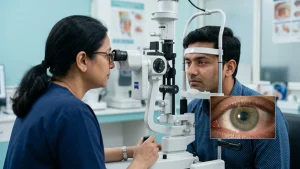
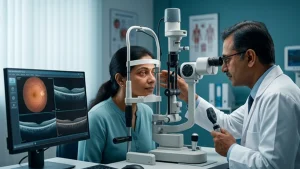
Diagnosis usually starts with a detailed medical history and eye exam. An ophthalmologist may check eyelid position, eye movement, eye pressure, the front of the eye, and the optic nerve. Also the doctor may measure how far forward the eyes are sitting which helps in the assessment of Bulging Eyes and also to monitor changes over time.
Blood work may include thyroid stimulating hormone and thyroid hormones and related antibodies. These tests also may point out Graves’ disease as well as other thyroid issues. When symptoms are very present that may also tell us we have to do imaging through means of CT or MRI to look at the eye muscles and structures in the orbit. We should look at the full picture of eye symptoms and also note any thyroid symptoms which may present rather than using a single test as a stand alone indicator.
Treatment Options for Thyroid-Related Eye Problems
Treatment depends on the severity and activity of Thyroid Eye Disease. Mild symptoms may need supportive care, while moderate or severe disease may require specialist treatment.
| Severity | Possible Management |
| Mild irritation | Lubricating eye drops and eye surface protection |
| Light sensitivity | Sunglasses and appropriate lubricants |
| Eyelids not closing fully | Night-time lubrication or other protective measures |
| Double vision | Prism lenses in selected patients |
| Active inflammation | Anti-inflammatory or immune-modifying treatment under specialist care |
| Significant Bulging Eyes | Specialist medical treatment or orbital surgery in selected cases |
| Optic nerve compression | Urgent specialist treatment to protect vision |
Controlling thyroid function remains important, but treating the thyroid does not always resolve the eye condition. Graves’ Eye Disease may need separate care from an ophthalmologist.
Patients should avoid changing thyroid or eye medicines without medical guidance.
Can Thyroid Eye Disease Cause Permanent Vision Problems?
Most of the time the disease is mild and does not cause permanent loss of sight. But in some cases of Thyroid Eye Disease we see that vision is put at risk. Also we may see very large swelling which in turn may press on the optic nerve behind the eye. Also there may be great exposure because of Bulging Eyes and poor lid closure which in turn may damage the cornea.
Patients report to emergency eye care if they have sudden vision loss, note large changes in color vision, experience severe eye pain, see their double vision get much worse, or have trouble closing their eyes. In the case of serious Graves’ Eye Disease early treatment is key to reducing complications.
Can Thyroid Eye Disease Improve?
In the course of the inflammatory phase of Thyroid Eye Disease which may vary from person to person symptoms may flare up for a while and then die down. Dryness, redness, and swelling may improve as the inflammation runs its course. However in some patients some structural changes may still be present. This includes issues like eyelid retraction, persistent double vision, or the issue of Bulging Eyes.
Long term treatment does for each person to their health issues and disease stage. Although in some cases general thyroid symptoms may improve, eye symptoms should still have proper follow up
When Should You Visit an Eye Specialist?
You may want to get an eye exam if you have thyroid issues which present with persistent redness, dryness, eyelid swelling, double vision, eye discomfort, or noticeable changes in eye position. For instance go in for a check up for Bulging eyes which tend to appear with other thyroid symptoms. Also see a medical professional.
People that are already diagnosed with Graves’ Eye Disease should report for follow up as recommended. Eye measurements which at home may not be noticed by the patient can be performed by a professional. At ASG Eye Hospital we do a full ophthalmic evaluation which may also include determination of whether the eye changes are due to the thyroid or to some other eye disease. As required we coordinate care with an endocrinologist to manage issues related to both thyroid health and eye health.
Conclusion
Yes we see that thyroid issues present in the eyes. In the case of Graves’ disease which is an autoimmune issue this connection is very strong. Thyroid Eye Disease can range from simple dryness and irritation to double vision, eye lid changes, and proptosis. Identifying Thyroid Symptoms along with changes in eye health may support early diagnosis
Although in most cases severe complications are rare, patients should pay attention to persistent eye pain, unexplained swelling, double vision, or Bulging Eyes. We recommend regular checkups which in turn will help doctors to see to it that inflammation is monitored and that the eye’s surface and vision are protected. Those with Graves’ Eye Disease may benefit from a team approach which includes an ophthalmologist and a thyroid specialist. If your thyroid issues are affecting your eyes, an assessment at ASG Eye Hospital can help determine the cause and will put in place the right eye care
Frequently Asked Questions
1. Can thyroid problems really affect the eyes?
Yes. Autoimmune thyroid disorders which include Graves’ disease may affect the eyes’ surrounding tissues which in turn causes Thyroid Eye Disease. Symptoms may include dry eyes, swelling, double vision, changes in the eyelids, and protrusion of the eyes.
2. Are bulging eyes always caused by thyroid disease?
No. Bulging eyes may present for many reasons. Thyroid related autoimmunity is a key cause but also may be a result of infection, inflammation, vascular issues, or orbital growths. An ophthalmologist should see you if you have unexplained eye protrusion.
3. What are the early signs of Graves’ eye disease?
Early in the course of Graves’ eye disease patients may see grittiness in their eyes, redness, tearing, puffiness, light sensitivity, or eyelid retraction. Also some report pressure behind the eyes or difficulty in moving them.
4. Can thyroid eye disease occur when thyroid levels are normal?
Yes. Thyroid Eye Disease does at times present when the thyroid function tests are normal. Also it is not true that eye symptoms and thyroid hormone activity will always begin or improve at the same time
5. Do thyroid symptoms appear before eye symptoms?
Not always. Thyroid Symptoms may occur before eye problems, during the same period, or after eye changes begin. This variation is one reason medical evaluation is important.
6. Can Graves’ eye disease cause double vision?
Yes. Graves’Eye Disease may also present with enlarged or rigid muscles which control eye movement. When the eyes do not move in unison double vision may result
7. Will treating the thyroid cure thyroid eye disease?
Not always. What is important for overall health is that thyroid levels be controlled, but in the case of Thyroid Eye Disease that may not always be the issue. Some patients do require eye specific treatment even after thyroid hormones have stabilized
8. Can bulging eyes return to normal?
The amount of improvement varies. Mild Bulging Eyes may reduce as inflammation settles. Persistent changes may require further treatment after the active phase of the disease.
9. What thyroid symptoms should I discuss with my doctor?
Tell your doctor about any unexpected weight changes, rapid heart rate, tremors, heat sensitivity, sweating, fatigue, sleep issues, neck swelling or other new Thyroid Symptoms. At the same time pay special attention to eye symptoms which may also present.
10. When is thyroid eye disease an emergency?
Severe forms of Thyroid Eye Disease require prompt evaluation when there is sudden loss of vision, reduced color perception, severe corneal exposure, progressive pain, or signs of optic nerve compression.
Reference links
National Eye Institute (NEI) – Graves’ Eye Disease
https://www.nei.nih.gov/eye-health-information/eye-conditions-and-diseases/graves-eye-disease
NIDDK – Graves’ Disease
https://www.niddk.nih.gov/health-information/endocrine-diseases/graves-disease
NHS – Overactive Thyroid (Hyperthyroidism): Complications
https://www.nhs.uk/conditions/overactive-thyroid-hyperthyroidism/complications/
University Hospitals Sussex NHS – Graves’ Disease
https://www.uhsussex.nhs.uk/resources/graves-disease/