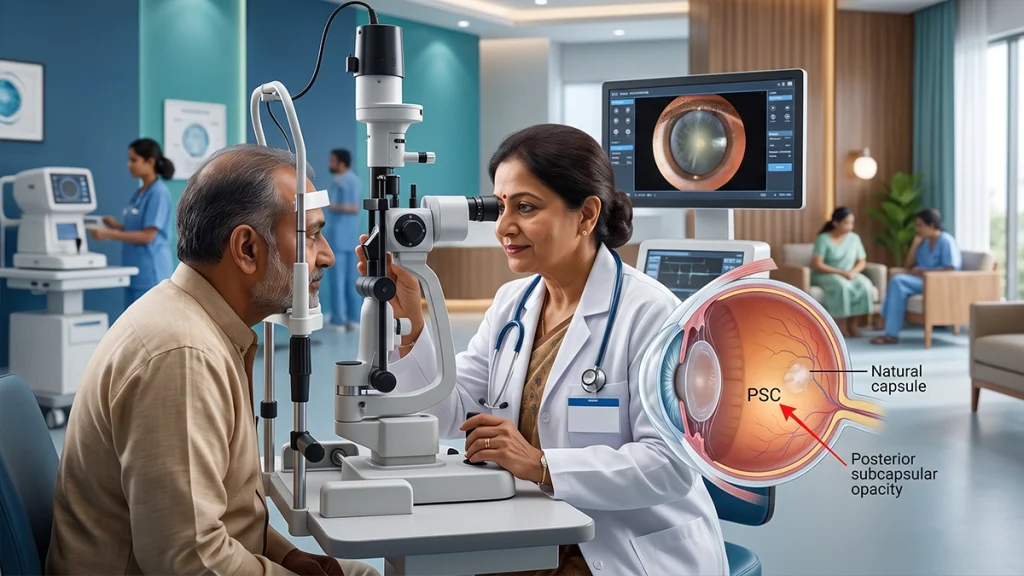
A cataract is a condition which sees the usually clear lens within the eye go white. Posterior subcapsular cataract is a type which develops at the back of the lens which is near to the visual axis just in front of the posterior capsule. In that area which is very close to the visual axis a little cloudiness may cause great vision issues.
People who present with a posterior subcapsular cataract may see glare, blurred vision, have trouble with reading, and have issues with bright light. As opposed to some age related cataracts which develop slowly a PSC cataract may develop more quickly. Early evaluation by an ophthalmologist will help determine the degree to which the cataract is affecting vision and whether or not treatment is required.
What Is a Posterior Subcapsular Cataract?
A development of posterior subcapsular cataract which grows under the lens capsule at the back of the natural lens is reported. This opacity tends to be centralized which in turn reports extensive interference with vision. The National Library of Medicine reports this form of subcapsular cataract which is an opacity at the posterior pole of the lens immediately beneath the lens capsule.
A posterior subcapsular cataract is a different entity from a posterior polar cataract. The latter also known as a polar cataract or PPC cataract,is in fact a separate type of cataract which may be present at birth. Also it may attach very closely to a thin posterior capsule which in turn may play a role in surgical plan.
| Cataract Type | Typical Location | Common Visual Effect |
| Posterior subcapsular cataract | Back of the lens, beneath the capsule | Glare, blurred vision and difficulty in bright light |
| Anterior subcapsular cataract | Beneath the front lens capsule | Variable reduction in vision |
| Posterior polar cataract | Central posterior part of the lens | Central visual disturbance and glare |
| Nuclear cataract | Centre of the lens | Gradual reduction in distance vision |
Symptoms of Posterior Subcapsular Cataract
Symptoms of a posterior subcapsular cataract can present themselves when the cataract is still moderate in size. Reportable is that blurred or hazy vision is a common issue. Also there is the problem of not being able to read fine print easily, and also that patients report an uncomfortable glare under which bright sun or car headlights fall.
A person with PSC in eye also reports seeing halos around lights, reduced contrast and trouble with fine detail. Vision may at times appear to deteriorate in bright conditions which causes the pupil to shrink and light to pass through the central cloudy area.
These symptoms do not distinguish between that of a PSC cataract. and other types of cataracts. Thus it is important to have an eye exam before we assume cataract is the cause of changed vision.
What Causes Posterior Subcapsular Cataract?
Several factors play into the development of a posterior subcapsular cataract. Long term use of corticosteroids is known to be a risk factor for this type of cataract. Also associated are diabetes, intra ocular inflammation which includes uveitis, injury and certain metabolic diseases. In some cases there is no clear cause.
A posterior subcapsular cataract does in fact affect younger people at times which is different for some other age related cataracts. Those on corticosteroid therapy for long term use should follow up with the prescriber and go to all recommended eye exams. Do not stop use of prescribed steroids without medical advice.
| Possible Factor | Relationship With PSC |
| Long-term corticosteroid exposure | Recognised risk factor |
| Diabetes | May increase cataract risk |
| Uveitis or eye inflammation | Can contribute to lens changes |
| Eye trauma | May cause cataract formation |
| Ageing | Cataract risk generally rises with age |
How Is PSC Cataract Diagnosed?
An ophthalmologist diagnoses a posterior subcapsular cataract at the course of a full eye exam. Visual acuity test results show what level of detail a person can see and also we have the slit lamp exam which the doctor uses to look at the lens in which they also identify the opacities.
The exam also differentiates between a posterior subcapsular cataract and a posterior subcapsular cataract and posterior polar cataract, nuclear cataract or other eye conditions. In past reports terms like cupuliform cataract may have been used for posterior lens opacity, but present day diagnosis is based on clinical examination.
The term sulcus subtarsalis refers to an anatomic area which is related to the eyelid as opposed to a type of cataract. Do not confuse it with what may be present within the lens.
Posterior Subcapsular Cataract Treatment
Treatment is based on the degree of impact posterior subcapsular cataract has on daily vision. At the early stage we may see some benefit in which we update glasses and improve lighting. Also, regular check ups at this stage are to monitor progress.
Patients report that they try to use PSC eye drop which will either reverse or remove their cataract. At present we do not have an eye drop which does treat an established posterior subcapsular cataract. When vision loss begins to impact reading, driving, work or daily activities it may be time to look into cataract surgery.
During the procedure the cloudy natural lens is removed and we put in an artificial intraocular lens. Cataract surgery is very common but it should be tailored to the eye of each patient. In case of posterior polar cataract care must be taken as the posterior capsule may be very thin or fragile.
Conclusion
A posterior subcapsular cataract which in turn may interfere with reading, driving and other day to day activities as the clouding occurs near the center of the visual field. Also reported are issues of glare, blurred vision and trouble with performance in bright settings.
An early ophthalmic exam can identify a posterior subcapsular cataract, tell it apart from conditions like polar cataract and also to determine which between watch and operation is the right thing to do. If you are noticing cloudiness in your vision or that glare is an issue which is a daily bother, get in to ASG Eye Hospital for a full assessment and personalized treatment advice.
Frequently Asked Questions
1. Is posterior subcapsular cataract serious?
A posterior subcapsular cataract which is located near the central visual axis may greatly affect vision. Also it’s a variable condition between patients, so an ophthalmologist should evaluate any persistent visual symptoms.
2. Does PSC cataract progress quickly?
A PSC cataract may progress more quickly than some other types. The rate of progression also varies by patient and type of risk factor.
3. Can eye drops cure PSC?
At present there is no set PSC eye drop which removes an existing posterior subcapsular cataract. Surgery is the definitive treatment when cataract related vision loss is severe.
4. Are posterior polar cataract and PSC the same?
No. A posterior polar cataract or PPC cataract is a different entity from a posterior subcapsular cataract,which although affects the posterior part of the lens.
5. Can PSC occur in only one eye?
Yes. PSC in eye may present in one or both eyes based on the root cause and also what happens in that person’s case.
Reference Links
- National Library of Medicine – Crystalline Lens and Cataract:
https://www.ncbi.nlm.nih.gov/books/NBK476171/ - National Eye Institute – Types of Cataract:
https://www.nei.nih.gov/eye-health-information/eye-conditions-and-diseases/cataracts/types-cataract - National Eye Institute – Cataract Surgery:
https://www.nei.nih.gov/eye-health-information/eye-conditions-and-diseases/cataracts/cataract-surgery