As we age our bodies go through many changes which also include the eyes. Some of these vision changes are mild and easy to manage. But others may be a sign of age-related eye diseases which require prompt medical care. By understanding these conditions better older adults may in turn do more to protect their eyesight and maintain independence.
Common age-related eye diseases are macular degeneration, cataracts, and glaucoma These do not play out the same for all. Some develop gradually, others may see in a short time dramatic change in their vision. Good senior eye care, regular eye exams, and early treatment play a large role.
According to the report from the U.S. National Eye Institute as we get older we see an increased risk of age related macular degeneration, cataract, diabetic eye disease, and glaucoma. Identifying these at the first sign is key to preserving vision into your golden years.
Why Does Vision Change With Age?
Over time the structures within the eye change. The lens may become less flexible. Also what we have for vision supported by tissue may become more prone to disease. These changes may cause issues like reading small print out to be more difficult, adjusting to low light, or focusing on close objects.
However we should not accept that which is progressive vision loss is a normal part of the aging process. Also it is at the early stages that many age-related eye diseases present no symptoms. This is why we see an increased value of comprehensive senior eye care as they age.
Certain health issues also play a role in eye health. Diabetes and high blood pressure may see your risk of vision problems go up. Smoking, genetic factors, a past of eye issues in your family, and long term sun exposure may also play into the development of some eye conditions.
Common Age-Related Eye Diseases
As related to aging which present in certain eye structures. By being aware of which structures are affected you may put notice to warning signs and seek out professional advice at the first notice.
Age-Related Macular Degeneration
Macular degeneration is an issue which affects the macula, a component of the retina at the back of the eye. The macula plays a role in sharp central vision. This vision is used for reading, driving, recognizing faces, and fine detail tasks.
Early on in the macular degeneration there may be little that is noticeable. As it progresses straight lines may take on a wavy appearance. Words may become difficult to make out and the central vision may appear blurred or distorted.
There is a dry and a wet form of macular degeneration. In dry AMD which is the more common form the progress is slow. In wet AMD there may be quick changes because abnormal blood vessels bleed or leak fluid into the retina.
The National Eye Institute reports that in AMD they may lose central vision before total blindness sets in. Also it is put forth that regular exams may detect changes which may not yet be noticeable to the patient.
Treatment of macular degeneration is based on the type and stage of the disease. Some patients may be put on a monitoring and lifestyle modification program. In certain cases of wet AMD patients may require eye injections to control abnormal growth of blood vessels.
Cataracts
Cataracts are what happens when the usually clear lens within the eye becomes opaque. Age is by far the top cause of this change.
People which have cataracts may see blurred or cloudy vision. Colors may appear washed out, head lights can cause glare, and night time driving is a challenge. Also some people require frequent changes to their glasses prescription.
Early onset of cataracts may not have a great impact on daily activities. Better lighting or new glasses may buy you some time. As vision begins to play a role in day to day living which outputs are noticed by the individual an ophthalmologist may put forth the recommendation of cataract surgery.
During surgery the cloudy lens is removed and we put in an artificial intraocular lens. We determine the treatment based on a patient’s visual requirements, general health, state of the eyes, and results of the exam.
Glaucoma
Glaucoma refers to a set of eye conditions that damage the optic nerve. The optic nerve transmits visual information from the eye to the brain.
Many types of glaucoma develop slowly. A person may lose peripheral vision which they notice at a later stage. That is why regular exams are a must for senior eye care.
Untreated glaucoma results in permanent vision loss. We may use eye drops, laser procedures, surgery, or a mix of the three for treatment. Treatment usually is to reduce the risk of additional optic nerve damage.
Regular ongoing care is a must after the diagnosis of glaucoma which is a condition that requires long term watchfulness.
| Eye condition | Common vision changes | Why early detection matters |
| Macular degeneration | Blurred or distorted central vision, difficulty reading or recognising faces | Early assessment helps determine the type, stage, and appropriate management |
| Cataracts | Cloudy vision, glare, faded colours, difficulty seeing at night | Monitoring helps determine when vision changes begin affecting everyday activities |
| Glaucoma | Often no early symptoms; gradual peripheral vision loss may occur | Optic nerve damage cannot usually be reversed, so early diagnosis is important |
Early Symptoms of Age-Related Eye Diseases
Symptoms of age-related eye diseases will present different signs based on which part of the eye is affected. Some may report a gradual loss in acuity. Also may see an increase in glare, a reduction in color intensity, poor night vision, or trouble with reading.
Central distortion is a sign of macular degeneration,, with cataracts. which do report increased cloudiness and glare. Peripheral vision loss is a feature of glaucoma which may however present with no symptoms in the early stages.
Sudden vision loss, flashes of light, a sudden increase in floaters, severe eye pain, or a curtain like shadow across the vision is a reason to seek prompt medical care. These symptoms may indicate issues beyond what is routine in age-related eye diseases and should be paid attention to.
How Are Age-Related Eye Diseases Diagnosed?
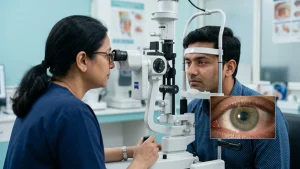
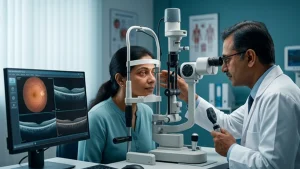
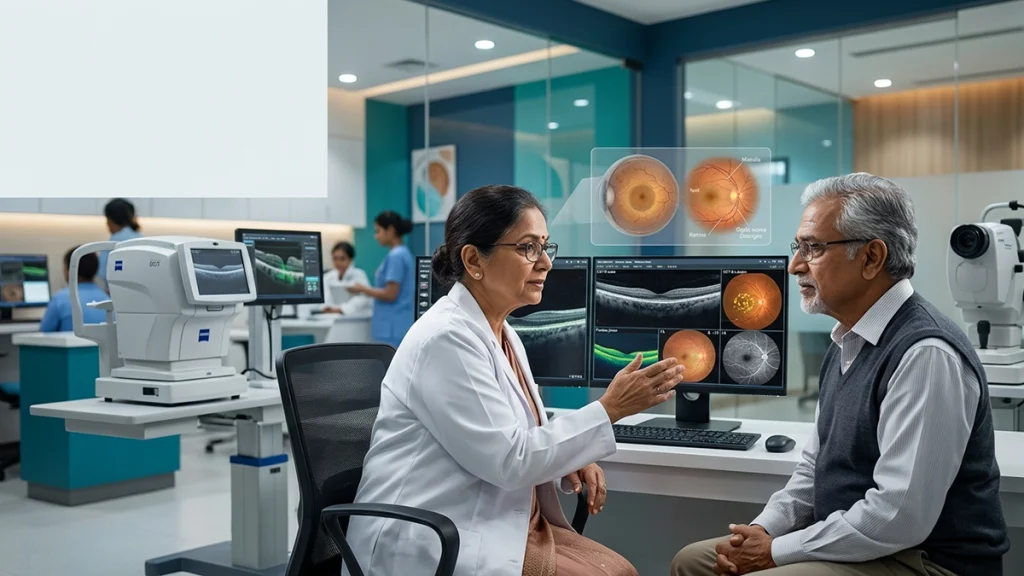
A full eye exam is performed by an ophthalmologist to assess the health of various eye components. The doctor may check visual acuity, eye pressure, retina, optic nerve, lens, and other structures.
Dilation of the pupils is done to allow for a better view of the retina and optic nerve. Also in the case of macular degeneration or glaucoma other tests may be ordered.
Evaluating cataracts also includes assessment of lens clarity and what degree of clouded lens affects day to day vision. In effective senior eye care more is required than to determine if a person needs a new prescription.
Can Age-Related Eye Diseases Be Prevented?
Some age-related eye diseases are not preventable. But that which can be done is to adopt healthy practices which in turn may in some measure reduce risk of some of these issues and promote in general good eye health.
Regular eye tests are a practical step out of which is to check for changes which may not yet be noticed by the patient. This is very true for glaucoma, which may present no symptoms in its early stages.
Smoking is a factor in eye health issues and is associated with an increased risk of macular degeneration and cataracts. The U.S. Centers for Disease Control and Prevention puts forth that which includes not smoking is a way to reduce the risk of vision problems.
A healthy diet, regular physical activity, and good control of diabetes and blood pressure also play a role in senior eye care. Also put on sunglasses which offer adequate protection from ultraviolet rays as a way to protect your eyes from long term UV exposure.
Treatment of Age-Related Eye Diseases
Treatment varies because age-related eye diseases do not share one cause or one treatment approach.
For macular degeneration, which eye condition the patient has is dry or wet AMD and the stage of the disease plays a role in what treatment is given. In some cases monitoring is sufficient, in others medical intervention is required.
For cataracts which affect daily life surgery may be an option when the vision starts to impede reading, driving, mobility, work, or other key activities.
For glaucoma what doctors do is try to reduce eye pressure and also to lower the risk of further damage to the optic nerve. We may see that they prescribe medication, perform laser procedures, or do surgery which will be based on the type and degree of the disease.
| Condition | Management may include | Follow-up focus |
| Macular degeneration | Monitoring, lifestyle guidance, nutritional recommendations in selected patients, or eye injections for certain forms | Retinal changes and central vision |
| Cataracts | Observation during early stages or cataract surgery when clinically appropriate | Vision quality and daily functioning |
| Glaucoma | Prescription eye drops, laser treatment, surgery, or combined treatment | Eye pressure, optic nerve and visual field |
The Importance of Regular Senior Eye Care
Good senior eye care which includes prevention, diagnosis, treatment and long term management should start before serious visual issues present.
People who have diabetes, a family history of ophthalmic disease, prior eye surgery, or at present have age-related eye diseases may require more frequent exams. The ophthalmologist is able to put together a proper schedule for each individual based on that person’s risk.
Routine senior eye care also identifies issues like dry eye, diabetic retinopathy, and which may include changes in your prescription.
Ignoring age-related eye diseases to go unnoticed. A regular eye exam gives patients a chance to bring up changes which if left untreated may greatly affect daily life.
Living Well With Changes in Vision
A diagnosis is not a death sentence. Many age-related eye diseases we can either treat, control or at the very least monitor.
Simple changes that also improve daily tasks. For example brighter lighting, proper glasses, larger text, better contrast, and visual aids which may help patients with vision reduction.
Family members play a role in senior eye care by having regular exams and to also point out to senior relatives changes which may go by unnoted. Patients also must take as prescribed the given medications and report for follow up as recommended.
Managing macular degeneration, cataracts, or glaucoma does best when patients and their eye care team track changes together.
When Should You Visit an Eye Doctor?
Older adults should not wait for severe symptoms before arranging an eye examination. Changes such as persistent blurred vision, difficulty reading, worsening night vision, distorted lines, glare, or changes in peripheral vision deserve assessment.
People who have been diagnosed with macular degeneration, cataracts, or glaucoma should adhere to the ophthalmologist’s recommended follow up schedule.
Regular senior eye care is of great importance for people with diabetes, high blood pressure, a strong family history of eye disease, or past eye issues.
An ophthalmologist may report on which of the above symptoms are due to normal aging and which point to treatable age-related eye diseases.
Conclusion
Ageing is not a direct indicator of poor vision. What we see instead is that the risk of age-related eye diseases goes up as we get older which is why it’s very important to be aware and to have timely exams.
Conditions that include macular degeneration, cataracts, and glaucoma present in different ways. Some develop gradually and may go unnoted in the early stage. senior eye care regularly allows doctors to identify these changes, to recommend appropriate treatment, and to monitor present conditions.
If you, a senior in your family, has noticed a change in vision it is best to get in for a full eye exam at ASG Eye Hospital. Early assessment helps determine the root cause and is a support for what course of treatment to follow as well as the long term health of the eyes.
Frequently Asked Questions
1. What are the most common age-related eye diseases?
Common elderly age-related eye diseases macular degeneration, cataracts, and glaucoma. Also as we age we see an increase in diabetic retinopathy and dry eye. Risk factors which play a role in this are general health, family history, lifestyle, and preexisting eye conditions.
2. At what age should senior eye care become more frequent?
There is not a one size fits all schedule for everyone. As to Senior eye care frequency it depends on age, medical history, family history, vision changes, diabetes, and past eye issues. An ophthalmologist will put together an exam schedule after they have assessed your risk factors.
3. Can cataracts cause permanent blindness?
Untreated cataracts may present as a large issue for a patient’s vision, but it is also a known fact that in the right case, cataract surgery does not only reverse, but also can restore useful eyesight at a very large degree especially where else the eye is still healthy. An exam from the eye will tell as to which cases the clouded lens is an actual cause for degraded vision and also play a role in the decision of whether we should go ahead with the surgery or not.
4. Is glaucoma curable?
At present there is no easy cure for reversing optic nerve damage in glaucoma. We do see that treatment which is able to control eye pressure and address other risk factors often does what it can to either slow or stop the progression of the disease. It is also very important that we have regular check ups as of yet lost vision from the disease will not return.
5. Can macular degeneration be prevented?
There is no certain way to prevent macular degeneration. That said, by not smoking, maintaining good health, eating a well balanced diet, protecting your eyes from the sun, and having regular eye exams you may see some risk reduction or early detection.
6. Do age-related eye diseases always cause symptoms?
No. Some age-related eye diseases develop without you noticing. For instance early glaucoma may produce no signs at all. This is why annual eye exams are very important for seniors which in turn may have healthy looking vision.
7. Are vision changes always part of normal ageing?
Minor shifts in focus and light adaptation which may present as we age. But to rule out other causes which may be the true source of serious issues like blurring, distortion, glare, loss of peripheral vision, or sudden changes don’t immediately attribute them to age. An eye exam is in order.
8. Can lifestyle changes protect eyesight in older adults?
Healthy habits play a role in senior eye care. Don’t smoke, manage diabetes and blood pressure, eat a healthy diet, get regular exercise, protect your eyes from high UV exposure, and have regular eye exams which in turn may support better long term eye health