
Clear vision is a result of light which passes through the cornea and natural lens without issue before it reaches the retina. If at any point in this path the structure is not as it should be, which is to say transparent, vision may begin to look hazy, foggy or blurred. Many patients report this as a cloudy eyes, appearance in their eyes’ but also many different eye conditions may present with the same symptoms.
Occasionally what you may see is that your cloudy vision which in most cases is due to dry eyes or tiredness. But if the cloudy eyes are persistent it requires a proper evaluation. Cataracts, corneal issues, diabetes related eye changes, inflammation, and retinal disorders can play a role in affecting visual clarity.
Cataracts are still the leading cause of which progressive blurring of visionblurry eyesight, which presents as a gradual process especially as we age. Also we are lucky to have advanced treatment options which can improve vision when cataract treatment does start to affect daily life. The National Eye Institute which is part of the U.S. National Institutes of Health reports that at present surgery is the only treatment which effectively removes a cataract.
What Do Cloudy Eyes Mean?
cloudy eyes is a term which may refer to a visible change in the eye or how a person’s vision is affected. Some report they are seeing through fog, smoke, or a dirty window. Also reported is glare, faded colors, reduced contrast, and difficulty with night time vision.
Cloudy vision in itself is not a disease. It is a symptom which may present for many reasons. According to the National Eye Institute, cloudy or blurry vision, faded colors, glare, poor night vision, and halos around lights are also very common cataract symptoms.
A progressive decline may present with cataract development. Acute cloudy eyes on the other hand requires prompt care as that may be a symptom of retinal, corneal, vascular, or inflammatory issues which in turn may cause quick changes in sight.
Common Causes of Cloudy Eyes
Several that cause cloudy eyes, are variable and may be different for each patient. An ophthalmologist has to evaluate the eye before putting forth a treatment.
| Possible Cause | How It May Affect Vision |
| Cataract | Progressive cloudy vision, glare, faded colours and poor night vision |
| Dry eye | Intermittent blurry eyesight, burning or fluctuating vision |
| Corneal disease | Hazy vision, light sensitivity or reduced visual clarity |
| Diabetes-related changes | Fluctuating or reduced vision depending on the affected eye structures |
| Eye inflammation | Haze, discomfort, redness or sensitivity to light |
| Refractive error | Persistent blurry eyesight that may improve with corrective lenses |
Cataracts are a special case which they do for the fact that they cause the clear lens of the eye to become cloudy. MedlinePlus reports that a cataract is a cloudy lens inside the eye. This cloudiness in turn does not allow light to hit the back of the eye properly.
Cataracts and Cloudy Vision
A cataract which is a natural result of the body’s aging process in the eye, the lens which is right inside the eye becomes opaque. As the lens clouds over time it does a less effective job at focusing light which in turn does not focus properly on the retina. This may happen slowly over time and as a result you may see things cloudy eyes and blurry and have trouble with everyday tasks.
Ageing is the cause of most cataracts. According to the National Eye Institute as people age there are natural changes in the eye lens. Over time lens proteins may begin to break down and form cloudy areas.
Patients report mild cloudy vision which may first present when reading, during night time driving, or when looking at bright lights. As the cataract progresses blurry eyesight becomes more of an issue during the day as well.
Other symptoms may include headlight glare, light halos, color fading, frequent changes in spectacle prescription, or reduced contrast. Cataracts tend to develop slowly as opposed to causing a sudden loss of sight.
Why Do Cataracts Develop?
Age is a key factor but it is not true that only older people get cataracts. Diabetes, past eye injury, certain drugs, extended ultraviolet exposure, and also some hereditary factors may play a role in the development of cataracts.
People which develop diabetes may see cataracts at an earlier age or more quickly than those who do not develop diabetes. MedlinePlus reports on this relationship in their discussion of diabetes related eye problems.
Previous eye surgeries or injury may also have affected the lens. Thus it is for someone with persistent cloudy eyes to rule out that age is the only cause of the issue.
An eye exam which in turn may identify if your cloudy vision is affected by cataracts or some other issue
How Are Cloudy Eyes Diagnosed?
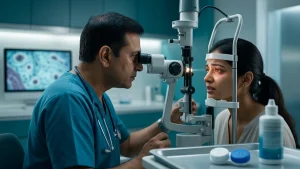
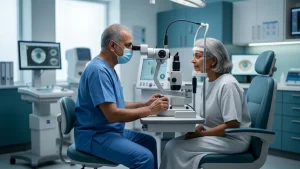
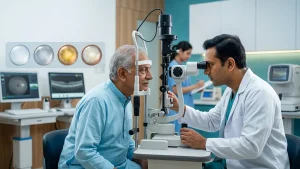
An ophthalmologist will first of all determine at what point the symptoms began and how they are affecting day to day life. The doctor may also do a visual acuity test, measure the power of corrective lenses, check eye pressure, the cornea, lens, retina and other internal structures.
The goal is to determine what is causing the blurry eyesight which we will use to create a treatment plan. If it is found that cataracts are the issue we also will see what activities of daily life are impaired by the lens clouding.
Early on some cataracts may not require immediate surgery. We see that updated glasses, brighter reading light, or changes in daily routine may help some patients. These measures do not cure the cataract itself.
When cataracts start to affect driving, reading, work, mobility, or any other important activity the ophthalmologist may bring up cataract treatment which is surgical.
Cataract Treatment for Cloudy Eyes
Modern cataract treatment we see which has the patient undergo removal of the diseased natural lens and in its place put in a clear artificial intraocular lens which we also term as IOL.
Also from the National Eye Institute we learn that at present cataract surgery is the only procedure which effectively removes a cataract.
In the operating room the ophthalmologist removes the cataract at the same time as the related structures which will support the new lens are preserved. Then the chosen IOL is put in to help with the focus of light within the eye.
| Stage | What Generally Happens |
| Before surgery | Eye examination, measurements and IOL planning |
| During cataract treatment | The cloudy natural lens is removed and an artificial lens is implanted |
| Early recovery | Prescribed eye drops and precautions support healing |
| Follow-up | The ophthalmologist checks healing and visual improvement |
The time for cataract treatment is based on the patient’s symptoms and visual needs. A cataract does not have to become very advanced before which point surgery is put forward. What we decide is how the cataract is affecting day to day life.
Can Cataract Treatment Restore Clear Vision?
Many patients present for cataract treatment which they have sought out due to progressive cloudiness in their vision which has made day to day activities a challenge. The removal of the cloudy vision allows for light to pass through a clear artificial lens.
However also the resultant image is a function of the health of the cornea, retina, optic nerve and other components of the eye. Cataract surgery does not reverse vision loss from all eye diseases.
For this reason we evaluate the full eye picture before going into what to expect. In some patients with cataract we see great improvement, in others which have glaucoma or retinal disease we may still see some visual issues.
Setting appropriate expectations is a key element of cataract treatment planning.
Can Cloudy Vision Return After Cataract Surgery?
A cataract which is removed will not grow back as the body’s natural cataract treatment has already played out.
However in some patients the thin capsule which supports the artificial lens does become cloudy.
This condition is known as posterior capsule opacification. It causes a return of cloudy vision which may be like the original cloudiness associated with cataracts.
When appropriate from a clinical standpoint we may treat this opacification with a laser procedure called YAG laser capsulotomy. Also it is that which one should have their new blurry eyesight checked after cataract surgery which at times may not be a return of the cataract.
Cloudy Vision Is Not Always a Cataract
cloudy vision does not always mean that cataract treatment is needed. Dry eye disease, corneal swelling, infection, inflammation, retinal disorders, glaucoma, and uncontrolled blood sugar may also inter
For example, according to MedlinePlus Fuchs corneal dystrophy causes hazy and blurry vision, starburst around lights, light sensitivity, and halos. At the time of diagnosis a full exam is very important when cloudy vision has presented suddenly or is in only one eye with visual clarity.
When Should You See an Eye Doctor?
Arrange an eye exam when you notice persistent and progressive cloudy eyes, which also disrupts your ability to read, drive, work, or recognize faces.
Go to the emergency room for sudden blurry eyesight, severe eye pain, large areas of redness, a sudden increase in flashes or floaters, a curtain like shadow over your field of vision, or a quick loss of sight. These may be signs of a non routine condition.
People with diabetes and preexisting eye problems should also go over the exam schedule which we as healthcare providers present.
We do this for early identification of what may be cloudy eyes which we can treat, or a separate issue that will need a different care plan.
Managing Cloudy Eyes at ASG Eye Hospital
People with diabetes and preexisting cloudy vision problems should also go over the exam schedule which we as healthcare providers present. We do this for early identification of what may be a cataract which we can treat, or a separate issue that will need a different care plan.
If it is cataracts which are causing the blurry eyesight, the ophthalmologist will go over what the cataract treatment is, what the different lens options are, what to expect in terms of recovery, and also what factors may play a role in the results of visual improvement.
Treatment of choice should include the patient’s eye health, lifestyle needs, medical history, and results of the exam.
Conclusion
Persistent cloudy eyes is a reason to have a full eye exam instead of self diagnosing. Cataracts are a common cause but also many other eye conditions present with the same symptoms.
When cataracts to the point of greatly impacting day to day life, proper cataract treatment may improve visual clarity which includes the removal of the opacified natural lens and the implant of an artificial one. Also with early diagnosis we note that doctors are better able to identify other causes of blurry eyesight before these issues progress.
If you are seeing a reduction in your vision which is progressive, increased glare, poor night vision, or having trouble with everyday tasks, see an ophthalmologist for a personal evaluation.
Frequently Asked Questions About Cloudy Eyes
1. What is the most common reason for cloudy eyes?
Cataracts are a very frequent cause of progressive cloudy eyes, which in turn causes blurring vision as we age. Also corneal disease, dry eye, diabetes and other health issues may play a role in reducing visual clarity.
2. Are cloudy eyes always caused by cataracts?
No. Cloudy eyes is a symptom which may present for many reasons. An eye exam will help to identify if the issue is a result of cataracts as opposed to corneal, retinal, refractive or any other eye issues.
3. Can cloudy vision improve with glasses?
Glasses can improve cloudy vision in which refractive error is the issue. They do not remove a present cataract. In time progressive cataract related blurry eyesight may require surgery.
4. What is the main cataract treatment?
The present course of action for cataract treatment is through surgery which involves the removal of the cloudy natural lens and we are to put in an artificial intraocular lens. The National Eye Institute reports that at present the only procedure used for removal of cataracts is surgery.
5. Can blurry eyesight occur after cataract surgery?
Some temporary blurry eyesight can occur during early recovery. Later clouding may also develop because of posterior capsule opacification. Persistent, sudden, or worsening symptoms should always be discussed with the treating ophthalmologist.
6. Should I worry about sudden cloudy vision?
Sudden cloudy vision which is blurry should not be dismissed out of hand, especially if it is accompanied by pain, redness, flashes, floaters, shadows, or loss of vision. Timely ophthalmic evaluation may determine the cause.