A pressure, tightness, or pain in the eye area which may extend to the brow, temples, cheeks, or nose. Although pressure behind eyes is often related to sinuses, head aches, screen time, or an out of date prescription we also see it to present with eye or neurological issues which require prompt evaluation.
The sensation of it alone does not determine the diagnosis. May not what you feel to be pressure the same as high intraocular pressure which is a measurement only an eye exam will reveal. Note which may cause eye pressure,, pay attention to eye pain, that accompanies and act upon new vision problems which in turn may help protect your comfort and sight.
What Does Pressure Behind the Eyes Feel Like?
People report that they feel a pressure behind eyes which may present as a dull ache, fullness in the eye sockets, a heavy sensation above the eyebrows, a throbbing in one eye at a time or in both, also the discomfort may present constantly or in intervals. It may affect one eye at a time or both at the same time.
The eyes, sinuses, optic nerves, facial nerves, and headache centers are related which is why discomfort may be felt in areas away from the source. Symptoms, duration, triggers, and associated vision problems provide tell tale signs. NHS reports that eye pain may be felt behind, within, or around an eye and requires evaluation when it is severe or associated with a change in vision.
Is It the Same as High Eye Pressure?
No. Pressure behind eyes is a symptom; intraocular pressure is what we measure the pressure of the fluid inside the eye. A person may report discomfort even when the measurement is within the normal range. Also, what many have is open angle glaucoma which may develop without any early symptoms.
The National Eye Institute reports that high intraocular pressure is a risk factor for glaucoma which is also to say that it may happen in people with normal readings and that raised intraocular pressure does not always lead to glaucoma. Diagnosis includes use of tonometry as well as evaluation of the optic nerve, visual field, and the cornea. As eye pressure causes are of various types, what you experience does not replace what we can determine from testing.
| Feature | Pressure sensation | Raised intraocular pressure |
| Meaning | Heaviness, aching, tightness, or fullness around the eye | A measured level of fluid pressure inside the eye |
| Can you identify it by feeling? | You can describe the symptom, not its cause | No; tonometry is required |
| Does it always mean glaucoma? | No | No, although it can increase risk |
| What guides diagnosis? | Timing, severity, triggers, and other symptoms | Optic nerve, drainage angle, visual field, cornea, and follow-up |
Common Causes of Pressure Behind the Eyes
Sinus Inflammation or Infection
Sinuses are air filled spaces in the nose, forehead, cheeks, and around the eyes. These can become inflamed and blockage of drainage causes pressure behind the eyes, face pain, nasal blockage, thick discharge, reduced sense of smell or more symptoms when bending over. MedlinePlus reports sinusitis as a cause of eye pain, also the NHS notes pain and tenderness in the eye, cheek, or forehead areas
Sinus issues are a common eye pressure causes, but if you have fever, severe eyelid swelling, double vision, or a health condition that is quickly getting worse you should see a doctor. Do not treat these symptoms like they are just a common cold.
Migraine and Cluster Headache
Migraines present with pulsing head pain, nausea, light sensitivity, and transient visual issues. It is reported that the attack is of pressure behind eyes which is due to neurological pathways and not to a build up of pressure in the eye. Also migraines may cause temporary visual changes which at times may be the main symptom of an attack without a very painful headache.
Cluster headache which causes severe piercing or burning eye pain area, usually around one eye. Also may see redness or watering of the same side eye and the eyelid may swell or drop. Headaches which are recognized to cause eye pressure causes are cluster headaches but if you have a first, sudden or very severe headache seek assessment as these may be a different issue which may include vision problems
Digital Eye Strain and Refractive Error
Long term extensive use of your eyes from reading or from the screen may cause tired eyes, headaches, intermittent blur, and pressure behind eyes. Also age related issues like astigmatism, farsightedness, presbyopia or an eye coordination problem may worsen the issue. The National Eye Institute reports that these conditions are associated with headaches, blurry vision and strain.
Visual fatigue is a very present issue which presents itself in the form of eye pressure causes that come up post close work and go away with rest. As for vision problems which return — they shouldn’t be so quick to tie to devices. A full exam can determine if it is in fact an issue of glasses, dry eye care, or eye coordination treatment.
Dry Eye Disease
Dry eyes present with symptoms like burning, scratching, redness, watering, fluctuating blur, or tired eyes. Some report to feel pressure behind eyes which is a result of air conditioned work setting, reduced blinking, or wearing contact lenses. The National Eye Institute reports that dry eye is a result of insufficient production of tears or tears which do not function right which in turn cause discomfort and blurry vision.
Dry out is a common eye pressure causes which we can do something about, but if you have persistent eye pain or large vision problems go in for an exam rather than repeating use of random over the counter drops.
Glaucoma and Acute Angle Closure
Most of the time open angle glaucoma develops slowly and at little to no symptoms. With acute angle closure glaucoma it is different. It may present very suddenly with eye pain, redness, headaches, nausea or vomiting, halos around lights, and blurred vision. The National Eye Institute and NHS report that in this case you should seek medical care right away.
This distinction matters:pressure behind eyes, by itself, does not establish glaucoma. Of the serious eye pressure causes, acute angle closure is more concerning when the discomfort starts suddenly and is severe, particularly if vision problems occur at the same time.
Optic-Nerve Inflammation
Optic neuritis is a condition which affects the optic nerve and may result in a decrease in vision out of one eye, colors looking pale and also aching that increases with eye movement. Affected patients may report the aching as a pressure behind eyes. The National Eye Institute reports that in association with optic neuritis patients experience ocular pain and sudden loss of vision.
Although not as common as strain or sinus related issues, the eye condition of optic-nerve inflammation is a eye pressure causes which should be taken into account when you have eye pain which is along with central blurred vision, faded colors, or and other new vision problems.
Pressure Around the Brain
Idiopathic intracranial hypertension which is when the pressure inside the skull increases and affects adjacent structures including the optic nerves. It may cause headache, brief episodes of dimmed vision, blind spots, pulsating noises in the ears, or peripheral visual loss.
A person reports pressure behind eyes, but we cannot rely on symptoms alone for diagnosis. For repeat headaches which come with visual changes, an evaluation by both ophthalmic and medical health care professionals is required.
Eye Inflammation, Infection, or Injury
Uveitis, corneal infection, scleritis, eye injury, or contact lens related complications may present with redness, light sensitivity, tearing, discharge, blurred vision, and eye pain. NHS advice is to seek prompt care when pain is severe, the eye is very red, there is light sensitivity, or vision changes.
These are key factors in eye pressure causes which we must pay attention to as delay may cause sight loss. Post surgical, post trauma, post chemical exposure, or in the case of contact lens wear new pressure behind eyes should be evaluated right away.
Symptoms and Their Possible Meaning
The that goes along with it may present with urgency. Congestion and facial pain may point to sinus inflammation. Nausea and light sensitivity is a feature of migraine. Redness, halos, vomiting, and sudden vision loss are red flags for acute glaucoma. Pain during eye movement with reduced color brightness may point to optic-nerve issues.
| Symptom pattern | Possible explanation | Recommended response |
| Mild ache after prolonged screen use that improves with rest | Strain, dryness, or refractive error | Book an eye examination if it keeps returning |
| Facial tenderness with blocked nose and discharge | Sinus inflammation | Seek medical advice if severe, prolonged, or worsening |
| Sudden severe pain, red eye, halos, nausea, or vomiting | Possible acute angle-closure glaucoma | Obtain emergency eye care |
| Pain on eye movement with a new colour or central-vision change | Possible optic-nerve inflammation | Seek urgent assessment |
| Fever, swollen eyelid, double vision, or restricted eye movement | Possible orbital infection | Obtain emergency medical care |
| Repeated dimming, blind spots, or peripheral visual loss with headache | Possible optic-nerve effect from neurological pressure | Arrange urgent eye and medical evaluation |
When Should You Worry?
Seek emergency care if you experience sudden and severe pressure behind eyes which may be accompanied by a red eye, vomiting, halos, a very bad headache, or quick loss of vision. Also get help right away if you have sudden double vision, a drooping eyelid, pupils that are not the same, weakness, confusion, fever with eye swelling, chemical exposure, or a serious injury.
Prompt evaluation is appropriate when you have eye pain which wakes you at night, pain that is quick to worsen, which follows recent eye surgery, or which in a contact lens wearer causes reduced vision. The NHS and CDC report pain, decreased vision, redness, double vision, halos, flashes, and other sudden changes as reasons not to put off care.
Even if there are no emergency signs, get an exam if you are having recurring eye pain, which lasts for several days, which is one sided or which goes along with vision problems. Also if you have diabetes, high blood pressure, a family history of glaucoma, or past eye issues you should have a very low tolerance for delay in getting checked out.
How Is the Cause Diagnosed?
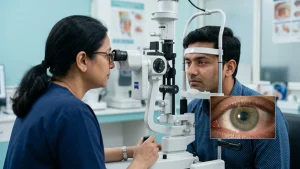
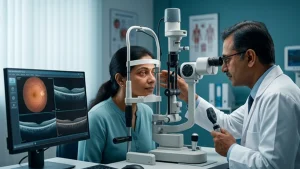
The doctor will ask about when it started, how severe it is, what triggers it, about the head and nasal symptoms, what medicines you are on, if you wear contact lenses, of any trauma, and changes in vision. We may do visual acuity, refraction, eye movement, pupil, color vision tests, slit lamp exam, tonometry, and a dilated look at the optic nerve and retina.
Further studies may include visual field testing, optic nerve imaging, angle of drainage evaluation, tear production assessment, neurological review, or medical imaging. Dilated exams are used to identify glaucoma and other diseases which may not present with symptoms.
Several types of high eye pressure causes with the same symptoms which is why we can’t determine the diagnosis based only on the intensity of the pressure behind eyes.
Treatment Depends on the Cause
There is no one size fits all remedy for pressure behind eyes. For screen related eye strain try out accurate prescriptions, timed breaks, improved blinking, right lighting, and dry eye treatment. Every 20 minutes check out what is within a 20 foot range for 20 seconds.
Sinus disease, migraine, cluster headache, glaucoma, optic neuritis, inflammation, infection and neurological disorders each present with different treatments. Stay away from leftover antibiotics, redness relief, glaucoma or steroid drops. If you have eye pain or vision problems do not delay care which may be required for a diagnosis.
Prevention and Routine Eye Care
Not all episodes are preventable. Proper glasses, screen breaks, full blinking, allergy control, contact-lens hygiene, adequate sleep, and recommended exams can reduce avoidance which are in fact preventable. Repeated pressure behind eyes still requires assessment.
Routine care is important in the case of glaucoma which often progresses without symptoms. The National Eye Institute reports that a comprehensive dilated eye exam is the sure way to screen for glaucoma and that the CDC puts forth that professional evaluation is right for when you have issues like decreased vision, pain, redness, double vision, halos, floaters, or flashes.
When to Visit ASG Eye Care
Visit ASG Eye Care if you experience persistent or unexplained pressure behind eyes which is interfering with your daily activities. Also bring in the case of headaches, redness, light sensitivity, or any visual changes. An ophthalmologist will be able to determine if the issue is related to focus, the health of the eye surface, intraocular pressure, inflammation, the optic nerve, or if it is a condition which requires referral to another specialist.
Sudden and serious symptoms require prompt care. Early assessment is what separates out routine discomfort from which quick treatment may preserve sight.
Frequently Asked Questions
1. Does pressure behind the eyes always mean glaucoma?
No. Pressure behind eyes may present with sinusitis, headache disorders, strain, dry eye, inflammation, and also a number of other conditions. Glaucoma requires measurement of pressure, optic nerve assessment and appropriate testing.
2. Can sinusitis cause this symptom?
Yes. Inflamed or blocked sinuses may lead to facial tenderness, congestion, headaches, and pressure behind eyes. Medical care is warranted if symptoms become severe, worsen, persist, or occur with eyelid swelling or changes in vision.
3. Can screen use cause pressure around the eyes?
Prolong term close work may cause headaches, dryness, focusing fatigue, and pressure behind eyes which is also true when glasses are out of date. If you have persistent symptoms go get an eye exam.
4. Which symptoms require emergency care?
Sudden serious eye pain, a red eye, nausea, vomiting, halos, fast loss of vision, double vision, fever with swelling, or a neurological symptom require immediate medical attention.
5. Can glaucoma occur with normal pressure?
Yes. Some patients present with glaucoma at what is considered the normal range, also some with elevated readings do not develop optic nerve damage. The full exam is key.
6. Should I use eye drops for the discomfort?
Do not choose drops from the symptom alone. Lubricants may help diagnose dryness, but antibiotics, glaucoma medicines, and steroids should only be used for the condition for which they were advised.
7. Can migraine cause visual changes?
Yes. Migraine can cause visual disturbances which are temporary, nausea, and light sensitivity. A first time episode, atypical pattern, persistent loss of vision, or a neurological symptom requires medical evaluation.
8. When should I arrange a routine examination?
Book in for an exam when you find that your headaches come back while reading, your glasses are no longer correcting your vision enough, you are still feeling discomfort which is one sided, or you have mild vision problems. Also get in for an earlier check up if your symptoms are getting worse.